Preventing Black Pad Defects: Ensuring Reliable ENIG Finish in Professional PCB Manufacturing
13 min
- What Black Pad Is and Why It Occurs in ENIG Processes
- The Serious Consequences of Black Pad in PCB Production
- Critical Factors Influencing Black Pad Risk
- Advanced Strategies to Prevent Black Pad
- JLCPCB's Robust Approach to Black Pad Prevention
- FAQ about Gerber File
- Conclusion
Key Takeaways
- Black Pad is caused by excessive nickel corrosion during the ENIG immersion gold step, leading to brittle solder joints and hidden BGA/QFN failures.
- Key prevention methods: tight chemistry control (temperature, pH, time), consistent phosphorus content, and regular bath monitoring.
- High-reliability alternatives: ENEPIG (lowest risk) or nickel-free finishes like Immersion Silver and OSP.
- Always source ENIG from manufacturers with strict process controls.
Ever get a great-looking board, work through the reflow process with care, and then see a BGA joint crack under the lightest of mechanical stresses? The pad was shiny and smooth. The solder appeared to be shiny. But the joint was virtually devoid of strength. If you have experienced it, there's a good chance that you had been exposed to one of the most infamous failure modes in the PCB manufacturing process - the Black Pad. Black Pad is subtle, as it's concealed beneath a beautiful gold finish. It is possible for the finish (ENIG) that is supposed to provide you with flat, solderable, corrosion-resistant pads to quietly develop as a brittle, oxidized nickel finish beneath.
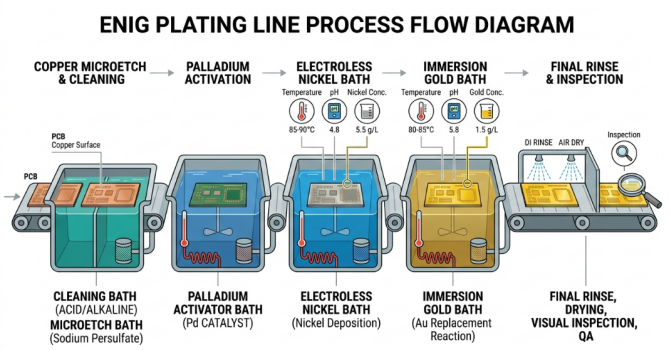
It will not be visible until the joint is cross-sectioned or opened up to reveal the dark, cracked nickel. The board might already be out then. In this article, I'd like to discuss what Black Pad is, why it occurs during the ENIG process, and the price it costs if it isn't caught. Then, we'll get down to brass tacks: chemistry control, materials used, alternative finishes, and how a high-volume manufacturer such as JLCPCB eliminates this defect in the manufacturing process. The goal is simple. At the end, you will know where the risk is and how to design and source around it.
What Black Pad Is and Why It Occurs in ENIG Processes
Definition of Black Pad and Its Impact on Solderability
ENIG is a two-layer stack with a layer of electroless nickel-phosphorus (NiP) (3-6 microns thick) on top of the copper pad, and a thin layer of immersion gold (0.05-0.1 microns thick) on top of the NiP. The nickel provides structural and barrier properties. The gold coating prevents the nickel from oxidizing and provides a surface that can be soldered and wire bonded.
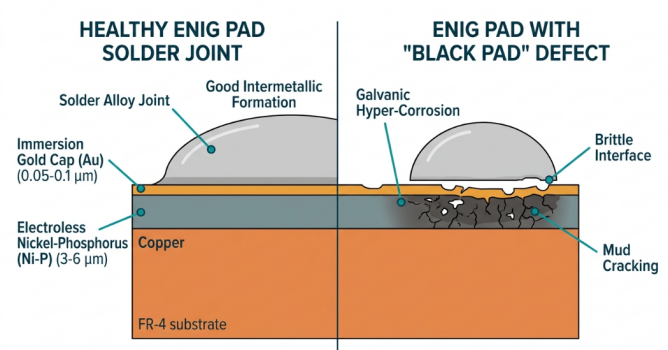
This is the corrosion of that nickel layer during the immersion gold step, which is known as "Black Pad. When it occurs, the nickel surface is oxidized and is extremely brittle, and it has a distinct texture of “mud cracking” when viewed under a microscope, similar to a dried-up lakebed. When making a soldered joint, you pull on the joint after soldering and discover a dark, almost black nickel surface where the solder didn't join. The effect on solderability is profound and well-defined:
- The solder will "wet" the gold, but will not fuse properly with the corroded nickel.
- They appear to be good and have a very low mechanical strength.
- Often, the failures are "brittle" in nature, that is, they are clean separations at the pad, rather than ductile tearing.
- The most dangerous victims are BGA and QFN packages, which have hidden joints.
Root Causes in the Electroless Nickel Immersion Gold Process
But why does the nickel corrode in the first place? The problem lies with the chemistry of the immersion gold process. Immersion gold is a galvanic displacement process, meaning that the gold is deposited because the nickel atoms are oxidized and dissolved in the bath, giving up their electrons, which reduce the gold ions. This is natural, and it is necessary, just a small amount. The issue is that galvanic hyper-corrosion occurs between the immersion gold bath and the nickel, and the attack is too aggressive. The gold solution does not etch thinly, but rather deep into the nickel grain boundaries, creating a porous, oxidized, phosphorus-enriched surface. The process tends to go towards hyper-corrosion due to several factors:
- Too much immersion gold attack due to too hot, too acidic, or too strong a bath.
- Variation in phosphorus content of electroless nickel layer can be a problem; too high and too low content of phosphorus can be an issue, and uneven distribution of phosphorus is even worse.
- Extended periods of soaking in which the gold solution continues to attack the nickel.
- Contamination from the bath and/or failure to maintain proper pH would destabilize the reaction.
The Serious Consequences of Black Pad in PCB Production
Reliability Failures, Poor Wetting, and Field Returns
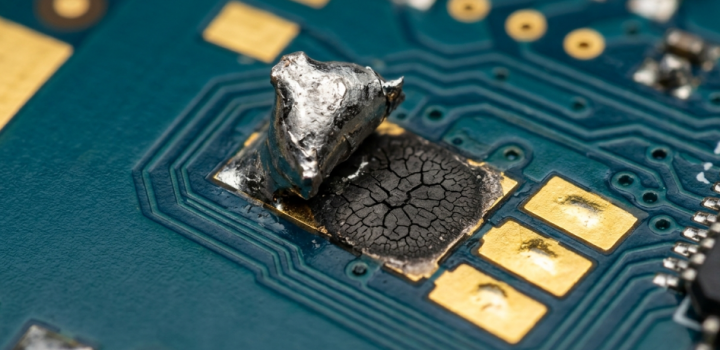
So the worst thing is that the Black Pad defects are still produced in the factory and die there. A joint with a corroded nickel interface may transmit signals and power just fine on day one. Next, thermal cycling, vibration, or mechanical shock can fracture the weak intermetallic and kill the device in the customer's hands. The common symptoms of reliability are:
- Bad wetting/dewetting when reflow, in which the solder beads up rather than spreads.
- Brittle solder joints that fail by bend, drop, and/or thermal cycle testing.
- Temporary opens that occur depending on the temperature are the most difficult ones to troubleshoot.
- Cryptic BGA failures that are only found with dye-and-pry or cross-section.
Cost Implications for Manufacturers and Customers
The financial sting is similar to the reliability sting in that the more time that passes before it is caught, the more expensive it is. The trite rule of thumb in manufacturing is that the cost of a defect increases about 10 times at each stage: bare board, assembly, system, and field. If a panel is scrapped at the bare-board stage, a Black Pad is placed in the middle of the panel. The same defect that is detected after assembly involves scrapping boards populated with costly components. In the field, it equates with warranty claims, recalls, RMA logistics, failure analysis, and the impact on reputation, which are not adequately described in the invoice. That's the reason why serious manufacturers spend lots of money on prevention and not detection. A small additional investment in good process control for tight ENIG is well worth it compared to field returns of completed products.
Critical Factors Influencing Black Pad Risk
Chemistry Control, Bath Parameters, and Process Timing
ENIG chemistry is a dynamic process. Both baths age and become contaminated with metal ions, and deviate from setpoints while boards are passed through the electroless nickel bath and the immersion gold bath. Maintaining them in spec is not a one-time setup. The most important parameters are:
- Bath temperature: High temperatures will increase the rate of gold deposition and nickel attack; a slight overshoot in temperature will increase the possibility of corrosion.
- pH control: Immersion gold bath is extremely aggressive towards nickel when the bath becomes too acidic, and the process is disturbed when the pH is too high or too low.
- Gold concentration and bath loading: A more concentrated bath or a more heavily loaded bath will increase the driving force for corrosion.
- Time of immersion: The longer the piece is in the gold bath, the more nickel will be dissolved, so this needs to be closely monitored.
Material Selection and Surface Preparation Best Practices
Chemistry is not the answer. But just as important is the fact that what the nickel deposits onto is as important as the nickel itself, due to the fact that corrosion loves defects and contamination. An embryo to collect and strike at the immersion gold reaction is provided by a rough or uncleaned copper surface or a surface that is not adequately activated. Good surface preparation practices are: Microetch and cleaning of the copper to remove oxides and organic residues. Nickel deposits uniformly without skip plating or nodules with consistent activation (palladium catalyst). Clean and maintain rinse between baths to avoid “drag in” contamination from one tank to another.
Advanced Strategies to Prevent Black Pad
Optimized ENIG Process Control and Monitoring
The foundation of prevention is relentless monitoring. What is not measured cannot be controlled, and ENIG baths constantly drift. A strong line does not assume anything; it tracks and checks all parameters. Control measures include: Statistical Process Control (SPC) on bath temperature, pH, and metal concentration, with alarms before limits are breached.
Regular bath analysis and replenishment to hold gold and nickel chemistries at their setpoints. Phosphorus content verification on the EN layer via XRF or EDS to confirm corrosion-resistant deposits. Cross-section and SEM checks on sample coupons to catch mud-cracking morphology before it reaches production volume. Solderability testing (wetting balance, dip-and-look) per IPC J-STD-003 to validate real-world performance.
Alternative Surface Finishes When Black Pad Risk Is High
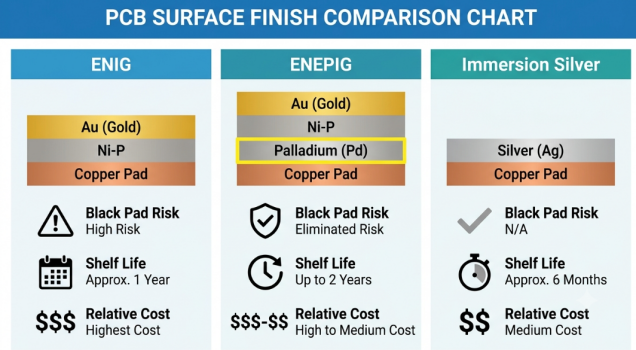
At times, the most intelligent thing to do is to avoid the immersion gold reaction altogether. While ENIG is great, it is not the only type of finish that is flat and solderable, and for some designs, an alternative finish does not involve a risk. The most important alternative is ENEPIG (Electroless Nickel Electroless Palladium Immersion Gold). It is used to add a palladium layer between the nickel and the gold. That palladium is a barrier, and that immersion gold deposits on palladium rather than attacking nickel directly, thus eliminating the Black Pad mechanism. More expensive, but it can be worthwhile for high-reliability and wire-bonding applications. Let's compare the common finishes:
| Surface Finish | Layer Structure | Black Pad Risk | Shelf Life | Relative Cost | Best For |
|---|---|---|---|---|---|
| ENIG | Ni-P + Au | Moderate (process-dependent) | 12+ months | High | Fine-pitch, BGA, flat pads |
| ENEPIG | Ni-P + Pd + Au | Very low | 12+ months | Highest | Wire bonding, high reliability |
| Immersion Silver | Ag over Cu | None (no Ni) | 6-12 months | Medium | Fine-pitch, RF, flat pads |
| Immersion Tin | Sn over Cu | None (no Ni) | 6 months | Medium | Fine-pitch, press-fit |
| OSP | Organic coating | None (no Ni) | 6-12 months | Low | Low-cost, single-reflow |
| HASL (lead-free) | Solder coat | None (no Ni) | 12+ months | Lowest | Through-hole, larger pitch |
The moral of the story is simple. To obtain a flat finish and absolute reliability, ENEPIG avoids a Black Pad altogether. Immersion silver or OSP does not even use nickel if shelf life is not an issue. For larger pitch designs that are cost-sensitive, HASL is also rugged and Black-Pad-free.
JLCPCB's Robust Approach to Black Pad Prevention
Strict Process Controls and Real-Time Monitoring in ENIG Lines
JLCPCB has strict chemistry control for its ENIG plating lines. These baths are controlled with respect to bath temperature, pH, gold concentration, and immersion time, and analyzed and replenished regularly to prevent these baths from becoming hypercorrosive. The purpose of that monitoring is to maintain the immersion gold reaction. To avoid the onset of nickel hyper-corrosion in the first place. Sorting a drifting bath before it makes a single bad pad is much cheaper than sorting good from bad afterward, and it is a lot safer as well.

Proven Track Record Delivering Reliable ENIG PCBs at Scale
The net effect is a reliable ENIG board at prototype costs and rapid delivery. The surface finish is available as a standard process (ENIG), instant online quoting and production can be as fast as a couple of days, and you don't need to pay a reliability tax for a flat, reliable finish. That combination is important for designers designing with fine pitch BGAs, QFNs, and dense SMT layouts. The flatness and solderability of ENIG with the process controls that prevent Black Pad from the finished assemblies.
FAQ about Gerber File
Q: What exactly causes Black Pad in an ENIG finish?
Black Pad is caused by galvanic hyper-corrosion of the electroless nickel layer during the immersion gold step. The gold solution attacks the nickel too aggressively, leaving a brittle, oxidized, phosphorus-enriched surface with a characteristic mud-cracking morphology that solder cannot bond to properly.
Q: How can I detect Black Pad if it's hidden under the gold?
You usually can't see it on the surface, so detection relies on cross-sectioning and SEM/EDS analysis of sample pads, plus solderability and joint-strength testing. After a joint fails, a dark or black nickel surface at the separation point is the classic signature.
Q: Does ENEPIG really eliminate Black Pad risk?
ENEPIG adds a palladium barrier layer between the nickel and gold, so the immersion gold deposits onto palladium rather than attacking the nickel directly. This essentially removes the Black Pad corrosion mechanism, which is why ENEPIG is favored for wire bonding and high-reliability applications despite its higher cost.
Q: Is ENIG still safe to use for fine-pitch BGA boards?
Yes, ENIG is widely used and reliable for fine-pitch BGAs and QFNs when the plating process is well controlled. The key is sourcing from a manufacturer that monitors bath chemistry, timing, and phosphorus content closely enough to keep the immersion gold reaction in its safe regime.
Q: Which surface finish should I choose if I want to avoid nickel entirely?
Immersion silver, immersion tin, and OSP all coat copper directly without a nickel layer, so they carry no Black Pad risk. They offer flat, solderable surfaces but generally have shorter shelf lives than ENIG, so plan your assembly timeline accordingly.
Conclusion
Black Pad is among those defects that penalize complacency. It is concealed under a flawless gold exterior, goes unnoticed upon inspection, and comes back to bite when it is most needed – in the field, in the finished product, and in the customer's hands. It is well understood now that the problem is galvanic hyper-corrosion of the nickel during immersion gold, which causes the surface to be brittle with a mud-cracked structure that solder cannot adhere to properly. The good news is that it can be completely avoided. By maintaining tight chemistry control, surface preparation, materials, and constant monitoring, the ENIG process remains within its safe regime.
Alternatives to the mechanism, such as ENEPIG or immersion silver, are available when the risk profile of a design is high. Prevention is less costly than a field return. By obtaining the ENIG from a manufacturer with disciplined process control, you can enjoy all the benefits of the flatness and solderability of ENIG without the Black Pad concern. With the monitored ENIG lines, quality verification, and fast and low-cost production, you can put these principles into practice.
Keep Learning
Choosing the Right Surface Finish for Your PCB: An Overview of HASL, ENIG, OSP, Immersion Tin and Immersion Silver
Key Takeaways Lead-Free HASL: Best low-cost, RoHS-compliant finish for general PCB builds. ENIG: Superior flatness and 12+ month shelf life for fine-pitch BGAs. OSP: Ultra-flat, lowest-cost option for high-volume SMT (3–6 month shelf life). Immersion Silver: Ideal for high-frequency RF by eliminating nickel signal loss. Immersion Tin: Best for press-fit connectors and fine-pitch assembly. Printed Circuit Boards (PCBs) are essential components in the manufacturing of electronic devices ranging from sma......
Conformal Coating in PCB Technology: Benefits, Challenges, and Future Developments
If you're searching for conformal coating, you're likely looking for a reliable way to protect your PCB from moisture, dust, chemicals, or harsh environments. Choosing the right coating directly affects product reliability, performance, and lifespan. In this guide, you'll learn what conformal coating is, the main types available, and how to select the best option for your application. We'll also cover key benefits, application methods (manual, automated, and selective), as well as inspection, rework, ......
PCB Gold Fingers: Why They Matter and How to Design Them
Key Takeaways PCB gold fingers provide reliable electrical and mechanical contact for PCBs that connect to external connectors or card slots. ENIG is suitable for general contact applications, while electroplated hard gold offers higher wear resistance for repeated insertion and removal. Gold fingers should remain fully exposed, with solder mask and silkscreen kept away from the contact area. Proper chamfering and gold finger orientation are essential to ensure smooth insertion and prevent damage duri......
Comparing HASL and ENIG Surface Finishes for PCBs
Selecting the right surface finish for a printed circuit board (PCB) is crucial to ensuring its performance, reliability, and longevity. Two of the most commonly used finishes are Hot Air Solder Leveling (HASL) and Electroless Nickel Immersion Gold (ENIG). Each of these surface finishes offers distinct advantages and disadvantages, making them suitable for different applications. In this article, we will compare HASL and ENIG to help you determine which finish is best suited for your PCB project. What......
Avoid PCB Assembly Failures: Mastering Solder Mask Expansion Rules and Best Practices
Solder mask protects copper traces and pads from oxidation, bridges, and contamination during assembly. Incorrect solder mask expansion—the clearance around features where mask is pulled back—leads to defects like shorts or exposed copper. Engineers must set expansion values precisely to ensure reliable soldering and long-term performance. Introduction: Why Solder Mask Expansion is Critical for PCB Reliability Understanding Solder Mask and Expansion Basics Solder mask is a polymer layer applied over t......
The Ultimate Guide to OSP Surface Finish in PCB Manufacturing: Advantages, Process, and Selection
Key Takeaways OSP (Organic Solderability Preservative) is a water-based, cost-effective PCB surface finish that deposits a 0.2-0.5μm organic film directly onto copper pads. Unlike metallic finishes such as ENIG or HASL, OSP provides superior surface flatness for fine-pitch SMT components at no extra process charge, making it ideal for high-density consumer electronics. However, OSP requires controlled handling and a limited assembly window (24-48 hours after opening vacuum packaging). It is best suite......