What is a High Frequency PCB?
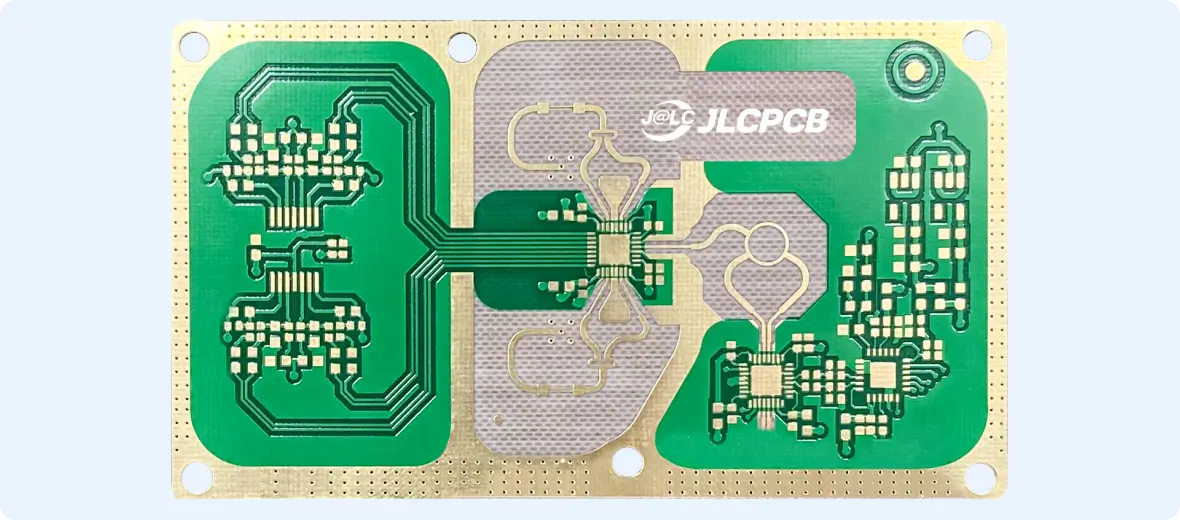
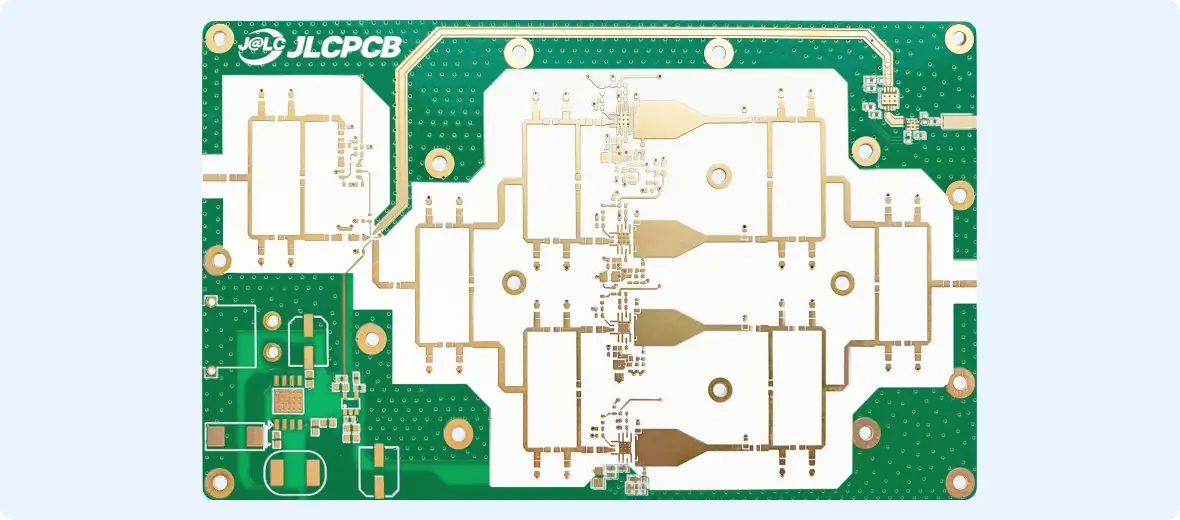
As the frequency increases beyond a certain limit, signal losses in standard FR4 boards rise significantly. To address this, we offer a range of High-Frequency PCBs, designed specifically for MHz to GHz applications. These boards use low-loss dielectric materials with a reduced loss tangent, minimizing signal degradation. This ensures controlled electromagnetic interference (EMI) and reliable, high-speed signal transmission.
Common Materials for High Frequency PCB
Unlike standard FR4 boards, High-Frequency PCBs can be selected based on Dk (dielectric constant) and Df (dissipation factor). The lower these values, the better the signal integrity at high frequencies. Some materials JLCPCB offers include:

The Benefits of JLCPCB High Frequency PCB
High Frequency PCB Design Considerations
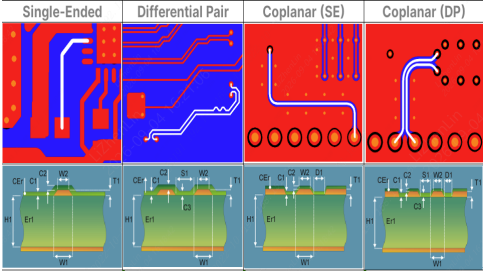
Controlled Impedance
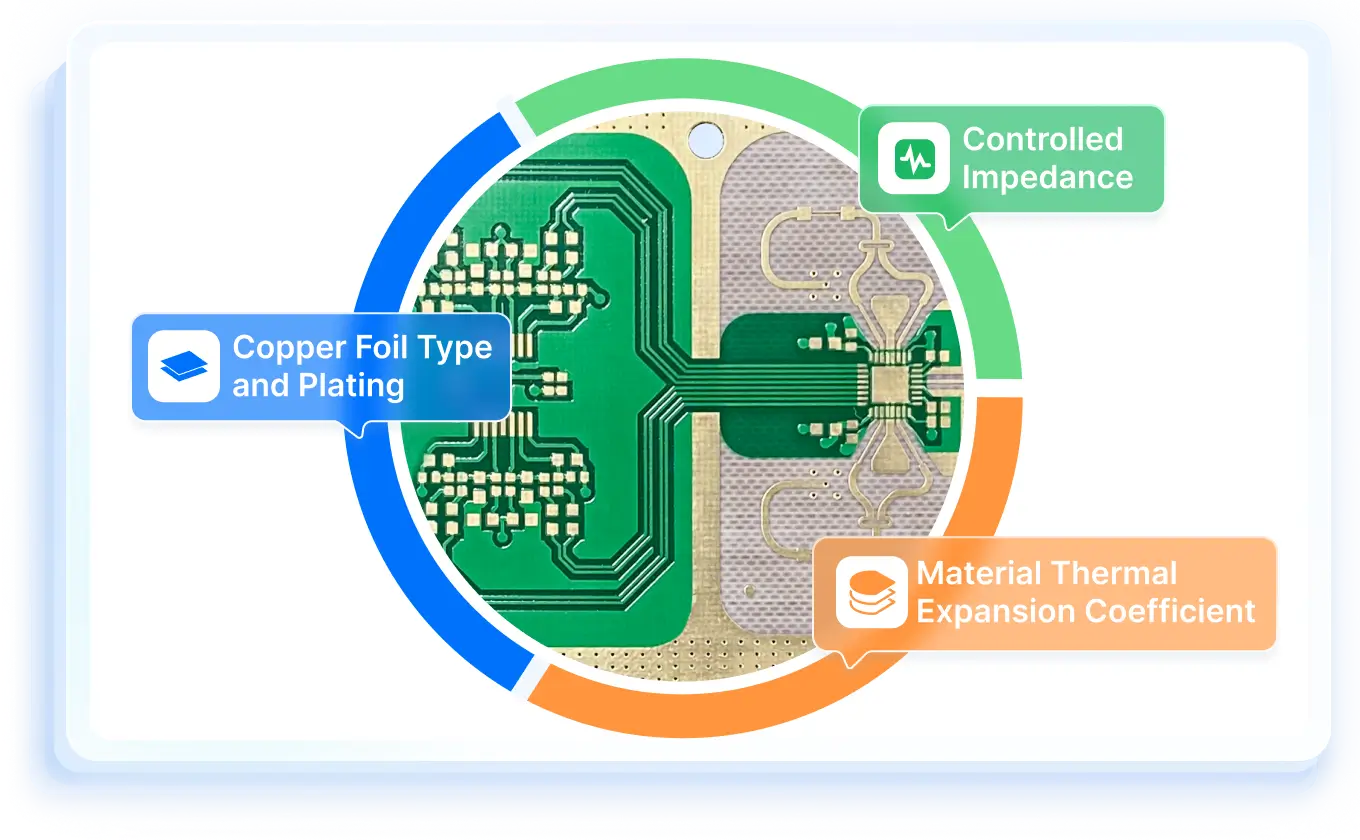
- Trace width, spacing, and dielectric properties are used to tune the impedance. Impedance matching should be there for better signal transmission. That's why in RF transmission lines 50Ω, 75Ω, and 100Ω are used.
Material Thermal Expansion Coefficient
Copper Foil Type and Plating
Common Applications of High Frequency PCBs
RF and Microwave Systems
- RF and microwave systems operate in the 3 kHz to 300 GHz range, and high-frequency applications often require specialized materials. Materials like Rogers are therefore used to design RF front-end modules that demand high accuracy and minimal signal distortion.
5G Infrastructure
Satellite Communication
JLCPCB High Frequency PCB Manufacturing Capabilities
Features | Capabilities |
|---|
Minimum Drill | 0.2mm |
Minimnum Track Width and Spacing | 0.10 / 0.10 mm (4 / 4 mil) |
Minimum Dimensions | 3 × 3mm |
Maximum Dimensions | 590*438mm |
Layer | 2-layer |
Thickness | 0.65mm,0.9mm,1.65mm |
Copper Weight | 1oz |
Soldermask Color | Green |
Silkscreen | White |
Surface finish | ENIG |
Gold Thickness | 1U", 2U" |
UL Certification | JLC-5(Rogers) JLC-6(PTFE ZYF255DA and ZYF265D) JLC-7(PTFE ZYF300CA-C and ZYF300CA-P) |
Why Choose JLCPCB as Your High Frequency Manufacturer?
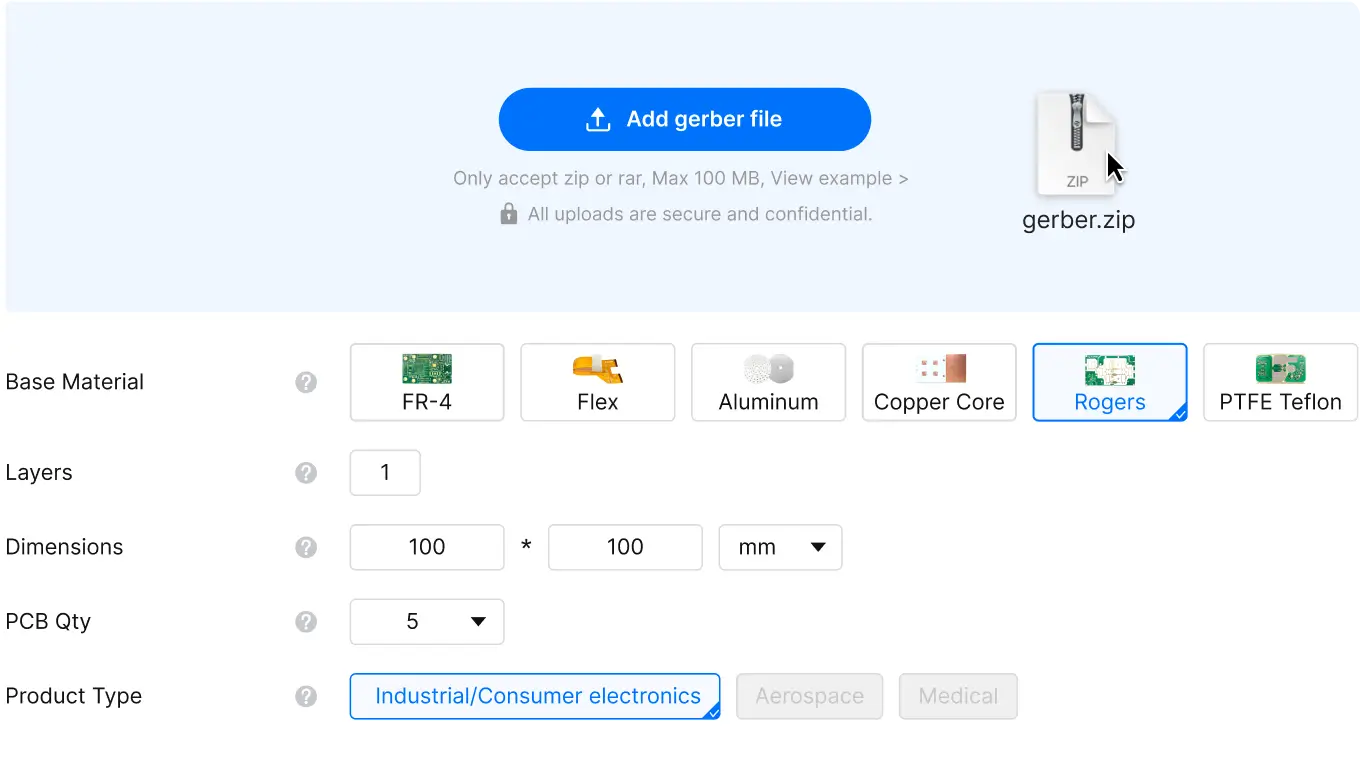
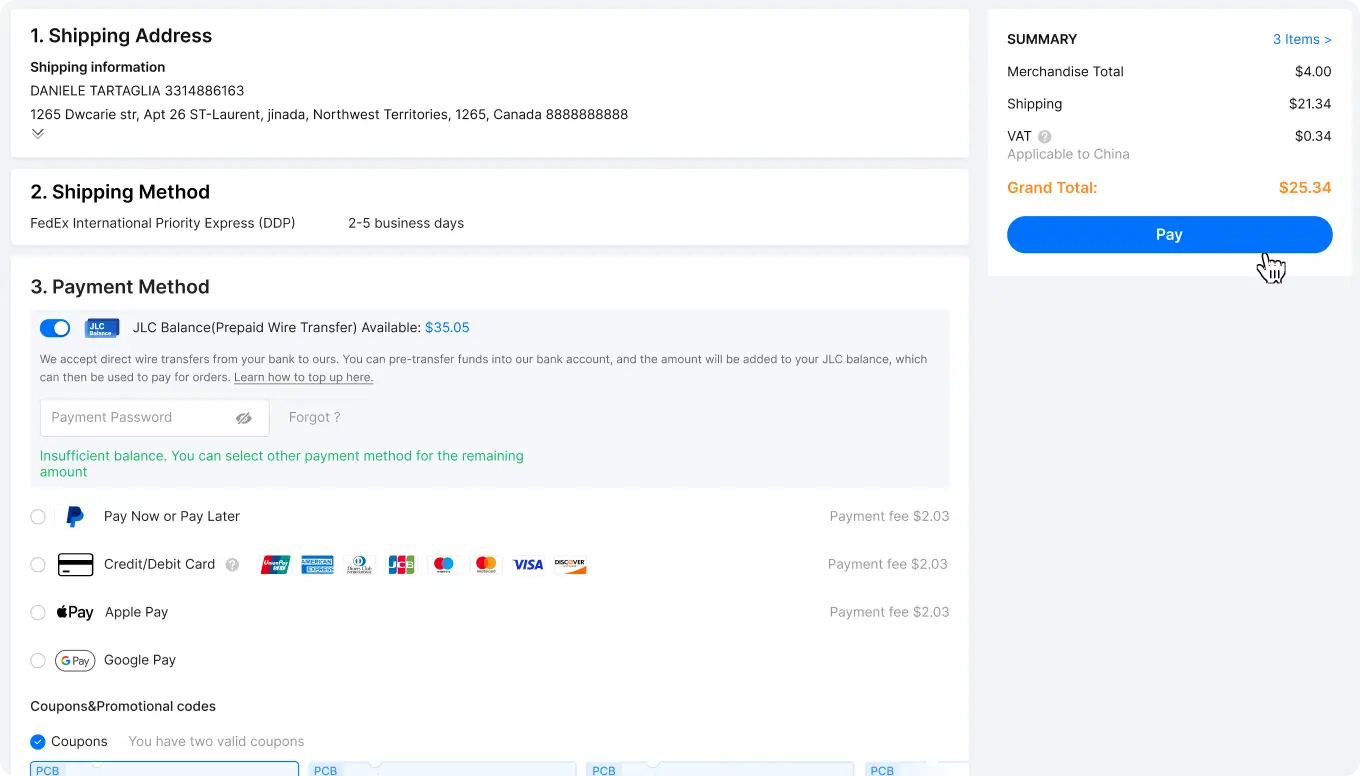
How to Order JLCPCB High Frequency PCBs in 3 Easy Steps
Frequently Asked Questions About High Frequency PCB
What frequency range do high-frequency PCBs cover?
Why is Rogers material preferred over FR4 for high-frequency PCBs?
Can high-frequency PCBs be multi-layered?
What are the challenges in manufacturing HF PCBs?
Explore Helpful Resources on High Frequency PCBs
Unlock More Possibilities with JLCPCB Solutions
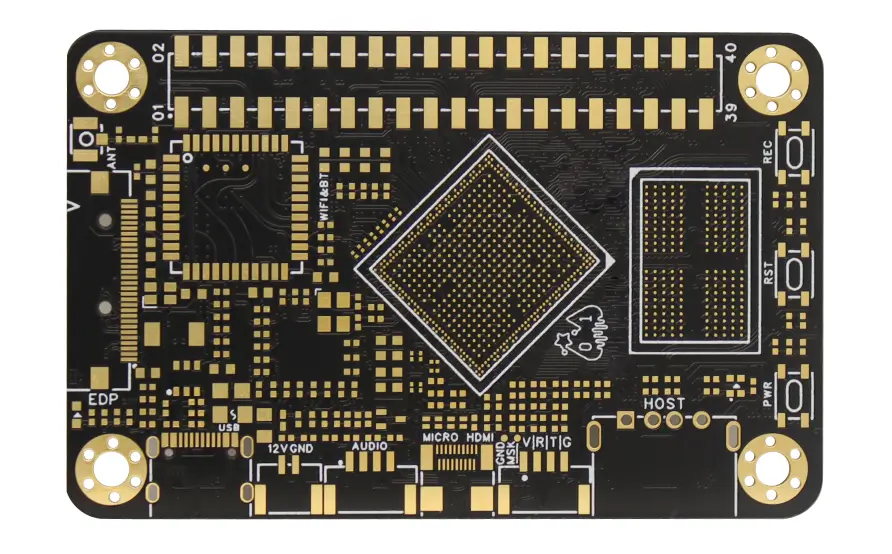
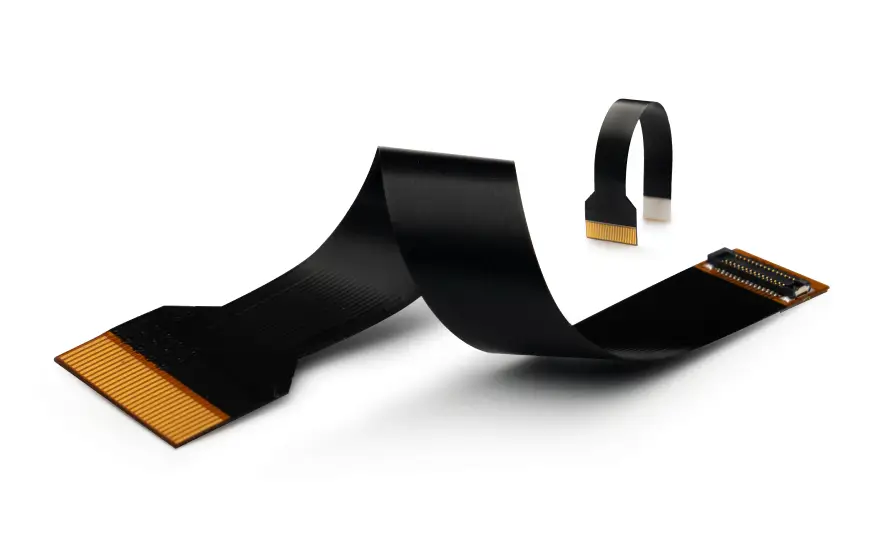
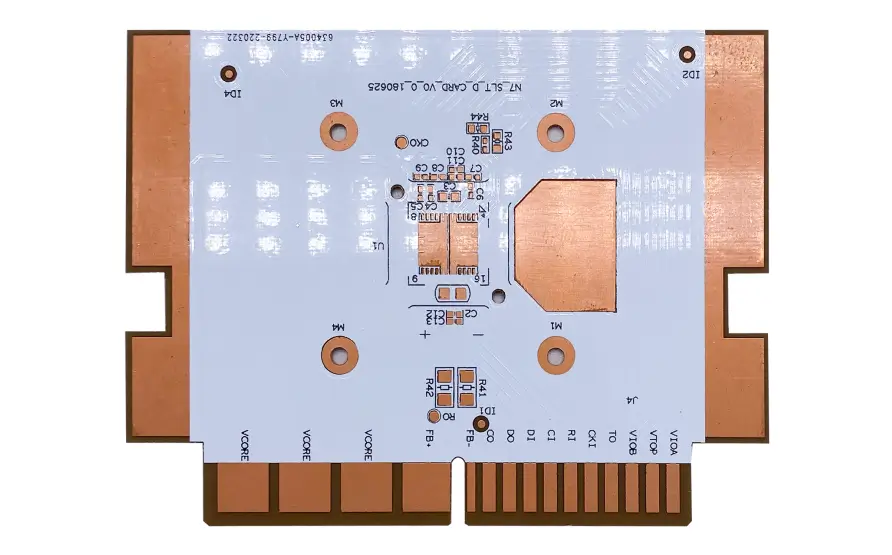

 JLCPCB High Frequency PCBs – Unmatched Signal Integrity for High-Speed Performance.
Get Instant Quote
JLCPCB High Frequency PCBs – Unmatched Signal Integrity for High-Speed Performance.
Get Instant Quote