Conformal Coating in PCB Technology: Benefits, Challenges, and Future Developments
10 min
- What is Conformal Coating?
- Types of Conformal Coating
- Conformal Coating Selection by Application
- Why Conformal Coating is Essential
- Conformal Coating Application Methods in PCB Assembly
- Inspection and Rework of Conformal Coating on PCBs
- Key Factors to Consider When Selecting a Conformal Coating
- Challenges and Solutions in Conformal Coating
- Future Development of Conformal Coating
- FAQ about Conformal Coating
- Conclusion: Conformal Coating for PCB Protection

If you're searching for conformal coating, you're likely looking for a reliable way to protect your PCB from moisture, dust, chemicals, or harsh environments. Choosing the right coating directly affects product reliability, performance, and lifespan.
In this guide, you'll learn what conformal coating is, the main types available, and how to select the best option for your application. We'll also cover key benefits, application methods (manual, automated, and selective), as well as inspection, rework, and common challenges—giving you a complete, practical overview to make confident decisions.
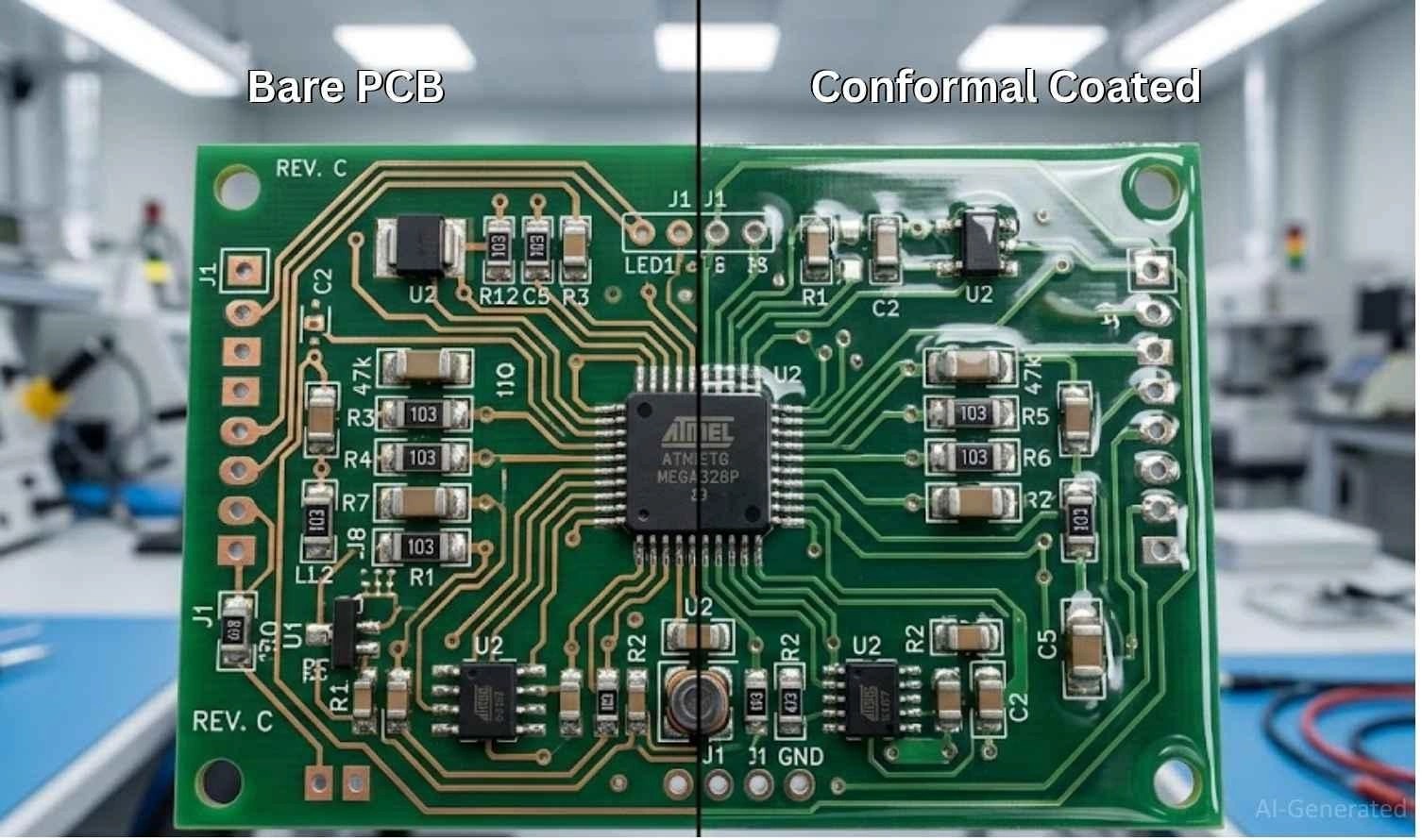
What is Conformal Coating?
Conformal coating is a specially formulated thin polymeric film—typically ranging from 25 to 75 microns—applied to Printed Circuit Board Assemblies (PCBAs) to protect electronic components from environmental damage. Unlike a standard enclosure, this "breathable" layer conforms to the irregular landscape of the board, providing a protective barrier without adding significant weight or volume.
Types of Conformal Coating
Conformal coatings come in various types, each with its unique characteristics and benefits. The most common types of conformal coating include:
| Coating Type | Key Feature | Best For |
|---|---|---|
| Acrylic (AR) | Easy to apply and rework; fast drying | General consumer electronics, testing prototypes |
| Silicone (SR) | Superior heat & moisture resistance; flexible | Automotive, outdoor lighting, high-temp industrial |
| Polyurethane (UR) | Excellent chemical & abrasion resistance | Aerospace, military, and fuel-exposed environments |
| UV-Curable (UV) | Ultra-fast curing (seconds); high productivity | High-volume manufacturing (Smartphones, EV electronics) |
| Epoxy (ER) | Extreme hardness and moisture barrier | Potting-like protection for harsh/submerged environments |
| Parylene (XY) | Ultra-thin, uniform vapor-deposited layer | Medical implants, space-grade sensors, MEMS |
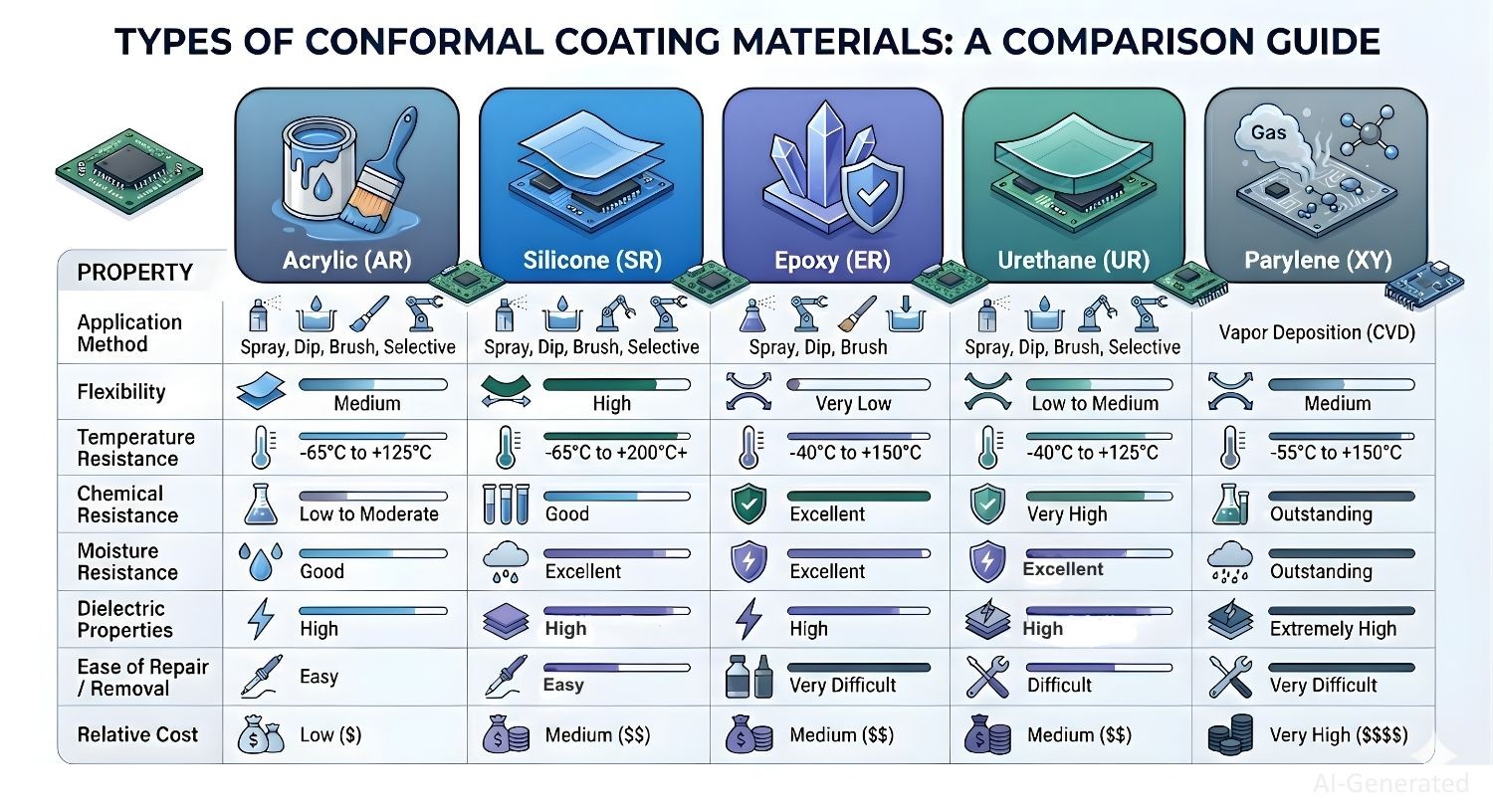
Acrylic (AR): Acrylic conformal coating is a popular choice due to its ease of application, low cost, and ability to provide good moisture protection. It is also easy to repair and remove, making it an ideal choice for applications that require frequent maintenance. However, it has limited chemical and solvent resistance.
Silicone (SR): Silicone conformal coating is a flexible and durable coating that can withstand extreme temperatures and harsh environments. It provides excellent moisture and chemical resistance, making it suitable for use in industrial and automotive applications.
Epoxy (ER): Epoxy conformal coating is a tough and durable coating that provides excellent chemical and mechanical protection. It is also resistant to solvents, making it ideal for use in harsh environments where chemical exposure is common. However, it is difficult to remove and has limited reworkability.
Polyurethane (UR): Urethane conformal coating is a high-performance coating that provides excellent protection against moisture, abrasion, and chemical exposure. It is also resistant to high temperatures, making it ideal for use in aerospace and high-precision applications.
Parylene (XY): Parylene conformal coating is a unique coating that is applied through a vacuum deposition process. It provides excellent moisture and chemical resistance, as well as good electrical insulation properties. It is also a good choice for applications that require a thin coating with no pinholes or voids. But it involves higher cost and complex processing.
Conformal Coating Selection by Application
| Application Scenario | Recommended Coating Type | Key Reasons |
|---|---|---|
| Consumer electronics | Acrylic | Low cost, easy application, and simple rework or removal |
| Automotive electronics | Silicone | Excellent thermal stability, vibration resistance, and moisture protection |
| Industrial control systems | Urethane | Strong chemical resistance and abrasion protection |
| Aerospace & defense | Parylene | Ultra-thin, pinhole-free coverage with superior dielectric properties |
| Medical electronics | Parylene | Biocompatibility, uniform coating, and high reliability |
| High-voltage PCB designs | Epoxy | Strong mechanical strength and electrical insulation |
Why Conformal Coating is Essential
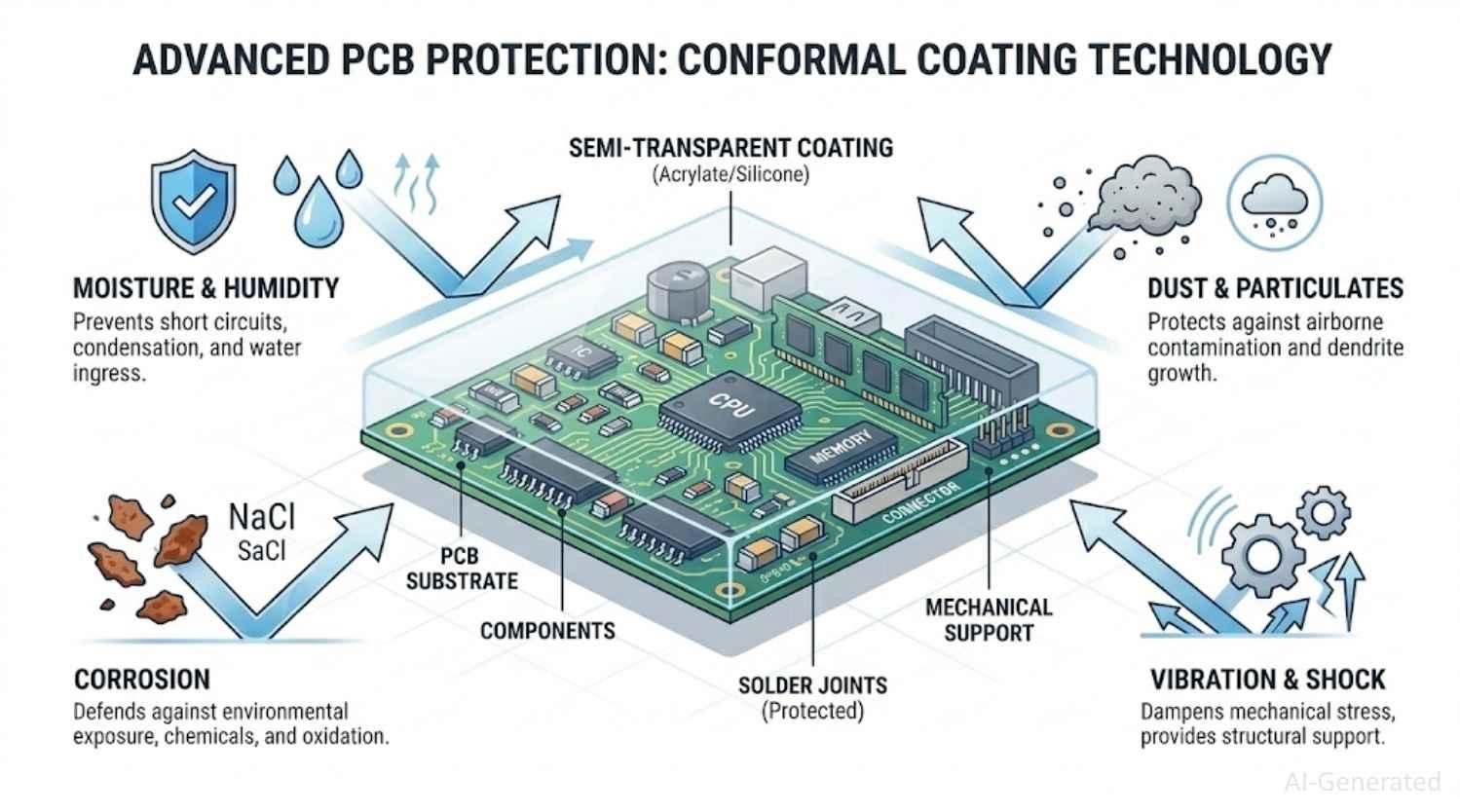
Conformal coating enhances PCB reliability by providing protection against environmental, mechanical, and electrical stresses.
Key Benefits of Conformal Coating
Pros
- Moisture and contamination protection: Prevents water, dust, salt spray, and chemical vapors from causing corrosion or short circuits.
- Mechanical protection: Reduces damage from vibration, shock, and abrasion in demanding environments.
- Improved electrical insulation: Increases dielectric strength and reduces the risk of electrical leakage and interference.
- Extended service life: Minimizes failure rates and maintenance needs, improving overall product lifespan and reliability.
Conformal Coating Application Methods in PCB Assembly
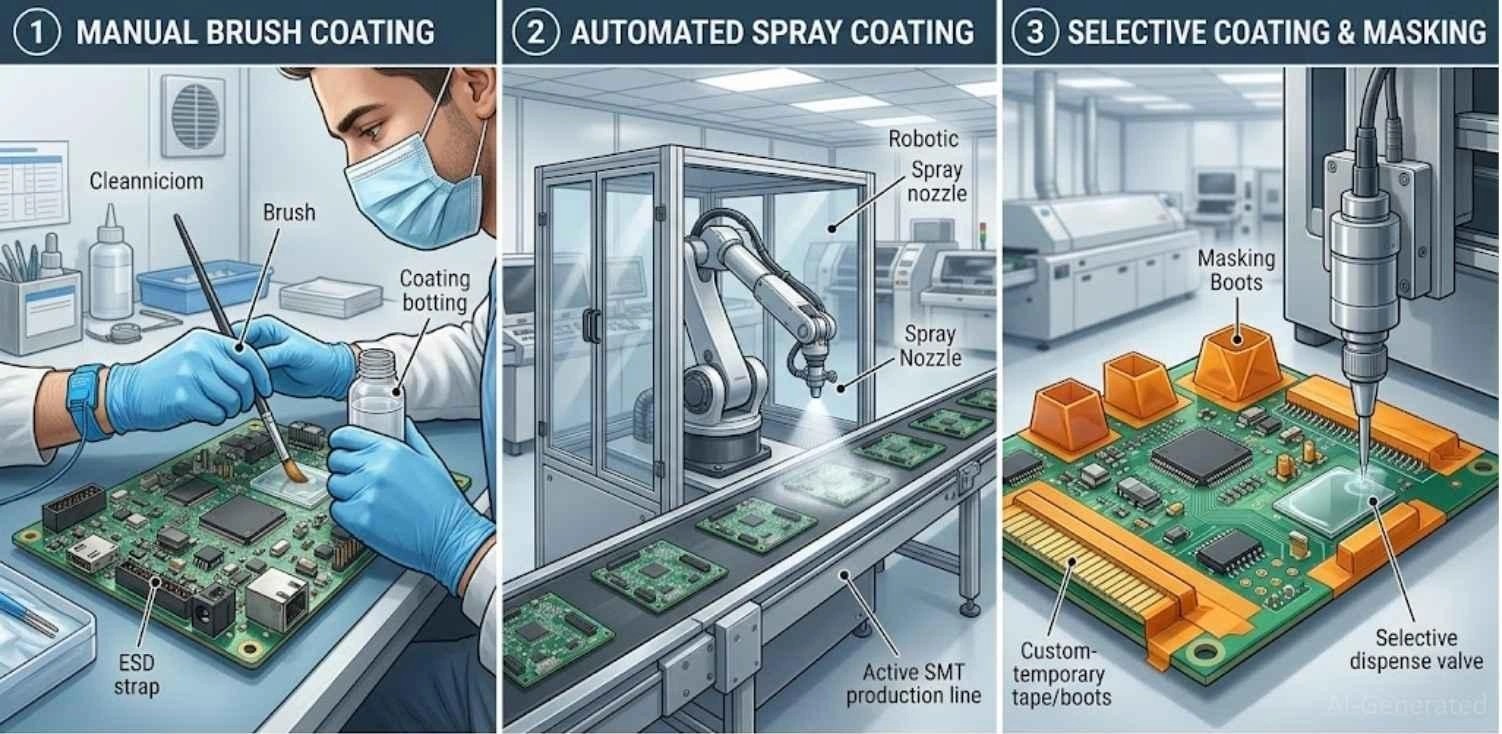
Conformal coating application methods vary depending on production volume, PCB complexity, and reliability requirements. In PCB assembly, coatings can be applied manually, automatically, or selectively to ensure consistent protection without compromising functionality.
Manual Conformal Coating (Brush & Spray)
Manual conformal coating is typically applied using a brush or manual spray gun and is most suitable for PCB prototypes, low-volume production, rework, or repair. This method offers flexible control over coating areas and thickness but relies heavily on operator skill, making consistency difficult for complex or high-density PCB assemblies.
Automated Conformal Coating (Spray & Dip Coating)
Automated conformal coating uses programmable equipment—such as spray coating or dip coating systems—to achieve uniform thickness and repeatable coverage across large production batches. This method is widely used in mass PCB manufacturing, where process stability, throughput, and coating consistency are critical for long-term product reliability.
Selective Conformal Coating for High-Density PCBs
Selective conformal coating applies protection only to designated areas of the PCB while avoiding connectors, test points, switches, and heat-sensitive components. Using robotic selective coating systems or masking techniques, this approach is ideal for high-density, mixed-technology PCBs where precise coating control is essential.
Inspection and Rework of Conformal Coating on PCBs
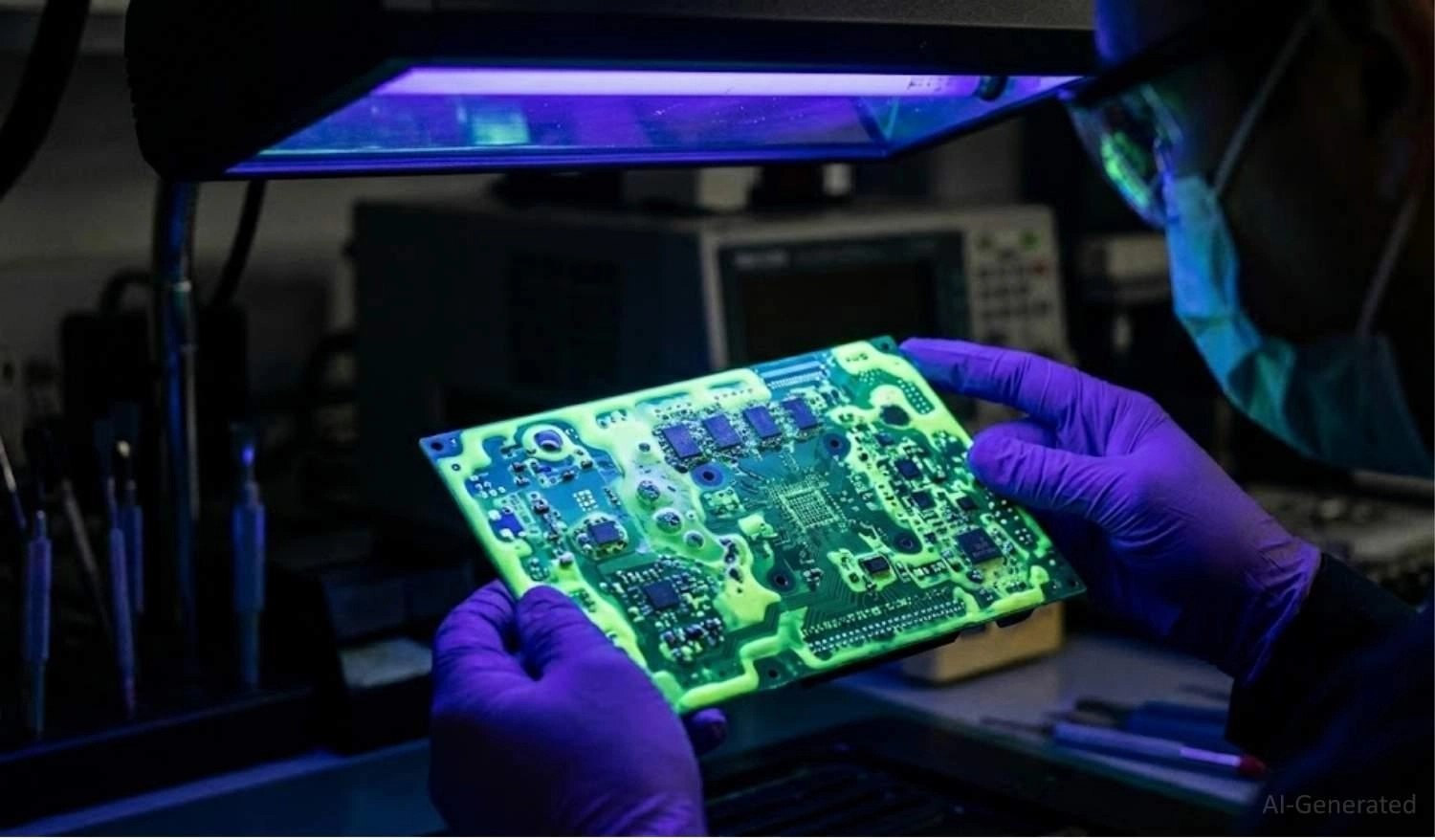
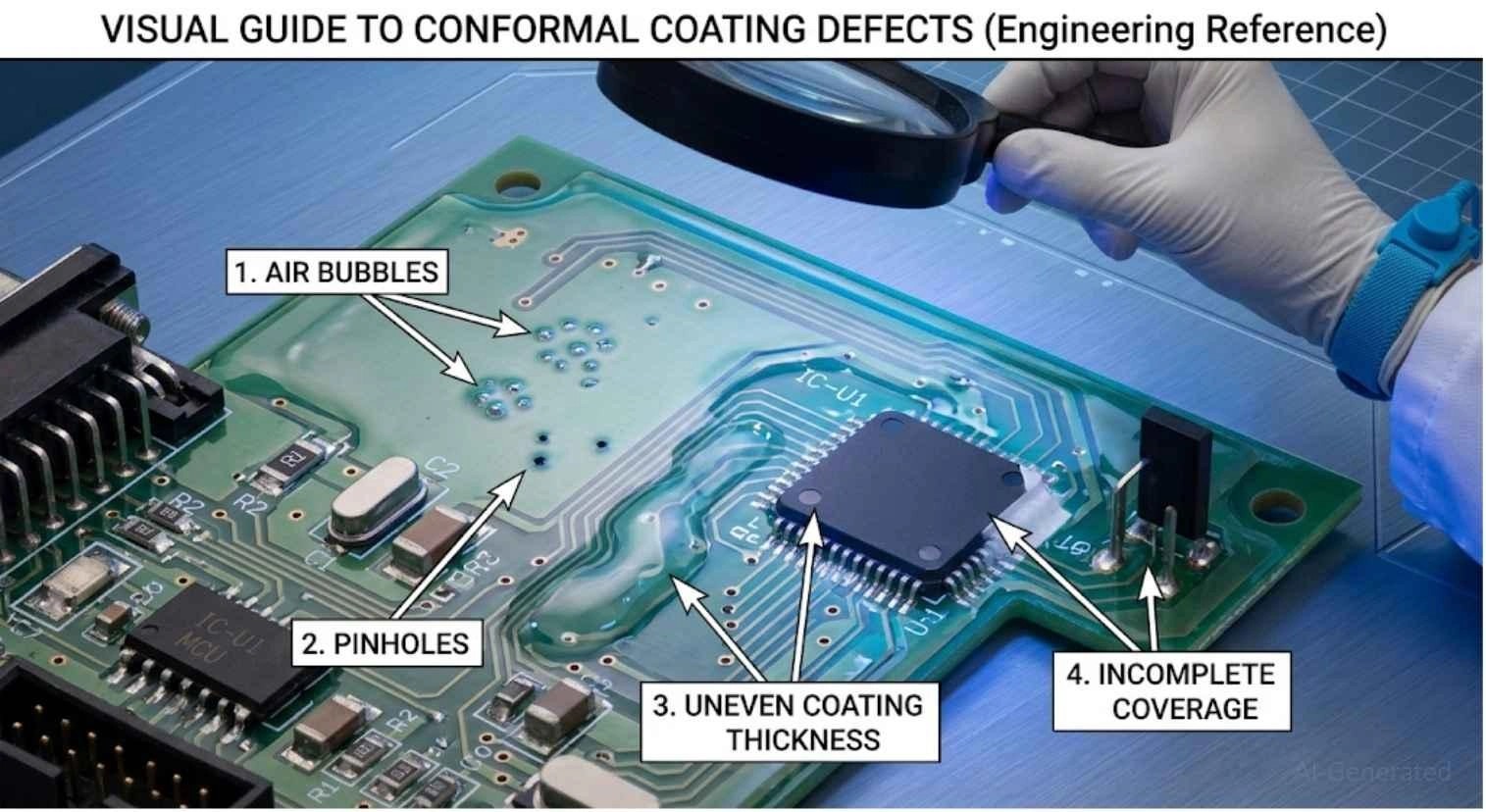
Inspection and rework are essential steps in the conformal coating process to ensure full coverage, proper thickness, and defect-free protection. Common inspection methods include visual inspection under UV light, automated optical inspection (AOI), and thickness measurement to detect issues such as bubbles, voids, pinholes, or insufficient coverage.
When defects are identified, localized rework or coating removal may be performed to restore protection without damaging PCB components or solder joints, ensuring compliance with reliability and quality standards.
Key Factors to Consider When Selecting a Conformal Coating
Selecting the right conformal coating requires balancing environmental protection, electrical performance, and manufacturing constraints.
- Environmental conditions: Consider exposure to moisture, humidity, temperature extremes, and chemicals. Harsh environments require coatings with strong thermal and chemical resistance (e.g., silicone or urethane).
- Electrical requirements: Ensure adequate dielectric strength and insulation performance, especially for high-voltage or high-frequency designs.
- Reworkability: Some coatings (e.g., acrylic) are easy to remove and repair, while others (e.g., epoxy) are difficult to rework. This directly impacts maintenance and lifecycle cost.
- Coating thickness and coverage: Proper thickness is critical—too thin reduces protection, while too thick may interfere with connectors, test points, or fine-pitch components.
- Application and curing process: Consider whether the coating supports manual, automated, or selective application, as well as curing methods (UV, thermal, or moisture cure) that affect production efficiency.
- PCB design constraints: Identify keep-out areas such as connectors, switches, and test points to avoid coating interference during assembly and testing.
- Cost and supply availability: Balance material cost, processing complexity, and supply chain stability to meet project timelines and budget.
Challenges and Solutions in Conformal Coating
While conformal coating provides several benefits, there are also challenges that come with applying and inspecting the coating.
- Application consistency: The application process can be challenging due to the need for consistent and uniform coverage, especially in complex PCB designs. Solutions include using automated application methods and ensuring that the coating is applied in a controlled environment to prevent contamination.
- Inspection accuracy: The inspection and repair process can be challenging due to the need for accurate and consistent inspection of the coating. Solutions include using specialized inspection equipment and developing standardized inspection procedures.
- Standardization gaps: To overcome the challenges associated with conformal coating, it is essential to develop standardized procedures for application, inspection, and repair. It is also important to use specialized equipment and tools to ensure consistent and accurate application and inspection of the coating.
Future Development of Conformal Coating
The future of conformal coating in PCB technology is promising, with several advancements in materials and formulations and new technologies that may impact the field.
Advancements in materials and formulations: New materials and formulations are being developed that provide better protection against moisture, abrasion, and chemical exposure. These materials may also be more environmentally friendly and cost-effective than existing materials.
Advancements in application methods: New application methods are being developed that provide better control over the thickness and coverage of the coating. These methods may also be more automated and efficient than existing methods.
Impact of new technologies on conformal coating: New technologies, such as nanotechnology and 3D printing, may impact the field of conformal coating by providing new methods for application and new materials with unique properties.
FAQ about Conformal Coating
What is conformal coating?
Conformal coating is a thin polymeric film (25–75 microns) applied to PCB assemblies to protect electronic components from moisture, dust, chemicals, and environmental damage while adding minimal weight or volume.
What are the main types of conformal coating?
The most common types include Acrylic (AR), Silicone (SR), Polyurethane (UR), UV-Curable (UV), Epoxy (ER), and Parylene (XY). Each offers different balances of moisture resistance, chemical protection, temperature tolerance, and reworkability.
How is conformal coating applied to PCBs?
Conformal coating can be applied manually (brush or spray), automatically (programmable spray or dip systems), or selectively (robotic systems that target only specific areas while avoiding connectors and test points). The choice depends on production volume and board complexity.
What factors should I consider when selecting a conformal coating?
Key factors include environmental conditions (moisture, temperature, chemicals), electrical requirements (dielectric strength), reworkability, coating thickness, application/curing methods, PCB design constraints (keep-out areas), and cost/supply availability.
What are common challenges in conformal coating application?
Common challenges include achieving uniform coverage on complex board designs, accurate defect inspection, and maintaining consistent application quality. These can be addressed through automated equipment, UV inspection, standardized procedures, and controlled environments.
How is conformal coating inspected for defects?
Inspection methods include visual inspection under UV light, automated optical inspection (AOI), and coating thickness measurement. These techniques detect common defects such as bubbles, voids, pinholes, and insufficient coverage.
Conclusion: Conformal Coating for PCB Protection
Conformal coating provides a thin protective layer that helps PCBs withstand moisture, chemicals, dust, temperature changes, and other environmental stresses. The right coating type and application method depend on the board’s operating environment, electrical requirements, rework needs, and production process.
For projects that require reliable conformal coating as part of PCB assembly, choosing a manufacturer with controlled application, inspection, and rework processes can help ensure consistent protection and long-term PCB reliability.
Keep Learning
Choosing the Right Surface Finish for Your PCB: An Overview of HASL, ENIG, OSP, Immersion Tin and Immersion Silver
Key Takeaways Lead-Free HASL: Best low-cost, RoHS-compliant finish for general PCB builds. ENIG: Superior flatness and 12+ month shelf life for fine-pitch BGAs. OSP: Ultra-flat, lowest-cost option for high-volume SMT (3–6 month shelf life). Immersion Silver: Ideal for high-frequency RF by eliminating nickel signal loss. Immersion Tin: Best for press-fit connectors and fine-pitch assembly. Printed Circuit Boards (PCBs) are essential components in the manufacturing of electronic devices ranging from sma......
Conformal Coating in PCB Technology: Benefits, Challenges, and Future Developments
If you're searching for conformal coating, you're likely looking for a reliable way to protect your PCB from moisture, dust, chemicals, or harsh environments. Choosing the right coating directly affects product reliability, performance, and lifespan. In this guide, you'll learn what conformal coating is, the main types available, and how to select the best option for your application. We'll also cover key benefits, application methods (manual, automated, and selective), as well as inspection, rework, ......
PCB Gold Fingers: Why They Matter and How to Design Them
Key Takeaways PCB gold fingers provide reliable electrical and mechanical contact for PCBs that connect to external connectors or card slots. ENIG is suitable for general contact applications, while electroplated hard gold offers higher wear resistance for repeated insertion and removal. Gold fingers should remain fully exposed, with solder mask and silkscreen kept away from the contact area. Proper chamfering and gold finger orientation are essential to ensure smooth insertion and prevent damage duri......
Comparing HASL and ENIG Surface Finishes for PCBs
Selecting the right surface finish for a printed circuit board (PCB) is crucial to ensuring its performance, reliability, and longevity. Two of the most commonly used finishes are Hot Air Solder Leveling (HASL) and Electroless Nickel Immersion Gold (ENIG). Each of these surface finishes offers distinct advantages and disadvantages, making them suitable for different applications. In this article, we will compare HASL and ENIG to help you determine which finish is best suited for your PCB project. What......
Avoid PCB Assembly Failures: Mastering Solder Mask Expansion Rules and Best Practices
Solder mask protects copper traces and pads from oxidation, bridges, and contamination during assembly. Incorrect solder mask expansion—the clearance around features where mask is pulled back—leads to defects like shorts or exposed copper. Engineers must set expansion values precisely to ensure reliable soldering and long-term performance. Introduction: Why Solder Mask Expansion is Critical for PCB Reliability Understanding Solder Mask and Expansion Basics Solder mask is a polymer layer applied over t......
The Ultimate Guide to OSP Surface Finish in PCB Manufacturing: Advantages, Process, and Selection
Key Takeaways OSP (Organic Solderability Preservative) is a water-based, cost-effective PCB surface finish that deposits a 0.2-0.5μm organic film directly onto copper pads. Unlike metallic finishes such as ENIG or HASL, OSP provides superior surface flatness for fine-pitch SMT components at no extra process charge, making it ideal for high-density consumer electronics. However, OSP requires controlled handling and a limited assembly window (24-48 hours after opening vacuum packaging). It is best suite......