Manual Pick and Place: A Cost-Effective SMT Alternative
11 min
- What Is Manual Pick and Place and When to Use It?
- Common Problems in Manual Pick and Place Assembly
- Manual Setup vs Automated SMT Pick and Place Machine
- Optimizing Your Workspace for Faster Pick and Place
- How SMT Stencil Quality Impacts Placement Accuracy
- Stencil Alignment Techniques for Manual Setup
- Recommended Setup for Professional Manual Pick and Place
- Frequently Asked Questions (FAQs) About Manual Pick and Place
- Conclusion: Manual Pick and Place as a Practical SMT Alternative
Key Takeaways for Manual Pick and Place
Manual pick and place uses a hand-held vacuum wand and positioning stage to place SMD components by hand, replacing tweezers in prototype assembly.
It is most cost-effective for production runs of 1 to 50 boards, where an automated SMT pick-and-place machine cannot justify its $10,000+ setup cost.
A complete manual workstation runs $300 to $500, compared with $10,000+ for an entry-level automated pick and place machine.
SMT stencil quality is the single largest driver of manual placement accuracy: uniform paste deposits stabilize components and prevent shift during reflow.
The four most common defects — nozzle release issues, paste smearing, placement fatigue, and tombstoning — all trace back to either vacuum tuning or paste deposition control.
A precision laser-cut stencil with electropolished apertures and nano-coating gives manual workflows near-industrial repeatability on 0603 and 0402 components.
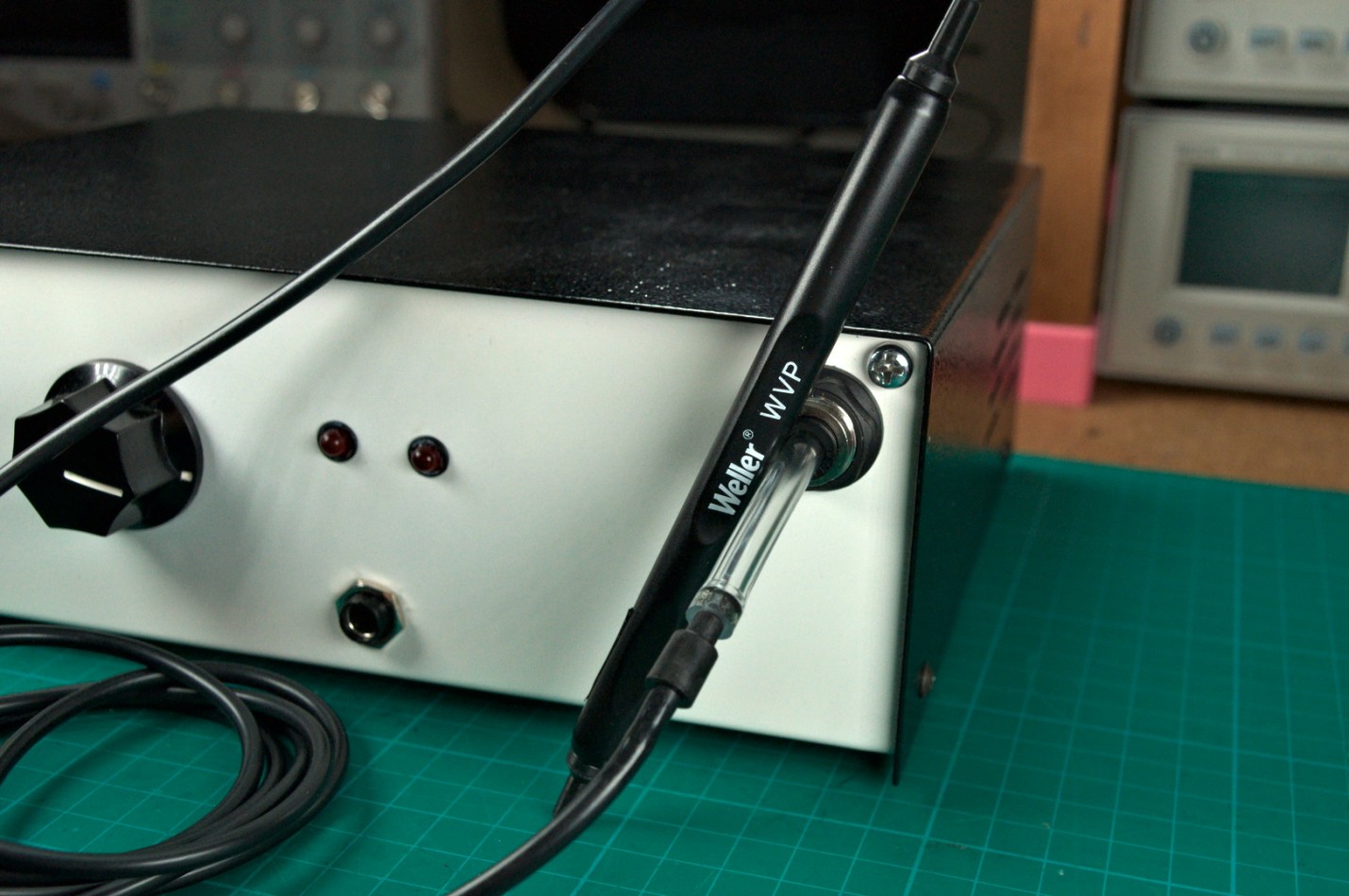
The prototype assembly shows that there is a lack of productivity in the SMT process. Multiple errors in the alignment and placement cycle are due to the tweezers. The investment and installation cost of pick and place machines used in industry is high.
You may need to use manual pick and place if you're creating a small batch of items. Pick and place method – assisted placement tools for increased precision and repeatability. If you aren't looking for advanced automation, a structured manual configuration can be used to achieve good results.
Quality of placement is determined by optimized ergonomics and the use of a high-precision SMT stencil. Components during pick and place are stabilized during this process by the uniform deposition of paste. The near-industrial accuracy of manual pick and place processes is low cost and has shorter iteration time.
What Is Manual Pick and Place and When to Use It?
Manual pick and place is a component placement technique in SMT assembly, performed with hand-operated tools rather than automated machinery. The technique relies on a vacuum wand and positioning stage for alignment, with visual feedback and mechanical stability on the PCB surface being critical to accurate placement. In fine-pitch and dense layouts, this placement accuracy depends directly on operator skill and control.
Manual pick and place is well-suited to low-volume production and engineering prototypes that undergo frequent design revisions. It handles most prototyping scenarios, from 1 to 50 boards, effectively. For complex layouts, each component can be inspected and corrected in place during the assembly process.
Automated pick-and-place machines are better suited to high-throughput, high-volume production. Manual pick and place, by contrast, prioritizes flexibility and direct operator control, making it the more cost-effective choice for small production runs and iterative hardware development.
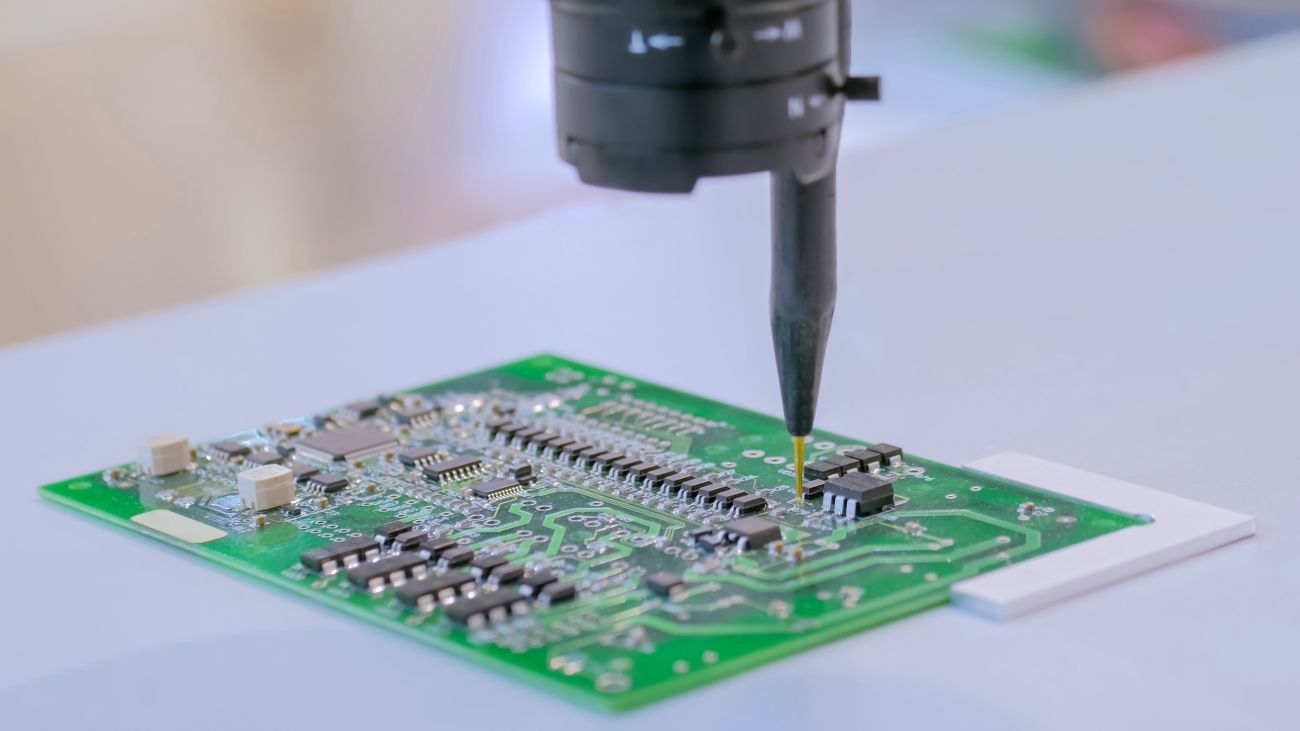
Common Problems in Manual Pick and Place Assembly
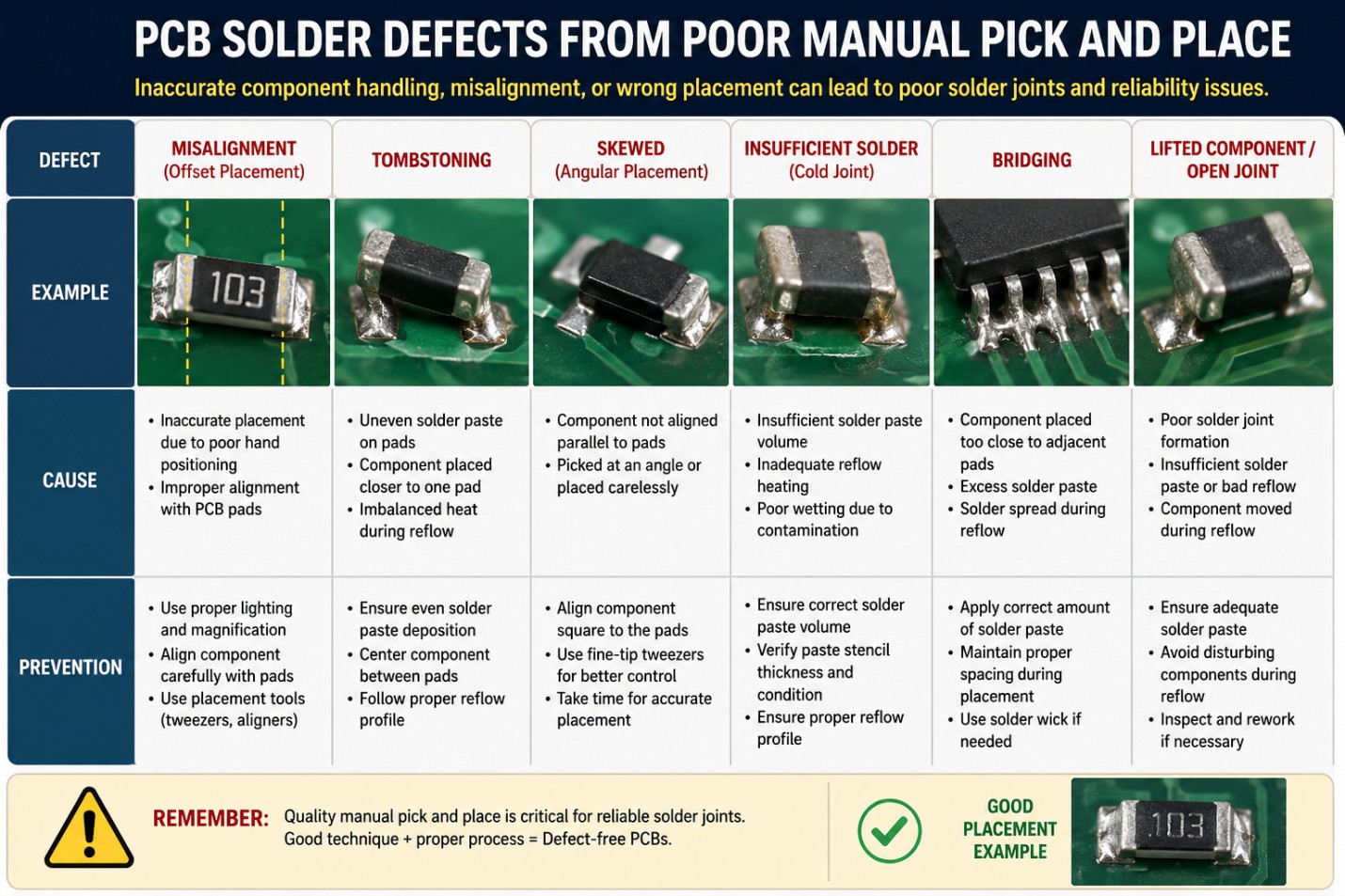
When process parameters such as vacuum pressure, paste viscosity, and alignment precision are not properly controlled, repetitive placement defects become common in manual SMT assembly. The process depends on consistent vacuum force and stable solder paste behavior. When either tool performance or material properties fluctuate, both placement quality and manufacturing cost predictability suffer. Here are the most common defects that can occur:
- Nozzle Release Issues: When the vacuum force at the nozzle tip is too high, components fail to release cleanly onto the solder paste pads. Without a proper balance between suction pressure and paste tack, components either fail to transfer correctly or land with positional errors.
- Paste Smearing and Bridging: Misaligned stencil printing allows solder paste to spread between adjacent pads. Repeated nozzle contact with wet paste further disrupts deposit geometry, which leads to bridging defects during reflow.
- Placement Fatigue: Extended assembly sessions inevitably lead to operator fatigue. The resulting eye strain and hand tremor degrade alignment accuracy, particularly for fine-pitch components. As batch size and session length increase, placement consistency declines significantly.
- Component Tombstoning: Tombstoning is a reflow defect in which a component stands vertically on one end rather than lying flat. It is caused by unequal solder paste volumes on opposing pads. During reflow, the pad with more paste generates a stronger surface tension force, which lifts one end of the component and breaks the electrical connection on the other side.
With structured process control, however, these defects can be minimized in manual assembly. High placement accuracy, consistent tool setup, and uniform paste deposition are all achievable with proper technique and workstation organization.
Manual Setup vs Automated SMT Pick and Place Machine
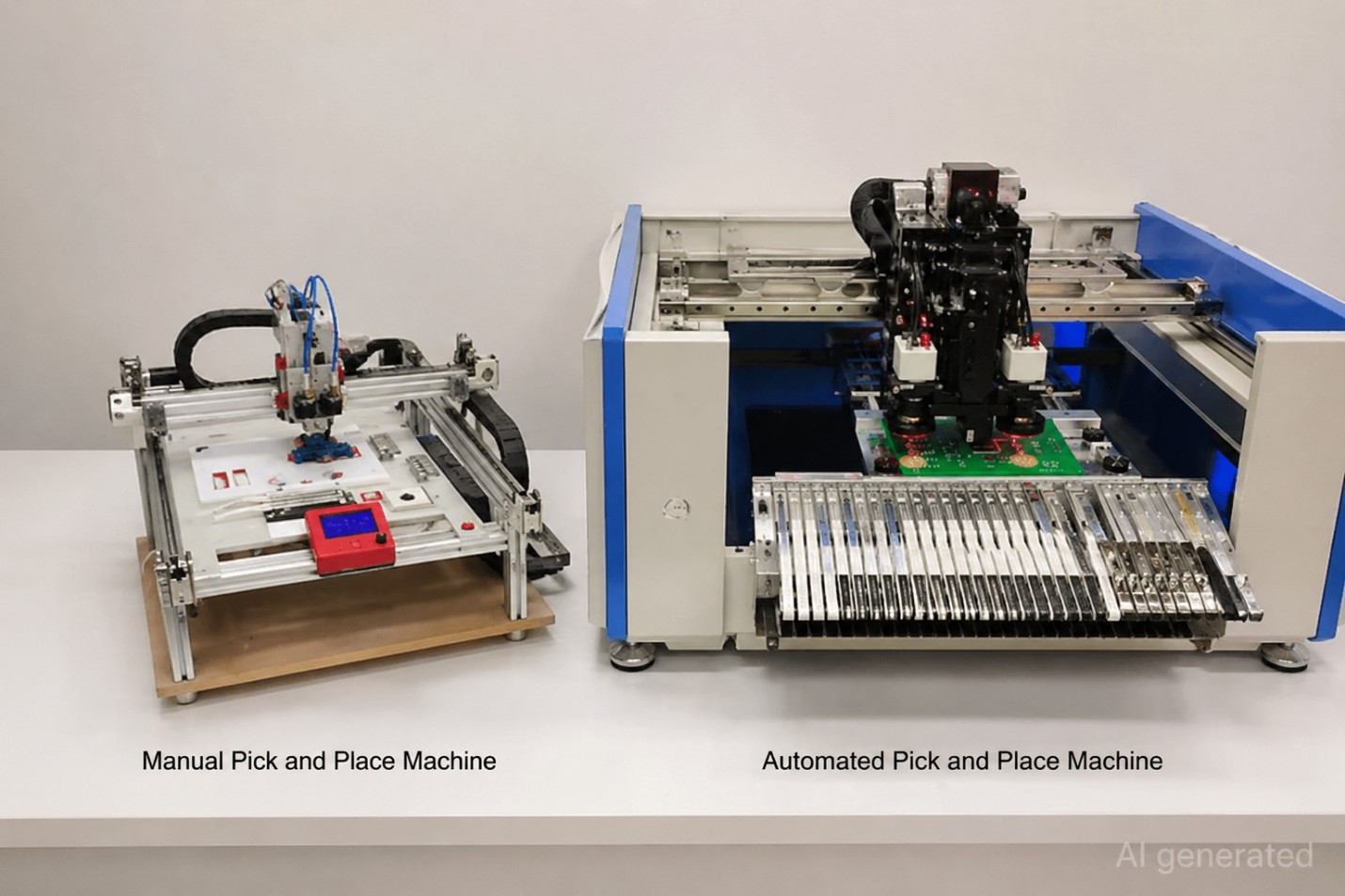
Although automated pick-and-place machines offer significant throughput advantages, their acquisition and setup costs can exceed ten thousand dollars. A professional manual pick-and-place station, by comparison, typically costs between $300 and $500, depending on the equipment and optical accessories included. This substantial cost difference has a direct impact on the economics of prototype and small-lot production.
Setup time also differs considerably between the two methods. Manual pick and place can begin immediately after paste printing, with no programming delays. Automated systems require feeder loading, machine calibration, and programming before the first board can be assembled.
Stencil quality directly affects placement quality by controlling paste deposit consistency. For fine-pitch components, where even small deviations are clearly visible, operator control during placement is essential for fine-tuning alignment and catching errors early.
Under stable working conditions, manual pick and place can achieve accurate placement of 0603 and 0402 components. High-quality stencil fabrication ensures placement repeatability across production runs and reduces batch-to-batch variation in paste deposit position.
Optimizing Your Workspace for Faster Pick and Place
An effective workstation configuration directly influences both pick-and-place speed and placement consistency.
Workspace organization is a key factor in manual pick-and-place efficiency. Arranging components in a radial layout around the PCB minimizes hand travel distance between component sources and the placement area, reducing both cycle time and operator fatigue. Clearly defined organization zones further support a smooth, repeatable placement workflow.
Vacuum force must be matched to the tack properties of the solder paste. Excessive suction makes it difficult to release components cleanly onto paste pads and degrades placement accuracy. Balanced vacuum settings improve consistency across component sizes, from small passives to larger ICs. Visual alignment systems, such as digital microscopes, provide the magnification needed for accurate fine-pitch placement.
Digital microscopes help verify correct pad alignment during placement. Components supplied in tape-and-reel format can be accessed quickly in sequence, reducing search time and handling errors. A well-structured pick-and-place setup improves overall throughput and placement consistency.
How SMT Stencil Quality Impacts Placement Accuracy
The SMT stencil is foundational to manual pick-and-place quality because aperture precision directly determines solder paste geometry. When aperture shapes are consistent, and paste is deposited in uniform volumes, components sit more stably on the pads and are less likely to drift during handling.
This is especially critical in fine-pitch designs, where even small variations in paste volume can cause components to shift out of alignment before reflow. Consistent paste volume on each pad makes component seating more predictable and improves overall assembly repeatability.
Long-term stencil performance also depends on material quality. 304 HTA stainless steel maintains stable aperture geometry through repeated use, and laser cutting precision of ±0.003mm makes it suitable for fine-pitch components. Controlled stencil thickness further ensures uniform paste volume across all pads.
Electropolishing smooths the inner aperture walls, reducing paste adhesion and enabling cleaner paste release onto PCB pads. This improves transfer consistency and supports a repeatable placement pattern across multiple production cycles.
Stencil Alignment Techniques for Manual Setup
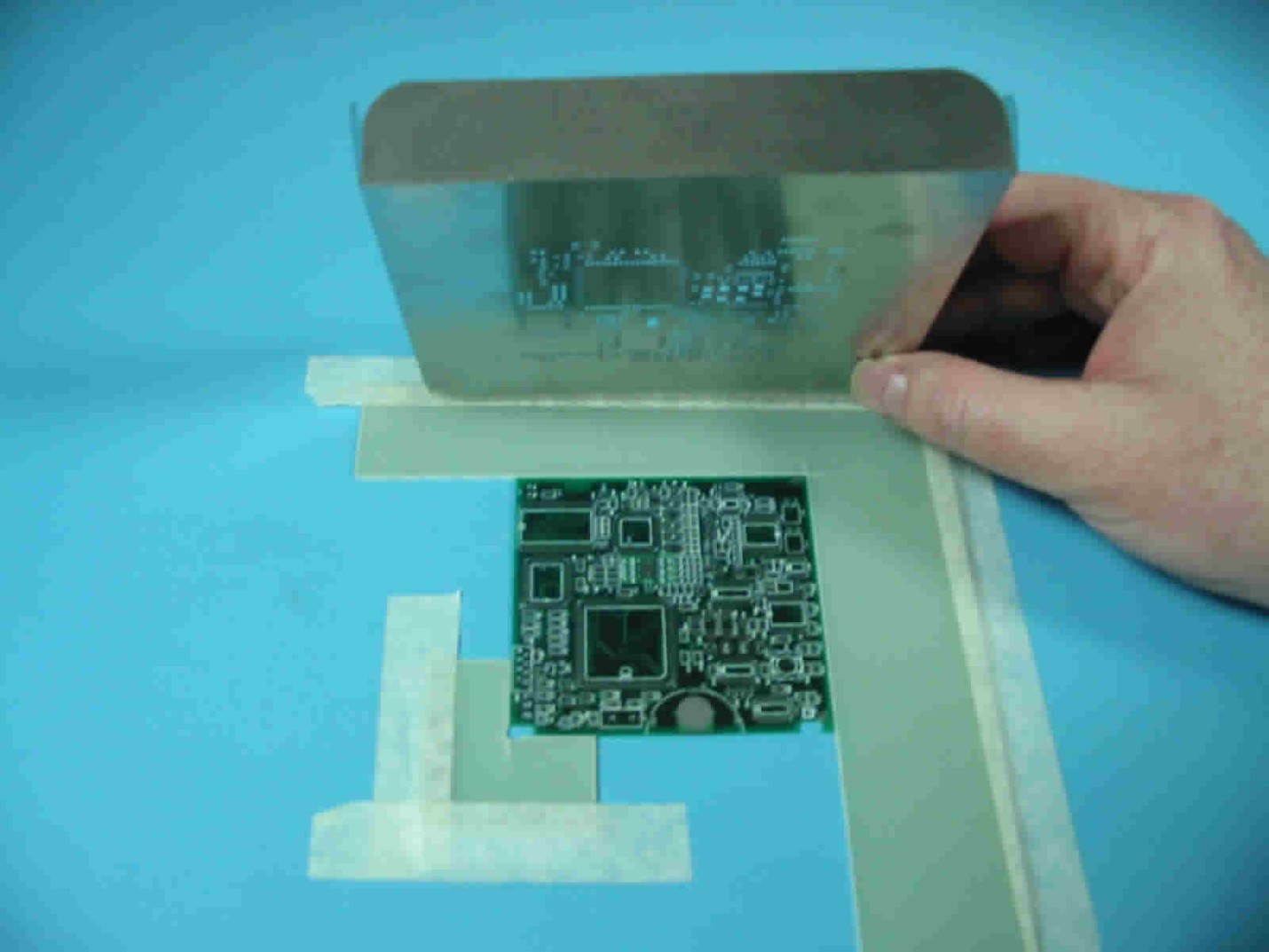
Accurate stencil positioning is essential for consistent paste deposition in manual SMT assembly. The tape-hinge method fixes the stencil in position before printing, providing a repeatable alignment reference that works across multiple boards. Keeping the hinge location consistent from board to board ensures reliable aperture-to-pad registration.
A PCB jig holds the board securely during paste application, while L-shaped edge holders maintain alignment under squeegee pressure. This mechanical stability during preparation directly improves downstream placement accuracy. Consistent stencil positioning reduces paste variation across boards and minimizes batch-to-batch alignment errors, both of which are essential for a reliable manual process.
Recommended Setup for Professional Manual Pick and Place
A professional manual pick-and-place workstation requires the right tooling, fixturing, and material handling setup. JLCPCB high-quality SMT stencils are central to this. Nano-coated stencil surfaces resist paste adhesion and produce cleaner paste release, which improves consistency whether one or multiple operators are assembling boards. The result is a more uniform paste distribution across all boards in a production run.
Entry-level stencils start at $3 per stencil, with standard turnaround times as fast as 12 hours. Global logistics support ensures timely delivery across different regions and production environments.
The ordering process uses a structured file upload system to ensure accuracy. Gerber files define the aperture geometry and layout, enabling precise stencil generation. Instant quoting reduces procurement lead time, and consistent stencil quality throughout ordering cycles is a measurable advantage in manual pick-and-place assembly.
Choose from Framed/Frameless, Electropolishing, Nano-coating, Step-Stencils, SMD Glue Stencil and more. Starting at $3. No MOQ. 12-Hour production.
Get $11 Coupon Now >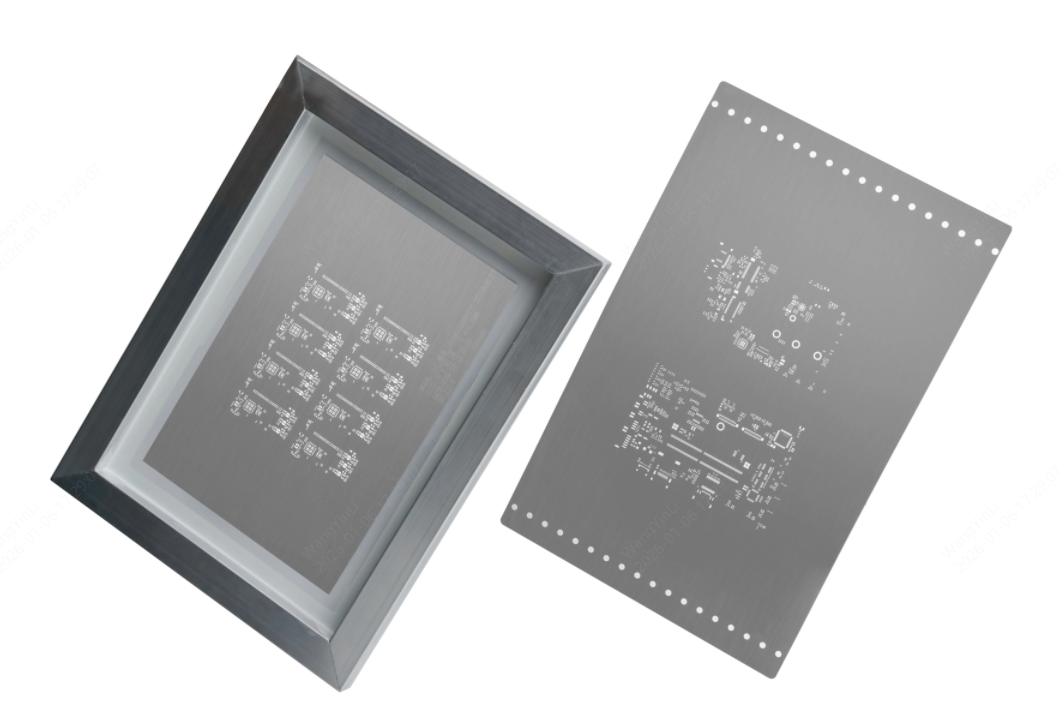
Frequently Asked Questions (FAQs) About Manual Pick and Place
How Does Manual Pick and Place Compare to Pick and Place Machines for Prototyping?
Manual pick and place is ideal for small production runs and rapid prototyping. It can begin immediately after solder paste is applied, with no programming or feeder setup required. Automated machines, by contrast, require configuration before the first board can run. For small batches and iterative development, manual processes reduce turnaround time significantly.
What Vacuum Pressure Works Best for Manual Pick and Place?
Optimal vacuum pressure depends on component size, weight, and surface area. Small passive components require lower suction to release cleanly onto paste pads, while larger IC packages need moderate suction for stable pickup. Matching vacuum force to the component being placed improves both accuracy and nozzle release consistency.
How Does Temperature Affect Solder Paste During Placement?
Ambient temperature directly affects solder paste tack and viscosity, which in turn influences how components seat on the pads. Cold conditions stiffen the paste and reduce print quality, while high temperatures lower viscosity and cause the paste to slump or spread. Maintaining consistent environmental conditions throughout a build is important for stable placement accuracy.
What Causes Components to Shift During Reflow?
Component shift during reflow is caused by unequal paste volumes on opposing pads. As the solder melts, surface tension forces pull the component toward the pad with more paste. Misaligned initial placement compounds this risk. Balanced paste deposition and accurate positioning work together to keep components stable throughout the thermal cycle.
How Does Component Packaging Affect Pick and Place Efficiency?
Component packaging format directly affects both handling speed and placement accuracy. Tape-and-reel packaging supports a consistent, efficient feeding process with minimal handling time between components. Loose components, by contrast, increase handling errors and slow the workflow. Standardizing on organized packaging formats improves overall pick-and-place consistency.
How Accurate Is Manual Pick and Place Compared to Machines?
In a controlled environment with a stable workstation setup, manual pick and place can achieve high placement accuracy. SMT stencil quality governs paste uniformity, while operator technique determines alignment consistency for fine-pitch components. Automated machines offer greater repeatability at scale, but for small batches and prototypes, a well-executed manual process is fully capable of meeting professional assembly standards.
Conclusion: Manual Pick and Place as a Practical SMT Alternative
Manual pick and place is a practical, cost-effective SMT assembly method that delivers the control needed for prototype and small-batch production. When workflows are set up consistently, with proper tooling, fixturing, and process discipline, it produces reliable, repeatable results.
SMT stencil accuracy is central to placement stability and defect reduction. High-quality stencil fabrication eliminates paste-related errors at the source, and when combined with proper technique, manual component placement can be optimized to meet professional assembly standards.
Keep Learning
Low-Temperature Solder Paste: A Practical Sn-Bi Guide
Key Takeaways Sn42Bi58 is the mainstream low-temp alloy and melts at 138 C. Typical reflow peak is 165 to 180 C, about 25 to 30 C above the melt. It protects heat-sensitive components and reduces warpage on large, thin boards. It enables step soldering, because 165 to 180 C will not remelt SAC305 joints. Bismuth joints are more brittle than SAC305, so avoid drop-critical products. Never mix Sn-Bi with leaded (Sn-Pb) solder. Bi, Sn and Pb form a ternary eutectic that melts near 95 C. Some parts and som......
Pin-in-Paste: Through-Hole Reflow With a Stencil
Key Takeaways One Reflow Process: Pin-in-paste combines SMT and through-hole soldering into a single reflow pass, eliminating the need for separate wave, selective, or hand-soldering steps when the board has only a few through-hole components. Paste Volume Is Critical: Solder paste is roughly 50% flux by volume, so you need to print about twice the solder volume the finished joint requires. Stencil design—overprint apertures and step-up zones—makes or breaks the process. Target 75% Barrel Fill: Per IP......
Mixed Technology PCB Assembly: Combining SMT and THT on One Board
As technologies become increasingly more complex, the demand for sophisticated printed circuit boards continues to rise. In the electronics industry, the two most prevalent PCB Assembly technologies are SMT and THT, which differ mainly in the manner at which the components are attached. SMT places the components on the surface of the board whereas THT makes use of drilled holes to solder components. While these technologies individually cater to specific applications, advancements in the electronics i......
Moisture Sensitivity Level (MSL): Baking Guide
Key Takeaways Moisture Sensitivity Level (MSL) is a 1-6 classification under IPC/JEDEC J-STD-020 that indicates how quickly a non-hermetic surface-mount package can absorb enough moisture to become vulnerable during reflow. MSL 1 has unlimited floor life at its reference condition, while MSL 6 requires baking before use and reflow within the time printed on the caution label. The floor-life clock begins when the moisture barrier bag is opened and exposure to factory air starts. Baking according to IPC......
Understanding SMT Stencil Printers for Accurate PCB Solder Paste Printing
Stencil printing is a critical process in SMT (Surface Mount Technology) assembly, significantly impacting the quality and reliability of solder joints on PCBs. The crucial machine for implementing this is the SMT Stencil Printer, which applies an appropriate measure of solder paste to each pad of the PCB board before it goes to the placement of components. For those of you looking to work out what a stencil printer is and why it matters in manufacturing, you've come to the right place. This is the ba......
Surface Mount Stencil: A Practical Guide for SMT Printing and Solder Paste Application
It starts with a slim piece of metal, slipped in early during assembly. Before any part lands in place, before heat ever touches the board, that layer shapes the flow. Where the paste spreads comes down to its design. How thick it is, how it's cut - those details decide what sticks and what washes away. For engineers looking for reliable stencils, JLCPCB provides high-precision SMT stencils that integrate seamlessly with PCB production workflows. Down goes solder paste, slipping through narrow cuts in......