Best Manual Pick and Place Tools for Precise PCB Assembly
8 min
- What Is Manual Pick and Place Assembly?
- Why a Frameless Stencil Improves Manual Placement
- Best Precision Tools for Manual Pick and Place
- Best Heating Tools for Manual SMT Assembly
- Best Inspection Tools for PCB Assembly
- How to Build a Complete Manual Pick and Place Toolkit
- Frequently Asked Questions about Manual Pick and Place Tools
While fully automated robotic SMT lines handle mass production efficiently, every hardware innovation begins on a workbench. Engineers shifting from soldering large through-hole components to microscopic surface-mount devices (SMD) by hand quickly realize that precision and control are everything. Achieving factory-level assembly on your desk is absolutely possible with the right setup.
This guide reviews the essential tool categories needed to build an effective prototyping workbench, covering precise paste application, accurate component placement, and controlled heating.
Pro Tip:
Before upgrading your lab hardware, grab an $11 JLCPCB Stencil Coupon to acquire industrial-grade prototyping tooling at a fraction of the cost.
What Is Manual Pick and Place Assembly?
Manual pick and place assembly refers to a human-driven SMT process for positioning surface-mount devices on PCBs. This manual pick and place process uses benchtop instruments such as tweezers, vacuum pens, and optical tools. Engineers perform manual PCB assembly without automated pick and place machines, relying on precision and control.
Manual pick and place assembly involves solder paste application, component lifting, alignment, and placement on PCB pads. This manual SMT workflow suits prototype development, testing cycles, and low-volume production environments. The process demands steady hand control and accurate visual inspection for fine-pitch components.
High-quality ergonomic pick and place tools reduce hand fatigue and improve placement accuracy during extended sessions. Precision tools increase workflow speed and improve repeatability across multiple boards. Manual pick and place assembly becomes efficient and stable with optimized tooling and controlled handling techniques.
Why a Frameless Stencil Improves Manual Placement
Manual pick and place assembly depends on stable solder paste deposition. Uneven paste distribution creates placement instability and increases defect rates during manual SMT assembly. Many beginners use manual or pneumatic syringes for solder paste application. However, this method produces inconsistent paste volume, and excess paste forms blobs that cause components to shift or float during pick and place operations.
Frameless stencil technology improves paste consistency and placement stability. A laser-cut stainless steel foil stencil spreads solder paste evenly across all pads in seconds. Flat paste deposits create stable surfaces that hold components firmly during placement, lowering overall defects.
Custom frameless stencils are accessible for prototype workflows and small-batch production. JLCPCB offers laser-cut stencil fabrication starting at just $3 with no minimum order requirement. Engineers often order stencils with PCB fabrication to reduce shipping time and cost while maintaining process efficiency.
Best Precision Tools for Manual Pick and Place
Proper tool selection improves placement accuracy and reduces component damage. Here is a quick recommendation guide for desktop SMT processes:
Tweezers vs. Vacuum Pens: Which Tool Is Better?
Manual pick and place assembly requires precise handling tools for accurate component placement. Engineers rely on specialized pick and place tools that maintain control during manual SMT workflows. Proper tool selection improves placement accuracy and reduces component damage.
The essential precision tools for manual pick and place are listed below:
-
Anti-Static SMD Tweezers:
High-quality SMD tweezers form the baseline tool for manual pick and place assembly. These pick and place tools use non-magnetic, ESD-safe stainless steel that prevents electrostatic damage to components. Fine-point straight tips handle 0201 and 0402 components with precision, while curved tips access densely populated PCB areas without disturbing nearby parts.
-
Manual Vacuum Pickup Pens:
Vacuum pickup pens improve handling of large or delicate components such as QFPs and BGAs. These pick and place tools use suction to lift components from the top surface, preventing pin damage or paste smearing. Controlled vertical placement along the Z-axis improves alignment accuracy and maintains paste integrity during positioning.
These precision tools form the foundation of stable manual pick and place workflows. Proper handling equipment improves repeatability, reduces defects, and maintains consistent placement quality across prototype and small-batch PCB assembly.
Best Heating Tools for Manual SMT Assembly
Manual pick and place assembly requires controlled heating to reflow solder paste after placement. Engineers apply thermal tools to melt solder paste and form reliable joints across all pads. Standard soldering irons handle touch-ups but fail to process full SMT assemblies efficiently.
Hot Plate vs. Hot Air Rework Station
-
SMT Reflow Hot Plate:
A reflow hot plate heats the PCB from the bottom surface using a controlled temperature profile. This pick and place heating method raises the entire board to reflow temperature uniformly. The process replicates industrial reflow conditions and forms consistent solder joints across all components.
-
Hot Air Rework Station:
A hot air rework station applies controlled airflow and heat from above the PCB surface. This pick and place tool allows precise thermal targeting without physical contact. Adjustable airflow settings prevent displacement of small components during heating cycles.
These heating solutions complete the manual pick and place workflow by forming stable solder joints. Proper thermal control improves joint quality and maintains consistency across prototype and small-batch PCB assembly.
Best Inspection Tools for PCB Assembly
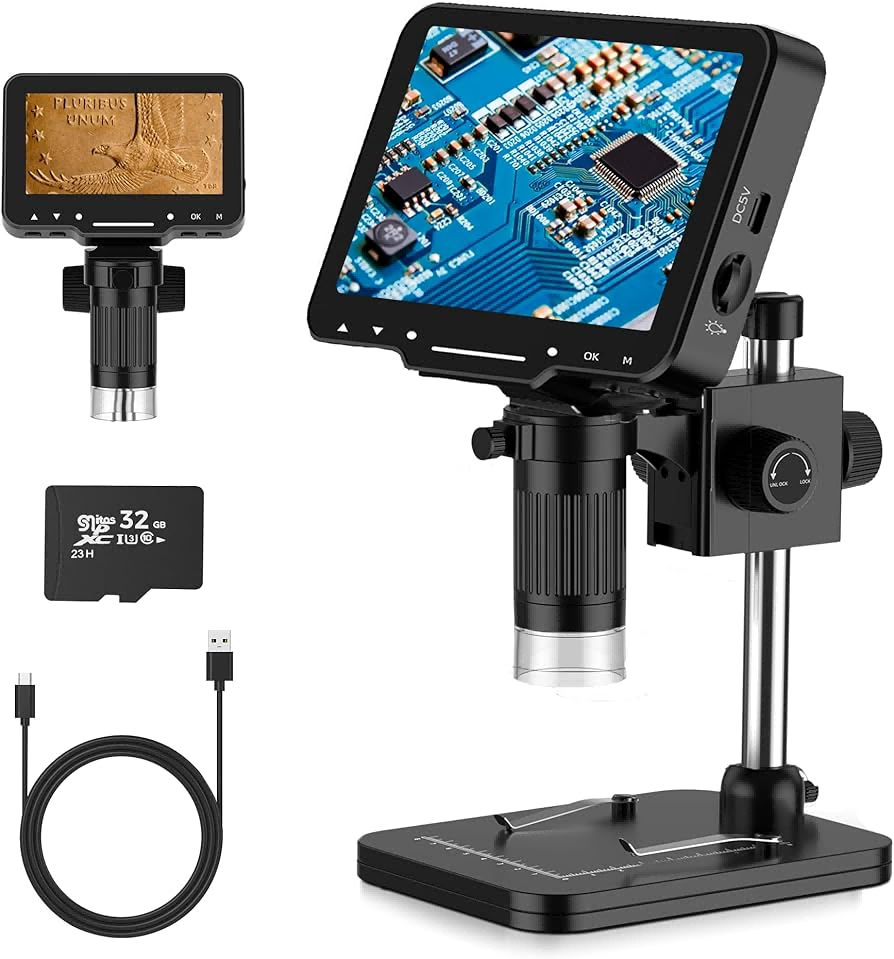
Accurate soldering requires clear visual inspection of all components and solder joints. Optical tools detect defects, verify component alignment, and confirm proper solder flow. Without inspection, even correctly placed parts can have hidden shorts, insufficient wetting, or tombstoned components. Engineers rely on microscopes and inspection equipment to ensure quality and reduce costly rework during prototyping and small-batch manual pick and place workflows.
-
Digital USB and Stereo Microscopes:
These microscopes reveal solder bridges, lifted or misaligned parts, and incomplete wetting that are invisible to the naked eye. Shadow-free LED ring lighting reduces eye and neck strain during extended assembly sessions, allowing precise inspection over hours of manual placement.
-
Consumables:
High-quality flux pens enhance solder wetting and improve joint formation. Desoldering braid or solder wick allows the removal of excess solder or accidental bridges efficiently. Isopropyl alcohol cleans residual flux and leaves a professional, factory-ready finish.
Combining optical inspection with the correct consumables ensures each joint meets reliability standards. Proper inspection gear guarantees placement accuracy, detects microscopic defects, and maintains consistent solder quality. Investing in a digital microscope and high-quality liquid tools improves efficiency, reduces rework, and increases first-pass yield for hand-assembled PCBs.
How to Build a Complete Manual Pick and Place Toolkit
Assemble a reliable manual pick and place toolkit, starting with precision tweezers and vacuum pens. Add thermal tools such as a hot air rework station or SMT reflow hot plate. Include optical inspection gear, such as USB or stereo microscopes, for defect detection.
Flawless solder paste application forms the foundation of frustration-free manual assembly. A perfectly printed board holds components securely, and tackiness allows parts to self-align during reflow due to surface tension.
Ordering a precision frameless stencil alongside prototype boards from JLCPCB removes the most difficult step of hand soldering. Upgrade prototyping workflow today by visiting the JLCPCB Stencil Service Pageto add a frameless stencil to the next PCB order for just $3.
Choose from Framed/Frameless, Electropolishing, Nano-coating, Step-Stencils, SMD Glue Stencil and more. Starting at $3. No MOQ. 12-Hour production.
Get $11 Coupon Now >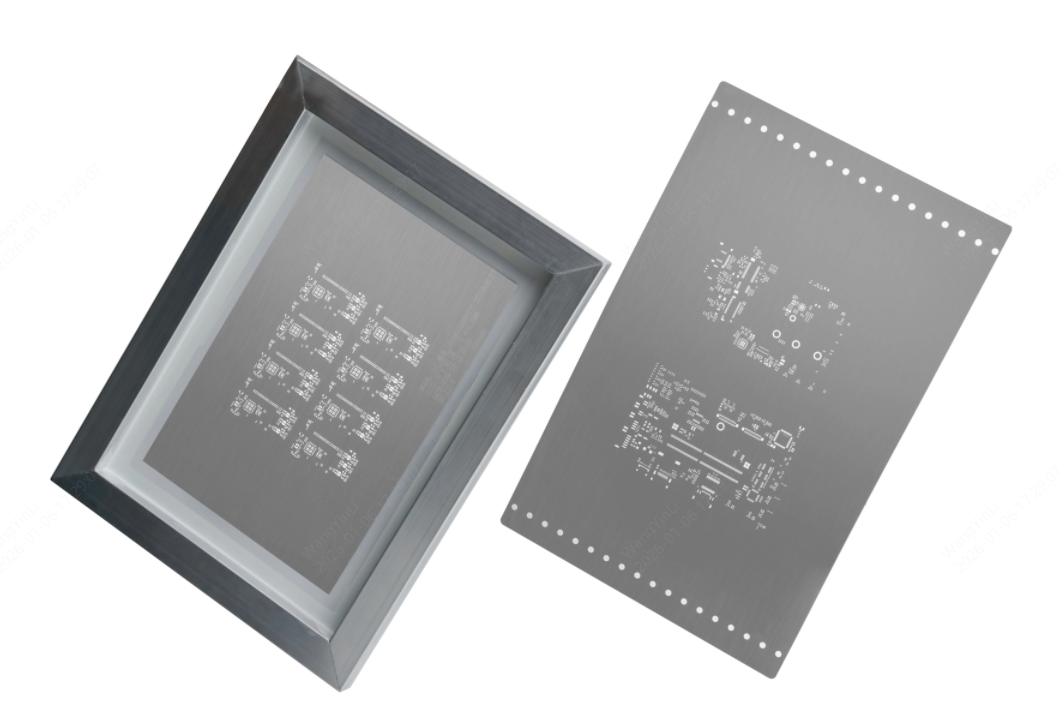
Frequently Asked Questions about Manual Pick and Place Tools
What tools are essential for manual pick and place assembly?
Precision tweezers, anti-static vacuum pens, a hot air rework station or SMT reflow hot plate, and USB or stereo microscopes form the essential toolkit. Consumables like flux pens, solder wick, and Isopropyl Alcohol complete the setup.
How do frameless stencils improve component placement?
Frameless stencils deposit solder paste evenly across PCB pads, preventing sliding, bridging, or misalignment. The flat paste holds parts securely and allows self-alignment during reflow, improving first-pass yield and consistent solder joint quality.
What mistakes do beginners make with manual pick and place?
Common errors include uneven paste application, misaligned components, bent pins from tweezers, and overheating components during reflow. Using proper stencils, tweezers, vacuum pens, and controlled heating reduces these defects.
How does paste volume affect solder joint quality?
Excess solder paste causes bridging between pads, while insufficient paste produces weak joints or tombstoning. Correct stencil thickness and consistent swipe techniques control paste volume.
Building a reliable manual pick and place toolkit is about combining precision handling, accurate paste application, and controlled thermal processes. By selecting the right tools for inspection and assembly, engineers can minimize human error and ensure that every prototype board meets high reliability standards. Ultimately, professional-grade results at the bench are achieved through the synergy of quality tools and a disciplined SMT workflow.
Keep Learning
Low-Temperature Solder Paste: A Practical Sn-Bi Guide
Key Takeaways Sn42Bi58 is the mainstream low-temp alloy and melts at 138 C. Typical reflow peak is 165 to 180 C, about 25 to 30 C above the melt. It protects heat-sensitive components and reduces warpage on large, thin boards. It enables step soldering, because 165 to 180 C will not remelt SAC305 joints. Bismuth joints are more brittle than SAC305, so avoid drop-critical products. Never mix Sn-Bi with leaded (Sn-Pb) solder. Bi, Sn and Pb form a ternary eutectic that melts near 95 C. Some parts and som......
Pin-in-Paste: Through-Hole Reflow With a Stencil
Key Takeaways One Reflow Process: Pin-in-paste combines SMT and through-hole soldering into a single reflow pass, eliminating the need for separate wave, selective, or hand-soldering steps when the board has only a few through-hole components. Paste Volume Is Critical: Solder paste is roughly 50% flux by volume, so you need to print about twice the solder volume the finished joint requires. Stencil design—overprint apertures and step-up zones—makes or breaks the process. Target 75% Barrel Fill: Per IP......
Mixed Technology PCB Assembly: Combining SMT and THT on One Board
As technologies become increasingly more complex, the demand for sophisticated printed circuit boards continues to rise. In the electronics industry, the two most prevalent PCB Assembly technologies are SMT and THT, which differ mainly in the manner at which the components are attached. SMT places the components on the surface of the board whereas THT makes use of drilled holes to solder components. While these technologies individually cater to specific applications, advancements in the electronics i......
Moisture Sensitivity Level (MSL): Baking Guide
Key Takeaways Moisture Sensitivity Level (MSL) is a 1-6 classification under IPC/JEDEC J-STD-020 that indicates how quickly a non-hermetic surface-mount package can absorb enough moisture to become vulnerable during reflow. MSL 1 has unlimited floor life at its reference condition, while MSL 6 requires baking before use and reflow within the time printed on the caution label. The floor-life clock begins when the moisture barrier bag is opened and exposure to factory air starts. Baking according to IPC......
Understanding SMT Stencil Printers for Accurate PCB Solder Paste Printing
Stencil printing is a critical process in SMT (Surface Mount Technology) assembly, significantly impacting the quality and reliability of solder joints on PCBs. The crucial machine for implementing this is the SMT Stencil Printer, which applies an appropriate measure of solder paste to each pad of the PCB board before it goes to the placement of components. For those of you looking to work out what a stencil printer is and why it matters in manufacturing, you've come to the right place. This is the ba......
Surface Mount Stencil: A Practical Guide for SMT Printing and Solder Paste Application
It starts with a slim piece of metal, slipped in early during assembly. Before any part lands in place, before heat ever touches the board, that layer shapes the flow. Where the paste spreads comes down to its design. How thick it is, how it's cut - those details decide what sticks and what washes away. For engineers looking for reliable stencils, JLCPCB provides high-precision SMT stencils that integrate seamlessly with PCB production workflows. Down goes solder paste, slipping through narrow cuts in......