Surface Mount Stencil: A Practical Guide for SMT Printing and Solder Paste Application
6 min
- What Is a Surface Mount Stencil in SMT Assembly
- Design and Manufacturing Considerations for Surface Mount Stencils
- Surface Mount Stencil Use Guidelines
It starts with a slim piece of metal, slipped in early during assembly. Before any part lands in place, before heat ever touches the board, that layer shapes the flow. Where the paste spreads comes down to its design. How thick it is, how it's cut - those details decide what sticks and what washes away. For engineers looking for reliable stencils, JLCPCB provides high-precision SMT stencils that integrate seamlessly with PCB production workflows.
Down goes solder paste, slipping through narrow cuts in a thin steel sheet, hitting exact spots on circuit board pads underneath. When the cutouts sit crooked or rough, extra goop creeps into wrong zones. A hair off target brings trouble fast - wires jumping across leads, shaky bonds, gaps with no link at all once printed.
Stencils need to be spot on when putting together circuit boards. Without laser cutting, squeezing out tiny amounts of solder paste wouldn’t work well - especially now that parts are shrinking and packed closer together.
What Is a Surface Mount Stencil in SMT Assembly
Definition And Basic Function
A thin piece of metal rests flat on the circuit board when applying solder paste - most often made from stainless steel. Where each gap appears on the sheet, a matching contact point lies below on the board underneath.
A thin blade glides over the board, forcing solder paste through cutouts onto waiting pads. When the metal sheet rises, the goo remains stuck exactly where it needs to be. Each deposit holds firm while parts are set above them. Then heat turns everything solid without shifting positions.
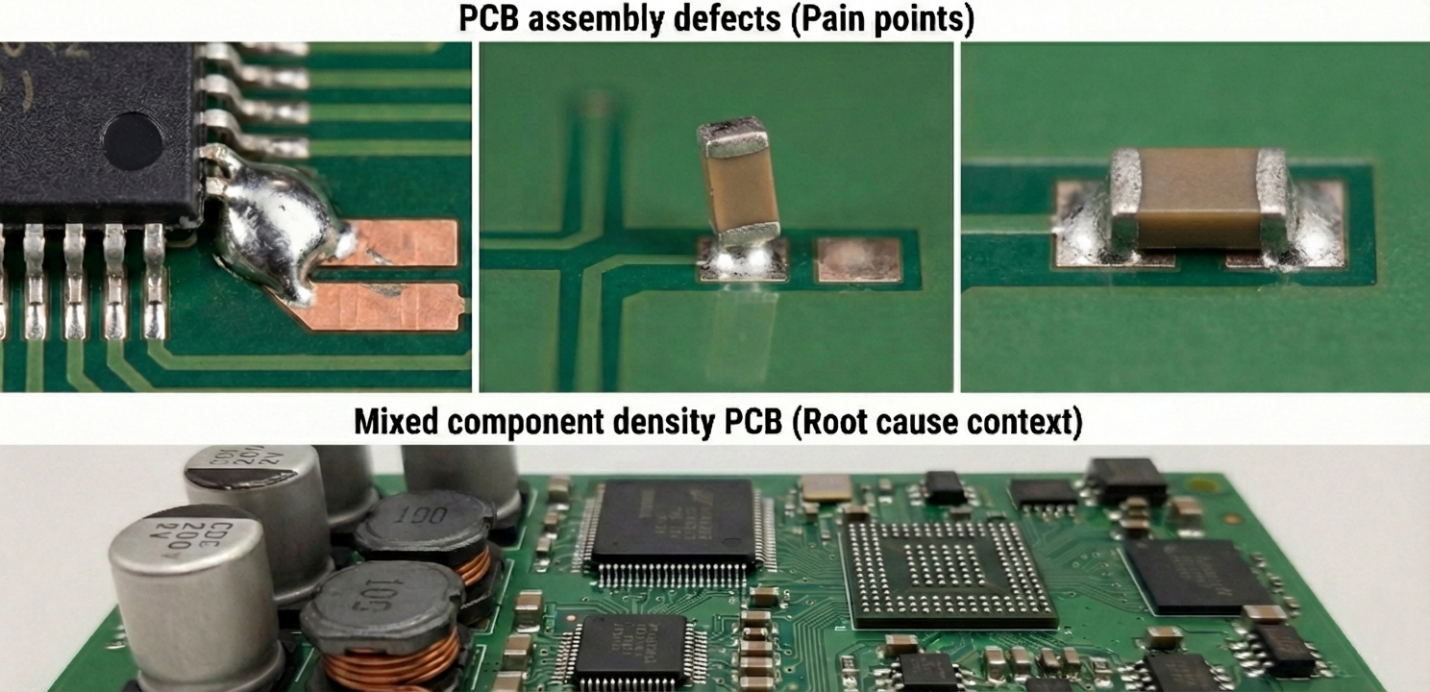
Laser Surface Mount Stencils
Laser cutting handles most stencil work these days. When gaps shrink and lead patterns get tricky, older techniques fall short - precision slips. Odd pad forms push limits beyond what those methods consistently offer.
Starting off with precision, laser-cut stencils create openings that are crisp and exact. Their smooth interior edges help solder paste let go without sticking. Unusual board layouts benefit from uniquely shaped cutouts made possible through focused light beams. JLCPCB’s laser-cut stencils offer consistent aperture quality, making them suitable for complex SMT layouts.
Role in SMT Printing Quality
Starting right begins with the stencil when it comes to a solid SMT print. Top-tier paste or high-end machines won’t fix damage from frayed stencils or badly shaped openings. Precision matters most where contact meets surface.
Sometimes stencils cause issues like solder bridges. Components standing upright instead of lying flat show up now and then. Uneven amounts of solder appear across pads more often than you’d think. Poor connections tend to follow, showing weakness or failing early.
Things settle down once the openings line up right, letting paste flow smooth. Misaligned holes mess up everything after, spreading trouble step by step.
Design and Manufacturing Considerations for Surface Mount Stencils
Choosing Aperture Size and Material Thickness
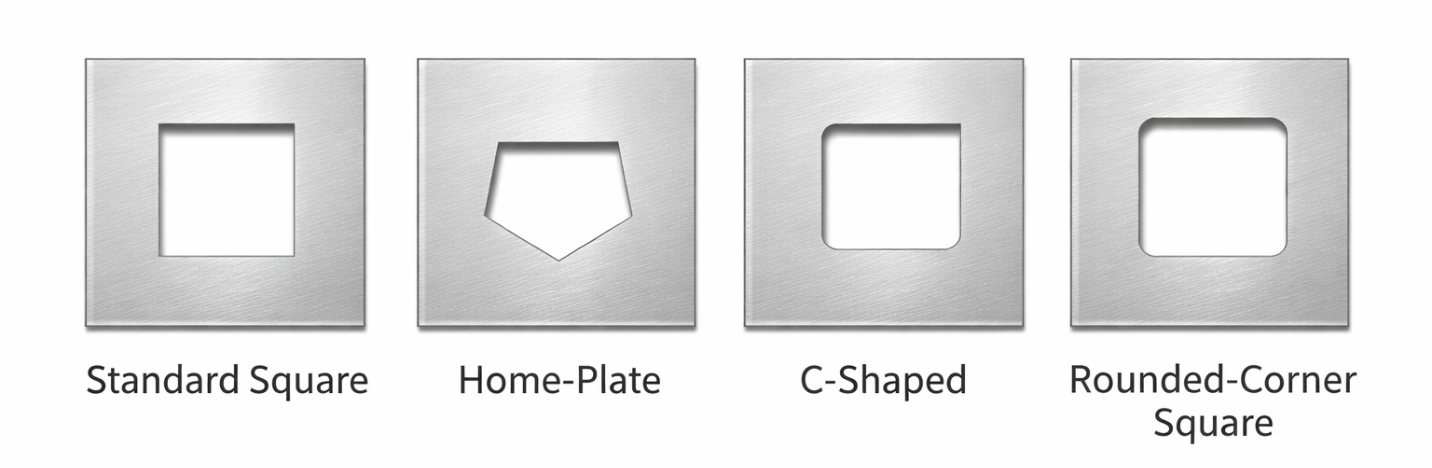
Starting narrow, the opening size decides paste volume on every contact point. Because edges matter, both outline and depth affect what sticks during printing. Ending uneven.
Falling mostly within a range of 0.10 mm to 0.15 mm, SMT stencils come in varying thicknesses. Thin versions handle tight-spaced parts well; bulkier ones deliver extra material where broad contact areas demand it. Sometimes, rather than swap out the whole stencil, specialists tweak hole dimensions or shape to get results.
Fewer details come straight from makers, yet designs such as QFN and SOT usually stick to openings that time has proven reliable. Instead of fresh rules each round, old habits guide most stencils in daily use.
Materials Used in Surface Mount Stencils
Flatness sticks around longer with stainless steel - it's what goes into most stencils mounted on surfaces. Shape holds firm even after many prints pass through. Wear hardly shows up thanks to tough resistance built into the metal. Clean paste release happens only if the sheet keeps its form.
Paste sticks less inside tiny openings when certain stencils get special surface tweaks like electro-polishing or ultra-thin coatings. Efficiency climbs because more material moves through where it should. Fewer wipe cycles are needed over time thanks to these finishes. Long jobs stay steady without drifting off target.
Selecting a Manufacturer for SMT Stencils
Few stencil makers hit the exact mark every time. When gaps narrow to microns, even slight shifts can tip outcomes. Precision slips here and there, making a difference where it counts.
A solid choice for SMT stencils brings laser-cut accuracy, holds strict size control, gets done quickly, works smoothly with common printing machines.
One company handling circuit boards and stencils cuts out waiting time between steps. With everything - from layout to laser-cut tools - managed together, production flows without long breaks in the middle.
Surface Mount Stencil Use Guidelines
Smt Solder Paste Printing Process
Precision begins the moment hands touch tools, not just when plans are drawn. A shift in grip or a hurried adjustment - mistakes appear before you even notice them.
Steady print speed keeps things reliable. When the stencil lines up right with the PCB, outcomes stay repeatable. Squeegee pressure matters - too much or too little changes everything. The kind of solder paste used needs to fit how the apertures are shaped. Instead of forcing steps together, letting each part match its role makes consistency possible.
How Stencils Change Common Problems
Paste printing is where a lot of SMT problems first show up. Oversized apertures often lead to bridging. Poor paste release results in too little solder joining parts. Smearing happens if the stencil gets blocked. Clogged openings mess up the pattern.
Fixing the stencil layout or making cleaning steps better usually works quicker than swapping pastes or adjusting printer controls. Most times, small tweaks in prep beat changes to materials or machines.
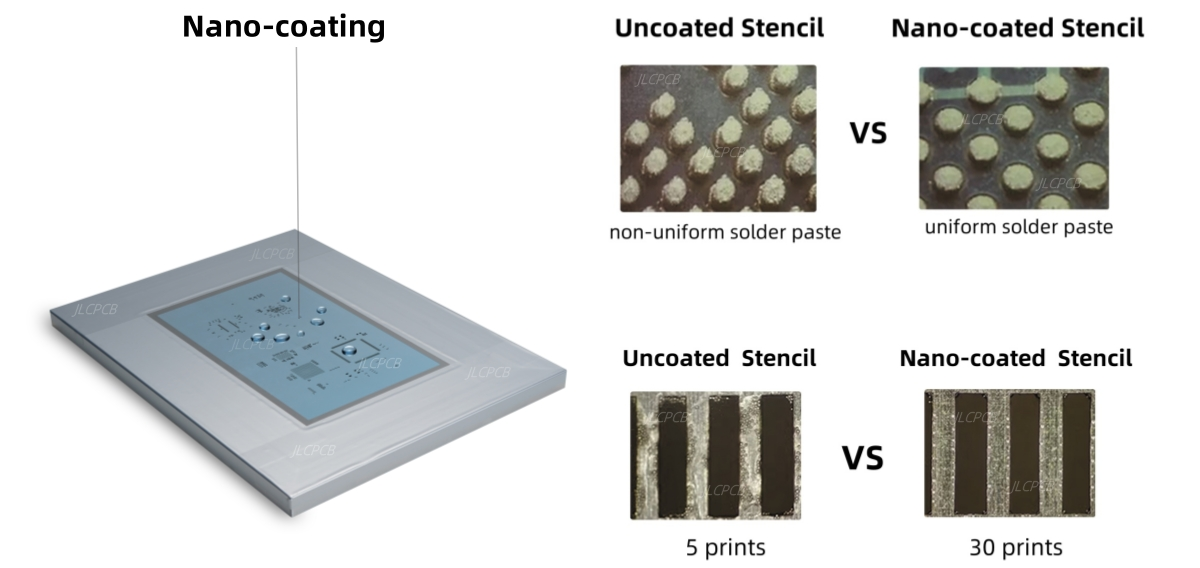
Cleaning and Maintaining SMT Stencils
Paste left behind slows stencil action. Over months, cleaning now then prevents shaky prints.
Storing stencils flat keeps them safe. A quick wipe between prints slows wear. Damage hides in tiny holes - check often. Approved cleaners work better than guesswork. Protection matters just as much as care during use.
One slip in making the stencil ruins every step after. Even a tiny bend shifts where material sits, harming joints later on.
A solid SMT print begins with a stencil cut exactly by laser. The form of each opening counts just as much as its placement, while regular care preserves sharp performance. Using trusted suppliers like JLCPCB ensures that each stencil meets high-quality standards, supporting both test runs and large-volume SMT production.
When handling first test runs or large-volume output, aligning the stencil to the task helps block flaws ahead of time.
Right from the first move, a surface mount stencil shapes how everything else unfolds in SMT assembly. Chosen wisely, it works behind the scenes without fuss or noise. One careful pick early on ripples through every stage ahead.

Keep Learning
Low-Temperature Solder Paste: A Practical Sn-Bi Guide
Key Takeaways Sn42Bi58 is the mainstream low-temp alloy and melts at 138 C. Typical reflow peak is 165 to 180 C, about 25 to 30 C above the melt. It protects heat-sensitive components and reduces warpage on large, thin boards. It enables step soldering, because 165 to 180 C will not remelt SAC305 joints. Bismuth joints are more brittle than SAC305, so avoid drop-critical products. Never mix Sn-Bi with leaded (Sn-Pb) solder. Bi, Sn and Pb form a ternary eutectic that melts near 95 C. Some parts and som......
Pin-in-Paste: Through-Hole Reflow With a Stencil
Key Takeaways One Reflow Process: Pin-in-paste combines SMT and through-hole soldering into a single reflow pass, eliminating the need for separate wave, selective, or hand-soldering steps when the board has only a few through-hole components. Paste Volume Is Critical: Solder paste is roughly 50% flux by volume, so you need to print about twice the solder volume the finished joint requires. Stencil design—overprint apertures and step-up zones—makes or breaks the process. Target 75% Barrel Fill: Per IP......
Mixed Technology PCB Assembly: Combining SMT and THT on One Board
As technologies become increasingly more complex, the demand for sophisticated printed circuit boards continues to rise. In the electronics industry, the two most prevalent PCB Assembly technologies are SMT and THT, which differ mainly in the manner at which the components are attached. SMT places the components on the surface of the board whereas THT makes use of drilled holes to solder components. While these technologies individually cater to specific applications, advancements in the electronics i......
Moisture Sensitivity Level (MSL): Baking Guide
Key Takeaways Moisture Sensitivity Level (MSL) is a 1-6 classification under IPC/JEDEC J-STD-020 that indicates how quickly a non-hermetic surface-mount package can absorb enough moisture to become vulnerable during reflow. MSL 1 has unlimited floor life at its reference condition, while MSL 6 requires baking before use and reflow within the time printed on the caution label. The floor-life clock begins when the moisture barrier bag is opened and exposure to factory air starts. Baking according to IPC......
Understanding SMT Stencil Printers for Accurate PCB Solder Paste Printing
Stencil printing is a critical process in SMT (Surface Mount Technology) assembly, significantly impacting the quality and reliability of solder joints on PCBs. The crucial machine for implementing this is the SMT Stencil Printer, which applies an appropriate measure of solder paste to each pad of the PCB board before it goes to the placement of components. For those of you looking to work out what a stencil printer is and why it matters in manufacturing, you've come to the right place. This is the ba......
Surface Mount Stencil: A Practical Guide for SMT Printing and Solder Paste Application
It starts with a slim piece of metal, slipped in early during assembly. Before any part lands in place, before heat ever touches the board, that layer shapes the flow. Where the paste spreads comes down to its design. How thick it is, how it's cut - those details decide what sticks and what washes away. For engineers looking for reliable stencils, JLCPCB provides high-precision SMT stencils that integrate seamlessly with PCB production workflows. Down goes solder paste, slipping through narrow cuts in......