Mastering PCB Stiffeners: A Comprehensive Guide to Types, Applications, and Design Best Practices for Flexible Circuits
7 min
- Introduction: What Are PCB Stiffeners and Why They Matter
- Types of PCB Stiffeners: Choosing the Right Material
- Key Applications of Stiffeners in PCB Design and Assembly
- Design and Manufacturing Considerations for PCB Stiffeners
- Benefits and Best Practices for Implementing Stiffeners
- Conclusion
- FAQ: Common Questions About PCB Stiffeners
Flexible and rigid-flex PCBs are increasingly common in modern electronic designs, but their soft nature poses mechanical reliability challenges, especially in connector, component mounting, and dynamic bending areas. PCB stiffeners serve as localized reinforcement materials to effectively address these issues. They add rigidity in designated areas to provide mechanical support while maintaining bendability in flexible zones. Engineers widely use them in consumer electronics, medical devices, automotive electronics, and wearables to ensure stability under repeated insertion, vibration, or high-temperature conditions.
Introduction: What Are PCB Stiffeners and Why They Matter
The Role of Stiffeners in Flexible and Rigid-Flex PCBs
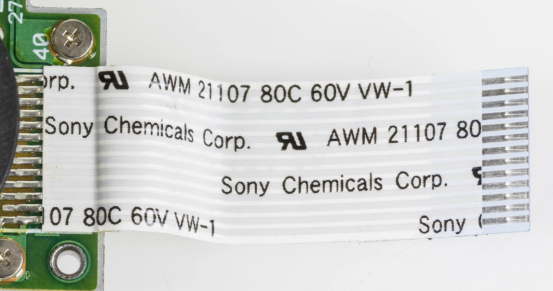
PCB stiffeners are typically non-conductive materials (such as FR4, polyimide, or metal) bonded to specific positions on the flexible substrate using pressure-sensitive adhesive (PSA) or thermal bonding. They do not participate in circuit functions but primarily enhance local rigidity to prevent pad lift-off, component displacement, or failures from excessive bending. In rigid-flex boards, stiffeners are often used in transition zones to smooth the structural change from rigid to flexible, avoiding stress concentration. In practical designs, stiffeners can be attached single- or double-sided, with thickness precisely controlled to match connector insertion depth or assembly requirements.
Evolution and Growing Demand in Modern Electronics
As component pitches shrink below 0.4 mm and product volumes decrease, flexible PCB usage has surged. Industry data shows that stiffener application in high-reliability flex circuits can reduce mechanical failure risk by 40-60%, particularly in vibration or thermal cycling environments. This has made stiffeners essential rather than optional, especially in smartphones, laptop foldable screens, and medical implants. Demand also stems from the widespread adoption of automated assembly—stiffeners provide flat platforms to improve SMT placement accuracy and reflow yield.
Types of PCB Stiffeners: Choosing the Right Material
FR4 Stiffeners – Cost-Effective and Widely Used
FR4 stiffeners are the most common type, made from glass-fiber reinforced epoxy resin, offering excellent rigidity and cost advantages. Thickness typically ranges from 0.1 mm to 3.2 mm (common 0.8 mm, 1.6 mm), with Tg values of 130-170°C. They suit most SMT component support and PTH connector reinforcement scenarios due to high mechanical strength to withstand assembly pressure, while being low-cost and ideal for high-volume production.
Polyimide (PI) Stiffeners – High-Temperature and Dynamic Flexibility
Polyimide stiffeners have chemical properties similar to flexible substrates (like Kapton), providing excellent thermal stability and flexibility. Thickness generally 0.025 mm to 0.2 mm, temperature resistance over 250°C. They are particularly suitable for ZIF connectors or gold finger areas, enduring tens of thousands of dynamic bends without cracking. In high-temperature reflow or operating environments, PI stiffeners' low CTE matches the substrate, reducing delamination risk.
Metal Stiffeners (Stainless Steel and Aluminum)
Metal stiffeners offer the highest strength and heat dissipation. Stainless steel thickness 0.1-0.5 mm, corrosion-resistant, suitable for harsh mechanical environments; aluminum thickness 0.2-1.0 mm, lightweight with high thermal conductivity (~200 W/m·K). They are often used in power modules or grounding-required areas but require insulation treatment (e.g., adding insulating layer) to avoid shorts.
| Material | Thickness Range (mm) | Key Properties | Thermal Resistance | Cost Level | Common Applications |
|---|---|---|---|---|---|
| FR4 | 0.1 - 3.2 | High rigidity, low cost, easy processing | Medium (Tg 130-170°C) | Low | SMT support, general reinforcement, PTH connectors |
| Polyimide (PI) | 0.025 - 0.2 | Flexible, high-temp compatible, low CTE | High (>250°C) | Medium | ZIF connectors, dynamic areas, gold fingers |
| Stainless Steel | 0.1 - 0.5 | High strength, corrosion resistant | Excellent | High | Harsh environments, vibration protection |
| Aluminum | 0.2 - 1.0 | Lightweight, high thermal conductivity | Excellent | Medium-High | Thermal management, power component heat sinking |
Table 1: Comparison table of common PCB stiffener materials.
Key Applications of Stiffeners in PCB Design and Assembly
Reinforcing Connector Areas and ZIF Interfaces
In gold fingers or ZIF tails, stiffeners add local thickness (usually matching connector slot requirements of 0.3-1.0 mm) to prevent pad lift-off or substrate deformation from repeated insertion. PI stiffeners are most common here, precisely controlling thickness tolerance (±0.05 mm) for reliable contact and reduced insertion force stress.
Supporting SMT Components During Assembly
Flexible substrates easily deform during pick-and-place and reflow; stiffeners provide rigid platforms to support heavier components (like connectors, ICs, or capacitors). This improves placement accuracy, reduces offsets or tombstoning, especially in double-sided assembly where stiffeners balance stress, boosting overall yield by 10-20%.
Stress Relief and Mechanical Protection in Dynamic Environments
Stiffeners limit bend radius (recommended minimum = 10 times stiffener thickness), protecting solder joints from fatigue failure. In automotive or industrial equipment, they absorb vibration energy to extend product life.
Heat Dissipation and Thickness Control
Metal stiffeners effectively conduct heat, suitable for LED or power chip areas. They also precisely control ZIF insertion thickness for compatibility.
Design and Manufacturing Considerations for PCB Stiffeners
Attachment Methods – PSA vs. Thermal Bonding
Pressure-sensitive adhesive (PSA) requires no heat, suitable for quick prototype validation, with medium adhesion (>5 N/cm). Thermal bonding (180-220°C, controlled pressure) provides higher strength (>10 N/cm) for volume production but requires attention to temperature effects on flexible substrates.
DFM Guidelines for Optimal Stiffener Integration
Stiffener edges should extend 1-2 mm beyond pads for full coverage; maintain at least 0.5 mm clearance from bend lines to avoid interfering with bending; add alignment holes (1-2 mm diameter) for attachment accuracy. Define stiffener outlines in separate Gerber layers and note material/thickness. Avoid excessive coverage leading to weight increase or loss of flexibility.
Common Challenges and How Professional Manufacturers Address Them
CTE mismatch can cause warpage or delamination—select matched materials and control bonding temperature/pressure. Misalignment issues are resolved with precision fixtures and optical alignment. Experienced manufacturers perform X-ray or shear testing to verify adhesion strength, ensuring reliability.
Benefits and Best Practices for Implementing Stiffeners
Key Advantages for Reliability and Performance
Stiffeners significantly reduce mechanical failure risk, improve assembly yield, and support higher-density layouts without sacrificing flexibility. In dynamic applications, they can extend bending life several times while not increasing overall thickness.
Industry Best Practices from Leading Manufacturers
Use PSA for rapid iteration in prototyping, switch to thermal bonding for production; mix materials on the same board (e.g., PI on connector side + FR4 on component side); conduct early DFM reviews to avoid late modification costs.
Conclusion
Consider stiffeners when designs involve connectors, heavy components, repeated bending, or vibration environments. They are indispensable in compact, high-reliability products, significantly enhancing overall durability.
JLCPCB offers reliable flex and rigid-flex production with support for FR4, polyimide, and stainless steel stiffeners in various thicknesses and attachment methods. Benefit from instant online quoting, quick-turn prototyping, and high-precision processes for consistent results and excellent reliability. Upload your design to jlcpcb.com today to access cost-effective stiffener solutions tailored to your project needs, making your flexible circuit designs more professional and reliable.

FAQ: Common Questions About PCB Stiffeners
Q1: What is the main purpose of adding a stiffener to a flexible PCB?
A: Stiffeners provide localized rigidity to support connectors, components, or mounting areas, prevent pad lift-off, reduce bending stress, and improve assembly reliability without affecting the flexible sections.
Q2: Which stiffener material should I choose for high-temperature reflow soldering?
A: Use polyimide (PI) stiffeners. They match the flex substrate, withstand temperatures >250°C, and offer low CTE mismatch to minimize delamination risk.
Q3: How thick should a stiffener be for a ZIF connector?
A: Typically 0.1–0.3 mm (often PI material) to match the connector slot specification (commonly 0.3 mm total stack-up). Exact thickness depends on the connector datasheet—always verify tolerance (±0.05 mm is standard).
Q4: Can I use different stiffener materials on the same board?
A: Yes. Many designs combine them—for example, PI on the ZIF/gold finger side for flexibility and FR4 on the component side for SMT support. This optimizes cost, performance, and mechanical behavior.
Popular Articles
• Design Guidelines for Flex PCB Panels on JLCPCB
• 45 Must-Know Flex PCB Design Tips You Can't Afford to Miss!
• Essential Design Guidelines for Flex PCBs
• FPC Design Rules: 13 Safety Distances You Can’t Ignore
• Mastering PCB Stiffeners: A Comprehensive Guide to Types, Applications, and Design Best Practices for Flexible Circuits
Keep Learning
Flex PCB Designing Useful Tips - JLCPCB
Flexible printed circuit boards, or Flex PCBs, are thin, lightweight printed circuit boards that can be bent, folded, and twisted to fit into any shape or size without damaging the electrical connections on the board. Flex PCBs are becoming increasingly popular in various industries, such as aerospace, automotive, medical devices, and consumer electronics. In this article, we will discuss what to consider while designing a Flexible PCB for effective product development. Currently, flex PCB manufacturi......
Flex PCB Manufacturing Process & Advantages
In today's fast-paced and technologically advanced world, printed circuit boards (PCBs) have become an integral part of many electronic devices. However, with the increasing demand for smaller and more flexible electronic devices, the traditional rigid PCBs are proving to be less efficient. This is where Flexible Printed Circuit Boards (Flex PCBs) come in, providing much-needed flexibility while maintaining the same level of functionality as rigid PCBs. For new users, JLCPCB also prepared up to $70 re......
Design Guidelines for Flex PCB Panels on JLCPCB
When placing orders for flexible PCBs (FPCs) on JLCPCB, several key points must be noted. Unlike rigid PCB panels, which often use mouse bites or V-cuts for depanelization, FPC panels require bridge (tab) connections. Requirements for Flex PCB Panels on JLCPCB FPC panelization differs significantly from rigid boards. Proper design ensures efficient manufacturing, high yield, and compatibility with SMT assembly. Key requirements are as follows: Internal Board Spacing: 2 mm (standard); preferably 3 mm w......
Flexibility and Reliability: Exploring the World of Flexible PCB
Key Takeaways Flexible PCBs deliver unmatched flexibility and reliability, making them essential for modern compact and dynamic electronic designs. With high-performance polyimide substrates, 1-4 layer configurations, ultra-thin 25μm options, and precision 2/2mil traces, JLCPCB’s Flexible PCBs excel in space-saving, weight reduction, and repeated bending applications across consumer electronics, medical devices, wearables, automotive, and aerospace industries. Whether choosing pure flex or rigid-flex ......
Avoid Trace Fractures in Flexible PCB Design
Flexible PCBs, also known as Flex PCBs, have gained immense popularity in the field of electronics due to their exceptional flexibility and versatility. These boards offer unique advantages, enabling efficient electrical signal transmission while withstanding bending and movement. However, when designing flexible PCBs, one crucial aspect that engineers and designers must consider is the prevention of trace fractures. Trace fractures can lead to significant issues such as signal loss, intermittent conn......
Exploring Flexible PCB: Applications and Design Considerations
Key Takeaways Flexible PCBs (flex circuits) are revolutionizing modern electronics with their superior flexibility, lightweight design, and space-saving capabilities. From wearable devices and automotive systems to aerospace applications and foldable consumer electronics, they enable innovative form factors that rigid boards cannot achieve. Successful flexible PCB design hinges on critical factors including proper bend radius, optimized trace/space width, strategic component placement with stiffeners,......