Solder Melting Point Guide: Chart, Alloy Types, and Reflow Considerations
11 min
- What Is The Melting Point Of Solder?
- Solder Melting Point Chart: Common Alloys Compared
- Solder Melting Point Physics: Solidus, Liquidus, and Eutectic Alloys
- Optimizing SMT Reflow Profiles for Solder Melting Points
- Critical Factors Affecting Solder Melting Point Selection
- Solder Melting Point in Rework and Hand Soldering
- FAQ about Solder Melting Points
- Conclusion: Solder Melting Points in Electronics Manufacturing

In the precise world of electronics manufacturing, a difference of just a few degrees can mean the distinction between a perfect, reliable solder joint and a catastrophic "cold" joint failure. While many hobbyists view soldering simply as "melting metal to stick things together," professional PCB assembly requires a nuanced understanding of thermodynamics.
The solder melting point is not simply a single value listed in a datasheet; it is a decisive limit that determines the choice of components, the selection of PCB substrate (FR-4 Tg), and the entire Surface Mount Technology (SMT) reflow profile.
It does not matter if you are working on a consumer IoT device or an automotive control unit; knowing the different alloys' behavior at melting points is crucial for successful manufacturing.
What Is The Melting Point Of Solder?
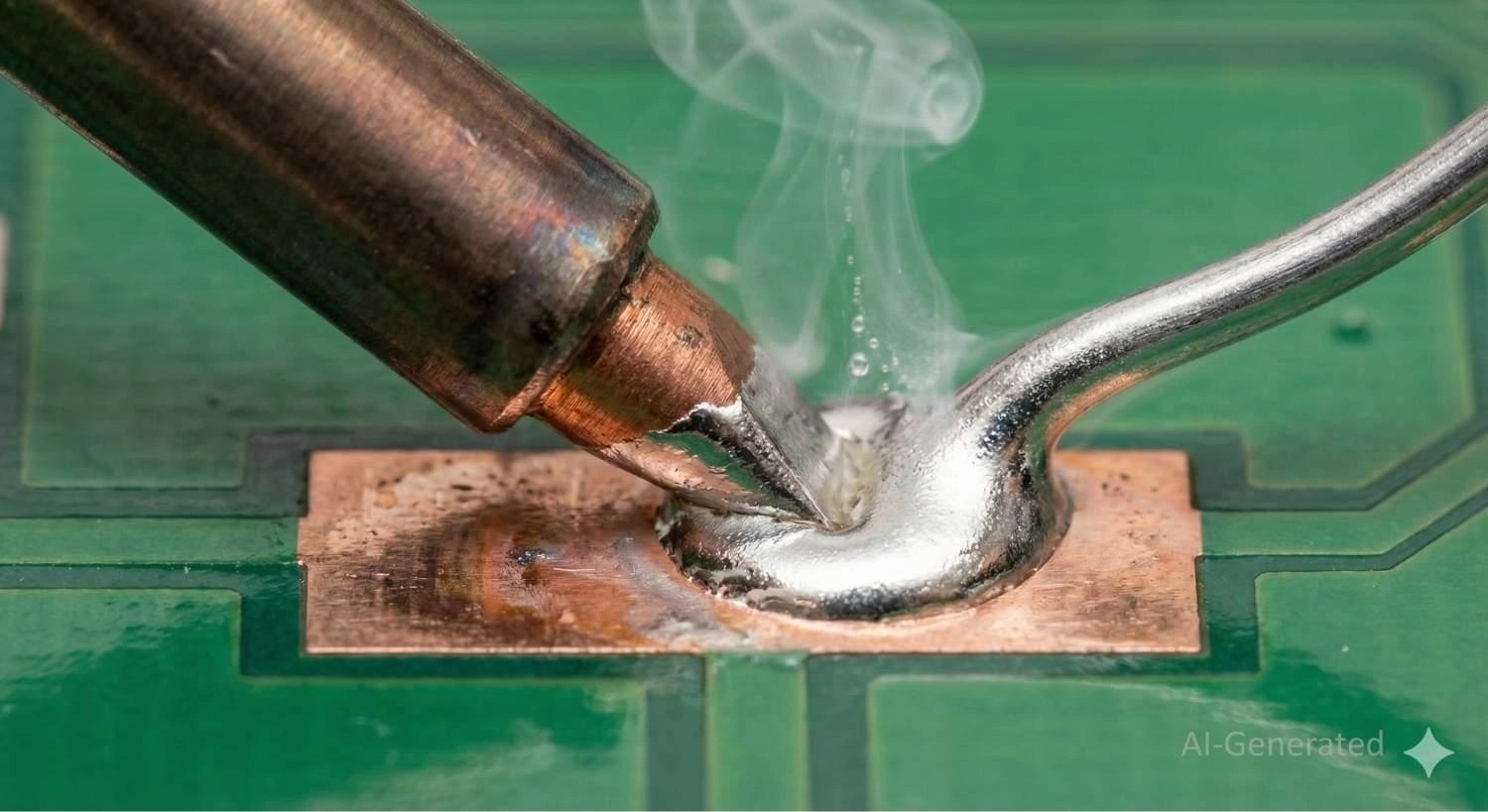
The melting point of solder depends on its alloy composition. Common solders range from 138°C (Sn42Bi58) to 183°C (Sn63Pb37) and up to 217°C–220°C (SAC305) for standard lead-free SMT assembly.
Solder Melting Point Chart: Common Alloys Compared
The shift of the industry towards RoHS (Restriction of Hazardous Substances) compliance has opened up new possibilities in the realm of solder alloys. Whole alloy choosing is typically a compromise between melting temp, mechanical strength, and price.
Sn63Pb37 Melting Point (Leaded Solder)
Melting Point: 183°C (Eutectic)
Characteristics: Known for its low melting point and superior wetting capabilities. The lower temperature puts less thermal stress on components and the PCB substrate. However, due to lead toxicity, its use is now largely restricted to medical, aerospace, and military applications where reliability trumps environmental regulation.
SAC305 Melting Point (Lead-Free Solder)
Composition: Sn96.5% / Ag3.0% / Cu0.5% (Tin-Silver-Copper)
Melting Range: 217°C – 220°C (Solidus/Liquidus: 217°C / 220°C)
Characteristics: This is the default alloy for most commercial electronics. The melting point is roughly 34°C higher than that of leaded solder. This requires higher reflow oven temperatures, necessitating more robust components and moisture-sensitive device (MSD) handling.
Sn42Bi58 Low-Temperature Solder Melting Point
Melting Point: 138°C (Eutectic)
Characteristics: Containing Bismuth, this alloy melts at a very low temperature. It is ideal for double-sided assembly (to prevent heavy components on the bottom side from dropping off during the second pass) or for heat-sensitive components like cheap LEDs or plastic connectors. However, Bismuth joints are brittle and less resistant to mechanical shock (drop tests).
Sn10Pb88 High-Temperature Solder Melting Point
Melting Range: 268°C – 290°C
Characteristics: Mainly for specialized applications like internal die attach inside a component package. The melting point is high enough to guarantee that the internal joints will not be remelted when the component is soldered to a PCB using standard SAC305.
Types of Solder Alloys and Their Melting Points
| Alloy Type | Composition | Melting Point (Solidus/Liquidus) | RoHS? | Best Use Case |
|---|---|---|---|---|
| Sn63Pb37 (Leaded Eutectic) | 63% Sn, 37% Pb | 183°C (Single Point) | No | Aerospace, Military, Avionics (High Reliability) |
| SAC305 (Standard Lead-Free) | 96.5% Sn, 3% Ag, 0.5% Cu | 217°C – 220°C | Yes | General Consumer Electronics, IoT, Mobile |
| Sn42Bi58 (Low Temp) | 42% Sn, 58% Bi | 138°C (Single Point) | Yes | LEDs, Step-Soldering, Heat-Sensitive Parts |
| Sn99.3Cu0.7 (Cost-Effective) | 99.3% Sn, 0.7% Cu | 227°C (Single Point) | Yes | Wave Soldering, Low-Cost SMT |
| Sn10Pb88 (High-Temperature Leaded Solder, typical composition) | 10% Sn, 88% Pb, 2% Ag | 268°C – 290°C | No | High-Power Die Attach, Automotive Under-hood |
Solder Melting Point Physics: Solidus, Liquidus, and Eutectic Alloys
In order to get a grip on solder melting points, it is important to identify first that the greater part of solders are not simple elements but alloys — blended metals like Tin (Sn), Lead (Pb), Silver (Ag), and Copper (Cu). Thus, the melting process of these mixtures is usually not instantaneous.
Solidus vs. Liquidus Temperature Ranges
Engineers focus on three specific states when analyzing solder alloys:
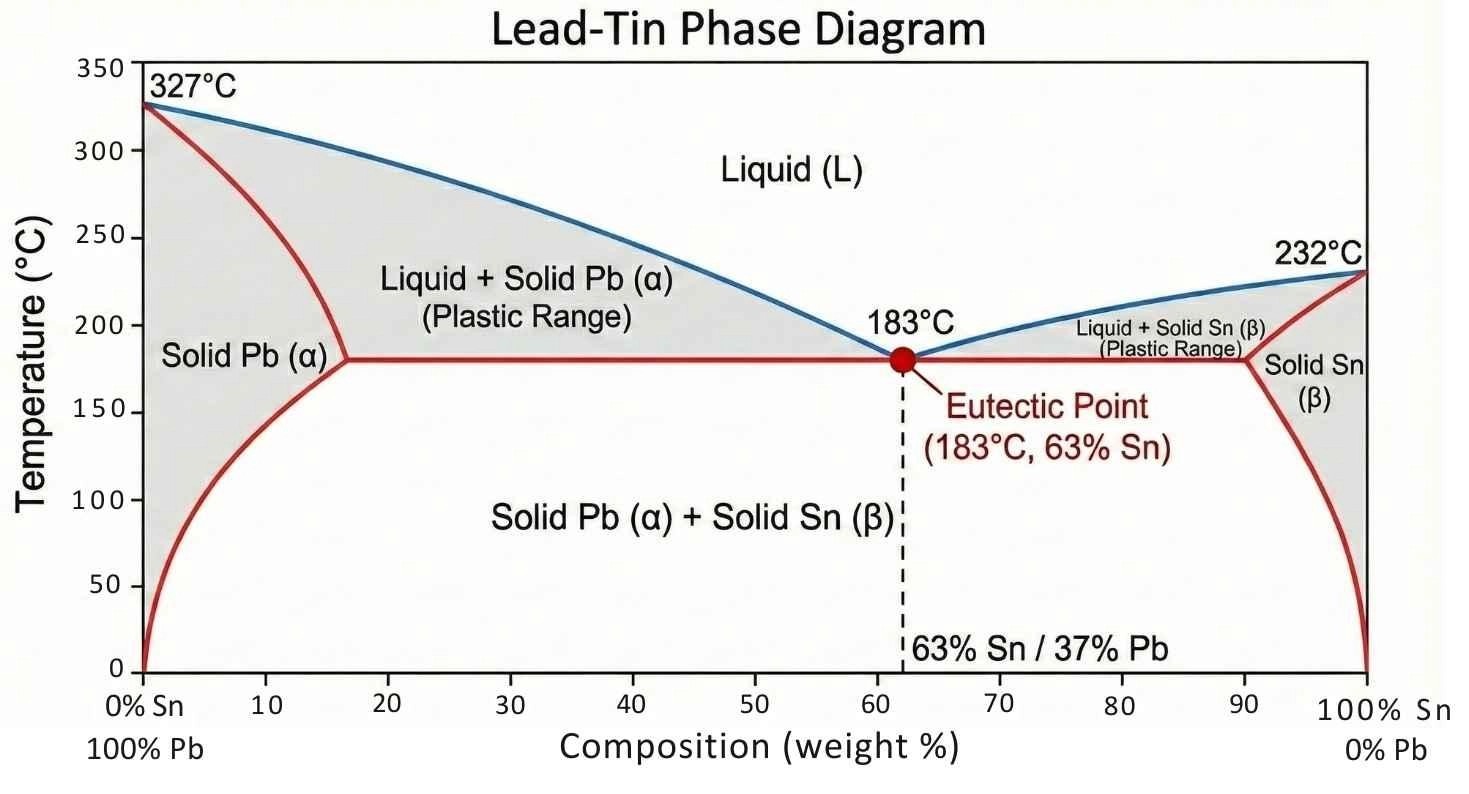
Solidus: The highest temperature at which the alloy is completely solid. Below this point, the solder has structural integrity.
Liquidus: The lowest temperature at which the alloy is completely liquid. Above this point, the solder flows freely and can "wet" the copper pads.
The Plastic Range: For many non-eutectic alloys, there exists a "mushy" zone between the solidus and liquidus temperatures. In this state, the solder is semi-solid — part crystals, part liquid.
Engineering Risk
If a solder joint is mechanically disturbed while in the plastic range (e.g., a conveyor belt vibration), the resulting joint will be granular, dull, and electrically unreliable. This is known as a "disturbed joint."
What is Eutectic Solder and Why Does it Matter?
This brings us to the concept of Eutectic solder. A eutectic alloy has a specific ratio of metals that eliminates the plastic range. For a eutectic alloy, the solidus and liquidus temperatures are identical.
Example: The classic Sn63Pb37 (63% Tin, 37% Lead) is a eutectic alloy. It turns from solid to liquid instantly at exactly 183°C.
This "instant freeze" property is highly desirable in manufacturing because it minimizes the window of opportunity for defects to form during the cooling phase.
Optimizing SMT Reflow Profiles for Solder Melting Points
In a professional assembly environment such as JLCPCB PCB Assembly, knowing the melting point is just the first step. You cannot just set an oven to 217°C for SAC305 and hope for good results. The whole reflow process has to be done according to a certain thermal profile in order to activate the flux and guarantee that the soldering will be done right.
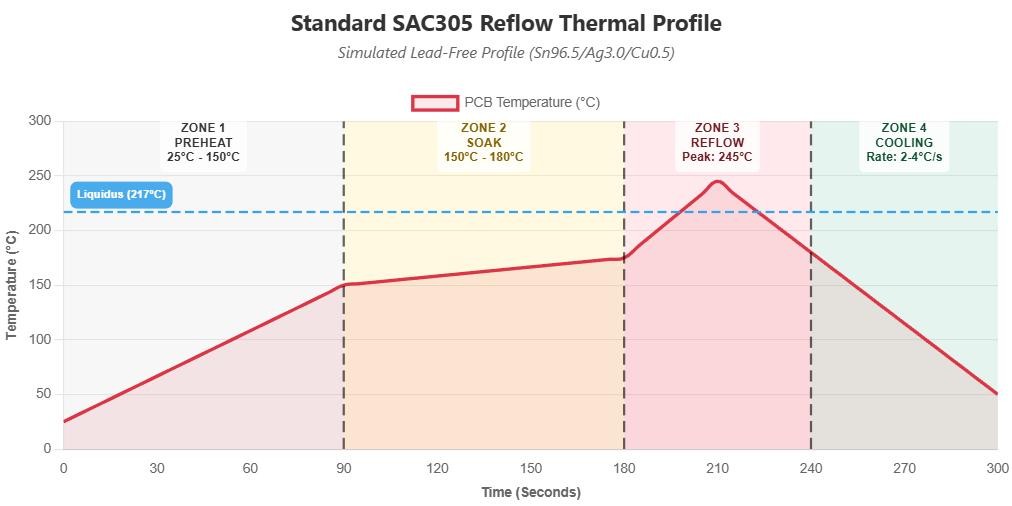
A standard reflow profile consists of four zones, heavily dictated by the alloy's properties:
Preheat Zone
The assembly is slowly heated to activate the flux and drive off volatile solvents.
Soak Zone
Temperature stabilizes just below the solder melting point. This large component (such as inductors) and small component (such as 0402 resistors) heating up together ensures that no tombstoning occurs.
Reflow Zone (TAL)
This is the critical spike. The temperature pushes past the liquidus point. Peak Temp: Usually 20°C to 40°C above the melting point (e.g., 245°C for SAC305). Time Above Liquidus (TAL): The solder must remain molten for 60–90 seconds. Too short, and the solder won't wet the pad; too long, and the heat damages the PCB or creates a brittle Intermetallic Compound (IMC) layer.
Cooling Zone
Rapid cooling to freeze the solder into a fine-grain structure.
JLCPCB SMT Assembly
At JLCPCB, our SMT lines utilize advanced 10-zone reflow ovens. Our engineers customize these thermal profiles based on whether you select "Leaded" or "Lead-Free" assembly in your order, ensuring the solder melting point is reached safely without thermally shocking your sensitive components.
Critical Factors Affecting Solder Melting Point Selection
Why not just use the lowest melting point solder for everything to save energy? Several technical factors dictate the choice.
Component Thermal Sensitivity and Melting Thresholds
Some components, such as plastic OLED screens or specific electrolytic capacitors, cannot withstand the 245°C peak temperature required for SAC305. In these cases, a low-temp Tin-Bismuth solder (melting at 138°C) is necessary.
PCB Substrate Tg vs. Solder Melting Temps
The Glass Transition Temperature (Tg) of the FR-4 material is the point where the rigid PCB begins to soften and expand.
Standard FR-4 Tg: ~130°C – 140°C.
High Tg FR-4: >170°C. If your lead-free reflow process requires high heat, the PCB expands significantly in the Z-axis (thickness). If the expansion is too drastic, it can rip the copper plating inside the via holes (barrel cracks). For high-reliability lead-free assembly, JLCPCB recommends choosing High-Tg FR-4 during the quoting process.
Service Temperature and Alloy Stability
The environment where the device lives matters. An automotive sensor under the hood might see ambient temperatures of 120°C. If that sensor is soldered with Tin-Bismuth (melting at 138°C), the joints will soften and fail during operation. The service temperature should generally remain well below the alloy's solidus point.
Solder Melting Point in Rework and Hand Soldering
The solder melting point also dictates how manual rework must be handled.
Iron Temperature: For hand soldering, the iron tip acts as a heat reservoir. It must be set significantly higher than the melting point to transfer heat quickly — typically 350°C for leaded and 380°C – 400°C for lead-free.
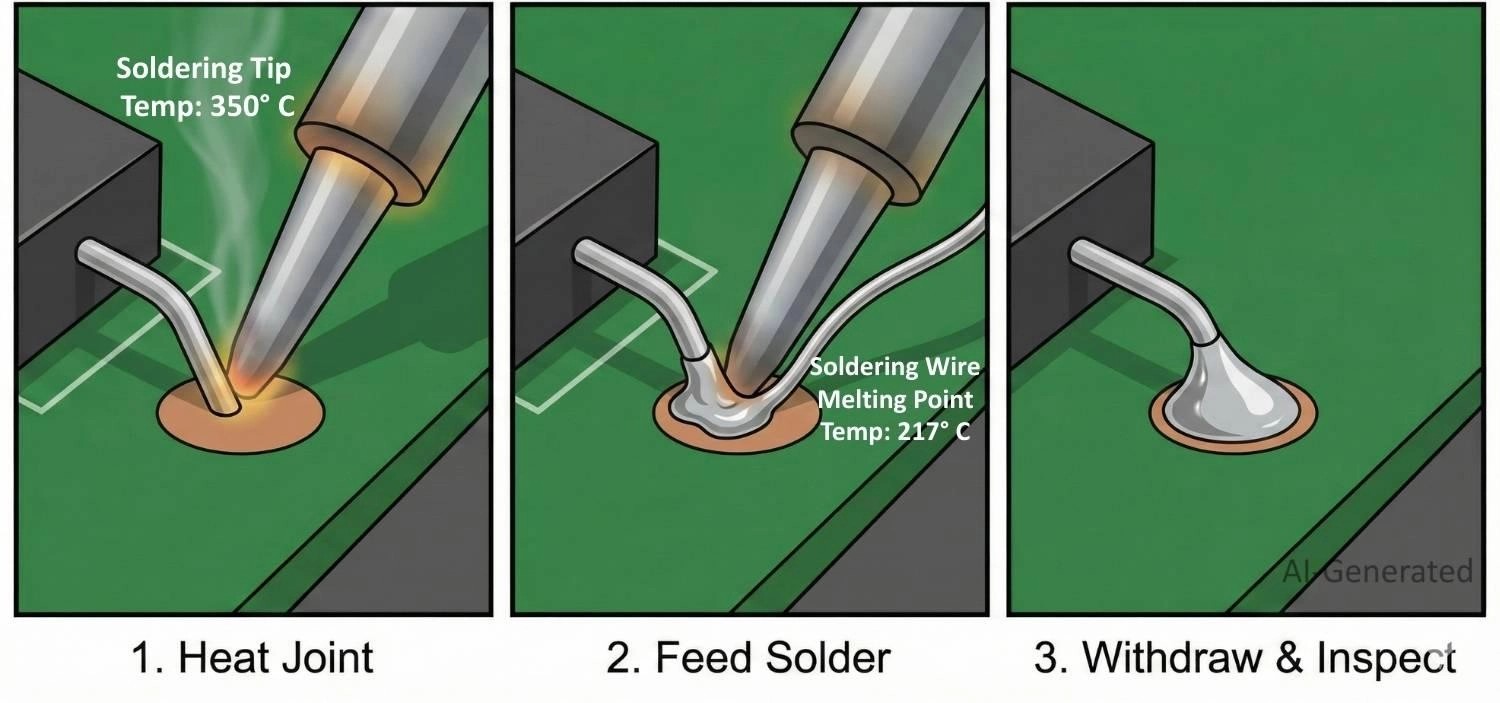
Desoldering: One popular technician method for getting rid of a hard-to-remove lead-free component is to cover the joint with leaded solder. The soldering creates a new mixed alloy that has a lower melting point; hence, the component can be taken out with less heat stress on the pad.
For complex designs where hand soldering carries a high risk of bridging or overheating, utilizing JLCPCB SMT stencils ensures precise paste application. This allows you to reflow components using a hot plate or oven, guaranteeing the entire board reaches the melting point uniformly.
FAQ about Solder Melting Points
Q: Can I mix leaded and lead-free solder during rework?
Technically, mixing leaded and lead-free solder is possible, but not recommended for high-reliability electronics. The combination of SnPb (Leaded) and SAC305 (Lead-free) results in forming a "ternary" alloy whose melting point is undefined, and it is sometimes lower than that of either original alloy (approx. 177°C). Although this promotes component removal (desoldering), it may create 'hot tearing' or phase segregation, which results in a weaker joint if it is unintentionally left on the board.
Q: Why do my lead-free solder joints look dull? Is this a "cold joint"?
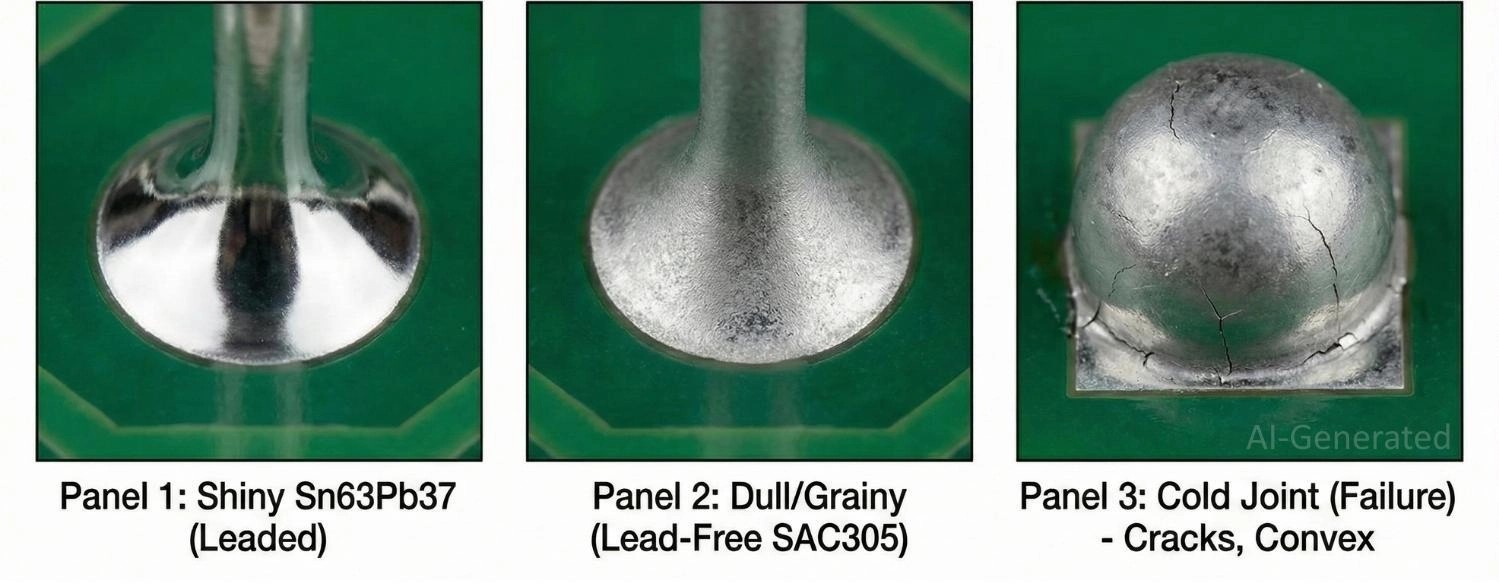
Not necessarily. A classic "cold joint" (caused by not reaching the melting point) looks granular and dull. However, perfectly good SAC305 joints also look dull and grainy compared to the shiny mirror finish of Sn63Pb37. This is due to the natural grain structure of the high-tin alloy as it cools. Visual inspection criteria must be adjusted when switching from leaded to lead-free processes.
Q: How does "Thermal Mass" affect the melting point in the oven?
The melting point of the solder is fixed, but the time it takes for a specific pad to reach that temperature varies. A small resistor pad might reach 217°C in 3 minutes, while a USB connector ground pin connected to a large copper plane might only reach 200°C in the same time. This is why JLCPCB engineers optimize the "Soak Zone" of the reflow profile — to allow heat to equalize across the board so that heavy copper areas hit the melting point at the same time as small pads.
Q: Does old solder paste affect the melting point?
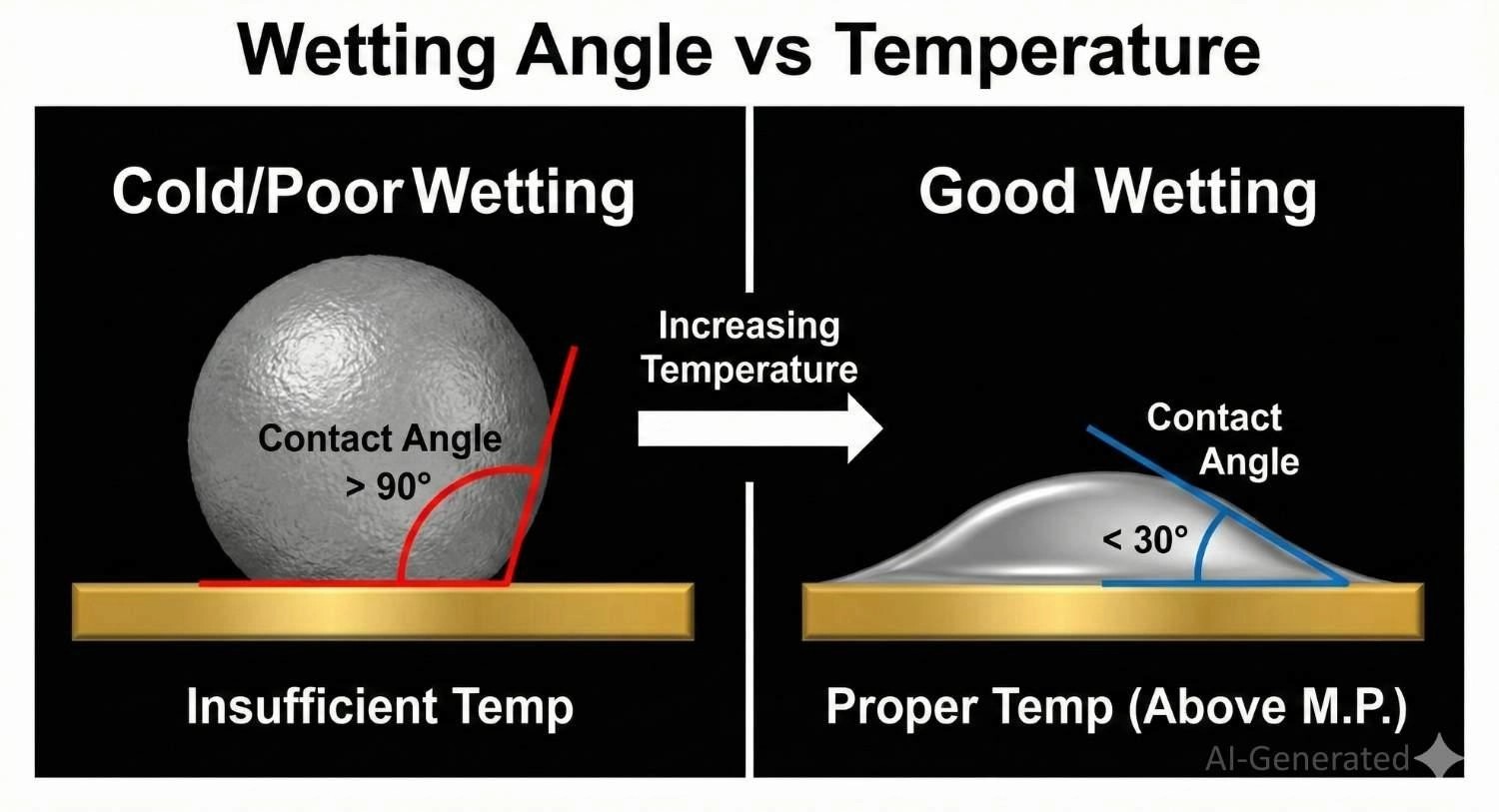
The metal alloy itself does not change melting points as it ages, but the flux degrades. Old flux loses its ability to remove oxides. If the oxides aren't removed, the solder cannot "wet" the pad even if the oven is well above the melting point. The solder will simply ball up on top of the pad (graping effect — solder paste balling due to insufficient flux activity) rather than flowing into a joint.
Q: What happens if I reflow a board twice?
Double-sided SMT assembly requires the board to go through the oven twice. The solder joints on the first side will re-melt during the second pass (unless using glues or low-temp alloys). While the joint will reform, each reflow cycle increases the thickness of the Intermetallic Compound (IMC) layer. Too many reflow cycles can make the joint brittle and prone to fracture under physical stress.
Conclusion: Solder Melting Points in Electronics Manufacturing
Knowing the melting point of solder is a very important factor in electronics manufacturing. It is the property that bridges the gap between material science and production. No matter if you are playing with the sharp eutectic point of Sn63Pb37 or dealing with the higher thermal demands of SAC305, accuracy is of utmost importance. Just a few degrees off can result in the formation of cold solder joints, lifting of pads, or even destruction of silicon.
Make sure your next project complies with the highest industry standards. By mastering these thermal characteristics, you can adjust your product design to ease the manufacturing process.
Popular Articles
• SMT Assembly Process Explained and Equipment Used: A Step-by-Step Guide to PCBA Manufacturing
• Common PCB Assembly Methods and Soldering Techniques Explained
• SMD Soldering Tools You Need: Complete Guide from Beginner to Pro
• What Is BGA Void? Causes, IPC Limits, and Solutions
• Reflow Soldering: Everything You Need to Know
Keep Learning
How to Repair a PCB: Traces, Pads, Solder Joints and Corrosion
figure: reworking an SMD joint with a soldering iron and tweezers A cut trace, a lifted pad or a joint that cracked after two years of thermal cycling doesn't mean the board is scrap. Most surface-level circuit board damage can be fixed with an iron, a multimeter and an hour at the bench. This guide covers finding the fault, the five most common repairs, and testing the board before it goes back into service. Each repair is broken into the steps you perform, in order, with the mistakes that most often......
How to Solder Wires to a Circuit Board Properly: Step-by-Step Guide
Learning how to solder wires to a circuit board is a fundamental skill for electronics repair, prototyping, and PCB assembly. Whether you are attaching power leads, signal wires, or test connections, a weak solder joint can cause intermittent failures, lifted pads, or long-term reliability issues. In this step-by-step guide, you'll learn the correct tools, preparation methods, and soldering techniques needed to create strong, clean, and reliable wire-to-PCB connections. From preparing the wire and PCB......
PCB Soldering Basic Techniques and Overview
Soldering means joining metal components with a melted metal called solder, which has a low melting point compared to other metals. Soldering is crucial in the electronics industry and is the primary method of joining electrical components. There are different types of soldering materials based on quality and their melting points. The most common combination is a tin or lead metal alloy mixed with silver or brass. The soldering iron melts the metal so it can be used like glue to connect two pieces. On......
SMT Assembly Process Explained and Equipment Used: A Step-by-Step Guide to PCBA Manufacturing
Today's high-performance electronics, from pocket-sized smartphones and IoT sensors to sophisticated industrial control systems, are made possible by a manufacturing miracle: Surface Mount Technology (SMT). SMT is the backbone of electronics manufacturing, allowing us to have the incredible component density and miniaturization. A bare circuit board is simply a substrate. The process of transforming it into a functional electronic circuit is known as Printed Circuit Board Assembly. This article outlin......
Common PCB Assembly Methods and Soldering Techniques Explained
Whether you're designing your first prototype or scaling up to production, understanding PCB assembly methods and soldering techniques is crucial to achieving reliable, high-performance circuit boards. Modern PCBA primarily relies on Surface Mount Technology (SMT) and Through-Hole Technology (THT)—each offering unique advantages for component density, durability, and manufacturability. In this guide, we'll break down the major PCB assembly methods, key soldering techniques such as reflow and wave sold......
What Is Tombstoning? A Practical Guide to Causes, Reflow Risks, Prevention, and Rework
Key Takeaways Definition: Tombstoning occurs when a small two-terminal component lifts off one pad during reflow and stands upright, leaving one end without a proper solder connection. Root Cause: Unequal solder wetting forces act on the two terminals, often due to differences in pad temperature, solder-paste volume, pad geometry, or thermal mass. Highest Risk: Small passive components, such as 0201 and 0402 resistors and capacitors, are especially susceptible because their low mass and small terminat......