The Industrial Heartbeat — A Rigorous Guide to Heat Exchanger Health and Longevity
9 min
- The Industrial Heartbeat — A Rigorous Guide to Heat Exchanger Health and Longevity
- 1. The Waiting Game — Storage and Preservation
- 2. Installation — The Geometry of Stress
- 3. Commissioning — Avoiding Thermal Shock
- 4. Maintenance — Tiered Defense
- 5. Troubleshooting — A Clinical Approach
- 6. Seeing the Unseen — Advanced Non-Destructive Testing
- The Takeaway
- FAQ
The Industrial Heartbeat — A Rigorous Guide to Heat Exchanger Health and Longevity
Walk through almost any large industrial facility — a refinery, a power plant, a chemical processing complex — and somewhere in the tangle of pipes and platforms you will find a heat exchanger. It won't announce itself. It has no moving parts, makes no sound, and demands no dramatic attention. And yet, remove it, and the entire operation collapses. Heat exchangers are the circulatory system of industry, silently shuttling thermal energy from where it is unwanted to where it is needed, keeping temperatures in check, recovering wasted heat, and enabling chemical reactions that sustain modern civilization.
Yet for all their importance, these devices are routinely taken for granted — until something goes wrong. According to Chapter 16 of the authoritative Heat Exchanger Design Handbook, the vast majority of service failures are not the fault of bad engineering or substandard materials. They are the predictable consequence of improper installation, careless operation, or neglected maintenance. In other words, we break them ourselves.
What follows is a guide to getting it right — from the moment a heat exchanger arrives on site to the day it is finally retired.
1. The Waiting Game — Storage and Preservation
Steel is patient, but it is not passive. The moment a heat exchanger leaves the controlled environment of a factory, oxidation begins its quiet work. Humidity condenses on internal surfaces, microscopic rust blooms form, and by the time the unit reaches installation day, it may already be compromised — before a drop of process fluid has ever touched it.
For units awaiting near-term installation, the prescription is simple: store indoors in a clean, dry space. If outdoor storage is unavoidable, the unit must be hermetically sealed in vinyl sheeting to block moisture ingress. Think of it as a hibernation pod.
Long-term storage — anything beyond two months — requires more active intervention. Internal surfaces must be treated with rust-preventive oils on a regular cycle. For Plate Heat Exchangers (PHE), the tightening bolts should actually be loosened during storage. This counterintuitive step places the plate pack in a "stress-free" state, allowing the gaskets to breathe and retain their elasticity rather than slowly taking a permanent set under compression. Any unit that has sat idle for over a year should be pressure-tested before returning to service — no exceptions.
2. Installation — The Geometry of Stress
Heat exchangers are not static objects. Feed them hot fluid and they grow — expanding measurably along their length as metal heats up. Cool them down and they shrink back. An engineer who treats installation as a simple plumbing job, bolting the unit rigidly in place, is setting the stage for cracked welds, blown gaskets, and fractured nozzles.
Correct installation respects this thermal breathing. Foundation bolts at one end must be left loose or set in slotted holes, allowing the shell to slide freely as it expands. The supporting surface must be perfectly level — an uneven foundation causes the unit to sag and warp over time as thousands of thermal cycles accumulate.
Piping connections deserve equal care. A common and costly mistake is forcing piping to align with nozzles rather than fabricating the pipework to meet them naturally. Every newton of mechanical stress imposed at a connection point is a stress that will eventually find its expression in a crack. Vibration — from nearby pumps or compressors — must also be dampened before it reaches the unit. Pulsating flow is essentially an acoustic jackhammer; applied repeatedly to a tube bundle, it induces fatigue failures that no material can indefinitely resist.
Finally, install high-point vents. Air trapped inside a heat exchanger creates insulating pockets — a phenomenon called vapor binding — that block heat transfer and cause dangerous localized overheating. Purging air at startup is not optional housekeeping; it is fundamental physics.
3. Commissioning — Avoiding Thermal Shock
Imagine dropping a cold glass into boiling water. The outer surface expands violently while the interior remains cold — and the glass shatters. The same physics applies to a heat exchanger introduced abruptly to extreme temperature differentials. Shell and tubes, made of different materials with different expansion coefficients, lurch at different rates. Tubes can shear from their tube sheets; gaskets can rupture.
The commissioning sequence exists to prevent exactly this. Always introduce the cold fluid stream first, allowing the unit to establish a stable baseline temperature. Only then should the hot medium be introduced — gradually, with vents open until the unit is confirmed to be fully liquid-filled and air-free.
Shutdown is the mirror image: stop the hot fluid first, let the unit cool gently, then close off the cold side. Reversing this order — stopping the cold stream while hot fluid still flows — creates the same thermal shock conditions the startup protocol was designed to avoid. These sequences should be posted as standing operating procedures, not left to individual memory.
4. Maintenance — Tiered Defense
Good maintenance is not reactive — it is a layered intelligence system designed to catch problems at their earliest, cheapest stage.
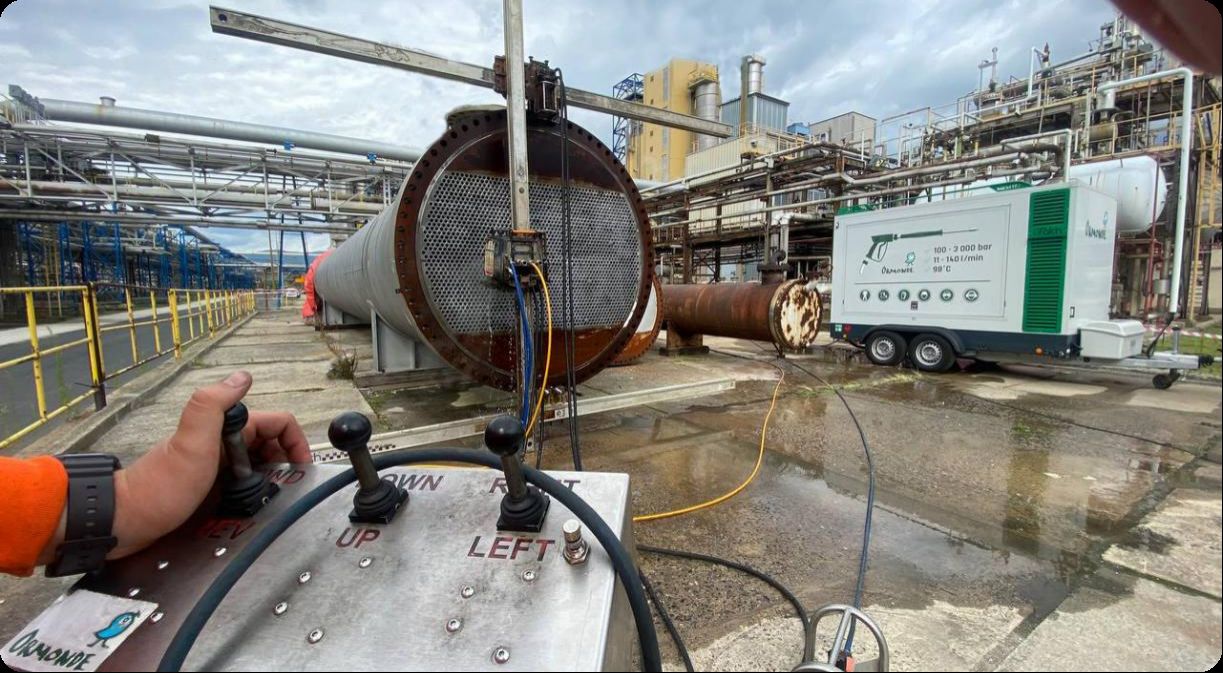
The first layer is simple observation. Technicians should track pressure drop across the unit daily. A rising trend is the earliest warning of fouling — the slow accumulation of scale, sludge, or biological growth that clogs tubes and chokes flow. Caught early, fouling is a cleaning job. Ignored, it becomes a performance crisis and eventually a metallurgical one, as trapped deposits concentrate corrosive chemistry.
For vessels fitted with internal liners, weep holes serve as diagnostic sentinels. Fluid appearing at a weep hole is an unambiguous signal: the liner has failed and needs attention before the underlying structure is compromised.
One rule in maintenance deserves particular emphasis: gaskets are single-use items. Once a heat exchanger is opened for inspection or repair, the gasket has fulfilled its service life. Reusing a compressed, aged gasket to save a few dollars is a false economy that buys a leak — and potentially a much more serious incident.
Before any personnel opens a unit, Lockout/Tagout (LOTO) protocol is non-negotiable. Isolate all piping, depressurize fully, and neutralize any toxic or reactive fluids. No maintenance task is urgent enough to skip these steps.
5. Troubleshooting — A Clinical Approach
When a heat exchanger begins to underperform, diagnosis follows the same logic as medicine: read the symptoms, trace them to their physiological cause, and prescribe the minimum intervention that addresses the root problem.
|
Symptom |
Likely Cause |
Recommended Action |
|---|---|---|
|
High Pressure Drop |
Fouling (clogged tubes) or vapor binding (trapped air pockets) |
Chemical or mechanical cleaning; vent trapped air |
|
Reduced Heat Transfer |
Fluid bypassing tubes or uneven flow distribution |
Check baffle orientation; measure inlet/outlet temperatures |
|
External Leaks |
Gasket fatigue or bolt relaxation |
Replace gaskets (never reuse); re-torque bolts to specification |
|
Tube Leaks |
Corrosion or vibration-induced fatigue |
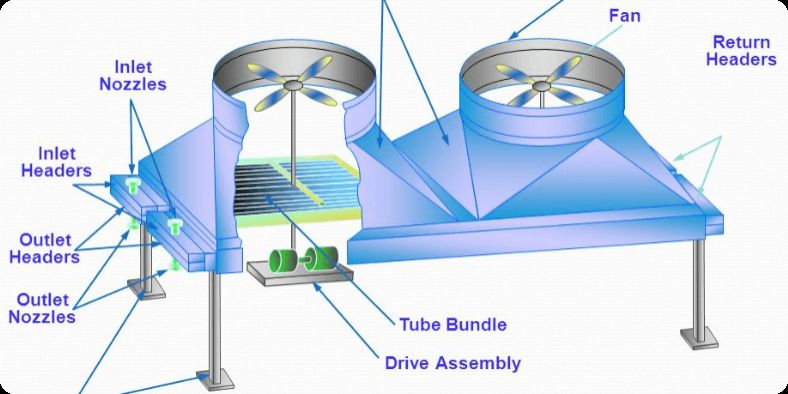
Hydrostatic test to locate leaks; plug (up to 10%) or sleeve affected tubes |
6. Seeing the Unseen — Advanced Non-Destructive Testing
Visual inspection tells you what is already broken. Non-Destructive Testing (NDT) tells you what is about to break — a vastly more valuable proposition for any piece of critical infrastructure.
The Internal Rotary Inspection System (IRIS) deploys ultrasonic waves to map tube wall thickness from the inside out, producing a detailed picture of where metal has been lost to corrosion or erosion. It is especially effective on carbon steel but can miss very fine cracks.
Eddy Current Testing (ECT) works by electromagnetic induction — passing an alternating current through a probe and measuring how the resulting magnetic field is disturbed by flaws in the tube wall. ECT is the method of choice for non-ferrous materials such as copper, titanium, and stainless steel alloys, and is particularly adept at detecting stress corrosion cracking that ultrasonic methods might overlook.
Used on a regular inspection cycle, these techniques transform maintenance from guesswork into a data-driven discipline. They are the difference between scheduling a tube replacement at a convenient planned shutdown and discovering a catastrophic leak at 2 a.m. on a Sunday.
The Takeaway
A heat exchanger asks very little — no lubrication, no moving parts to replace, no software updates. What it does ask for is respect: respect for the physics of thermal expansion, respect for the chemistry of corrosion, and respect for the engineering logic embedded in every operating procedure.
The facilities that keep these machines running for forty years rather than four are not the ones with the most advanced metallurgy. They are the ones where every technician understands why the cold fluid always goes in first, why a gasket is never reused, and why a slow climb in pressure drop is worth investigating today rather than explaining away until tomorrow.
In industry, the silent machines are the ones that matter most. Keep them silent.

FAQ
Q: Why do heat exchangers fail if they're so simple?
Most failures aren't due to design flaws or poor materials — they're caused by improper installation, careless operation, or neglected maintenance. Common mistakes include rigid mounting that doesn't allow for thermal expansion, forcing piping connections instead of fitting them naturally, and reusing gaskets that should be replaced. The equipment is robust, but it requires respect for basic physics and proper procedures.
Q: What's the single most important rule during startup and shutdown?
Always introduce the cold fluid first during startup, then gradually add the hot fluid. During shutdown, stop the hot fluid first and let the unit cool before closing the cold side. Reversing this order causes thermal shock — rapid, uneven expansion that can shear tubes from tube sheets and rupture gaskets. Think of it like the glass-in-boiling-water effect: sudden temperature changes cause catastrophic stress.
Q: How can I tell if my heat exchanger needs attention before it fails?
Watch the pressure drop across the unit daily. A gradual increase signals fouling — the buildup of scale or deposits that restricts flow. Caught early, this is just a cleaning job. Ignored, it becomes a performance crisis and eventually causes corrosion as deposits trap aggressive chemistry against metal surfaces. For units with liners, any fluid at the weep holes means the liner has failed and needs immediate repair.
Keep Learning
Induction Billet Heating: How to Achieve Uniform Heating
Induction billet heating prepares metal for forging, extrusion, or rolling by generating heat inside the workpiece. For steel billets, reaching the required exit temperature is only part of the task: the temperature distribution from surface to core and along the billet must also suit the forming process. Uniformity depends on how frequency, coil geometry, heat transfer, power distribution, and billet movement work together. This guide focuses on through-heating steel billets, particularly in progress......
How to Upgrade a 3D Printer Heated Bed with a Silicone Heater
If your 3D printer heated bed takes too long to reach temperature, develops uneven heating, or struggles to maintain a stable surface temperature, a silicone heater can be a practical upgrade. Faster warm-up and more uniform heat can improve first-layer consistency and reduce temperature-related printing issues. This guide explains how to identify when a heated-bed upgrade is needed, choose a suitable silicone heater, install it safely, and verify the results. Quick Answer A silicone heater can be a s......
How Graphene and MXene Flake Sensors Detect Force
Key Takeaways Flake networks sense force through microstructural change: Graphene and MXene coatings distribute conduction across overlapping platelets whose contacts shift under stretch or pressure, producing measurable resistance changes. Three mechanisms compete: Crack propagation, flake slippage, and quantum tunnelling each dominate at different deformation levels, giving many sensors multiple sensitivity regions rather than one uniform response. The substrate is an active partner: Elastomers, tex......
Conductive 2D Coatings Are a Matching Problem, Not a Miracle Ink
Key Takeaways Ink is a system, not a material: Conductivity depends on the combined effect of flake chemistry, solvent, additives, substrate, coating method, and post-processing—not on the 2D filler alone. Three carbon routes carry different trade-offs: GNPs demand dispersion engineering, GO shifts effort to a reduction step, and MXenes move the bottleneck to synthesis, storage, and oxidation control. Substrate geometry drives method selection: Spray and blade coating suit flat sheets; dip coating nat......
Graphene Heat Spreader Design: Layers and Interfaces
Key Takeaways Conductivity alone is not enough: A record thermal-conductivity value does not guarantee a cooler chip. Effective thickness, interface resistance, hot-spot geometry, and heat-sink connections all belong to the same thermal path. Few-layer graphene can outperform a single layer in practice: A few-layer sheet provides a larger heat-flow cross section and better tolerates transfer, embedding, and defects, even though its intrinsic conductivity is lower. Interface resistance is the bottlenec......
How Graphene Heat Spreaders Cool SOI Chip Hot Spots
Key Takeaways Buried oxide is a thermal bottleneck: SOI's insulating layer improves electrical isolation but traps heat near transistor channels, creating dangerous hot spots that package-level cooling alone cannot fix. Graphene enables lateral heat routing: Placing graphene or few-layer graphene beneath the buried oxide adds a high-conductivity sideways path, redistributing hot-spot energy toward dedicated sinks without removing any heat itself. Multi-source chips benefit most: Finite-element modelin......