Dimensional Stability in PCB Manufacturing: Precision Solutions for Reliable PCBs
7 min
- What is Dimensional Stability and Why Does It Matter?
- Key Factors That Affect Dimensional Stability
- Common Problems Caused by Poor Dimensional Stability
- How Professional Manufacturers Deliver Superior Dimensional Stability
- Practical Tips to Achieve Better Dimensional Stability
- Frequently Asked Questions about Dimensional Stability
- Conclusion: Choose Precision Manufacturing for Reliable PCBs
Key Takeaways
Dimensional stability is a PCB’s ability to maintain precise dimensions and flatness under thermal, humidity, and mechanical stresses. It is essential for accurate layer registration, preventing warpage, via cracks, and assembly failures in multilayer boards. Achieving this requires high-Tg FR-4 materials with low CTE, symmetric stack-ups, balanced copper, and tightly controlled lamination. Professional manufacturing delivers <0.75% bow/twist and ±0.1 mm tolerances, ensuring higher yields and superior reliability in automotive, medical, and telecom applications.
Dimensional stability is the ability of a PCB substrate and finished board to maintain its intended dimensions under varying temperatures, humidity, mechanical stress, and chemical exposure during fabrication, assembly, and operation. For engineers designing high-reliability electronics, this property directly determines registration accuracy in multilayer boards, solder joint integrity, and long-term field performance. Poor dimensional stability can cause trace misalignment, via cracking, or board warpage—issues that lead to assembly failures and reduced product lifespan.
In practice, dimensional stability becomes critical as boards shrink, layer counts increase, and operating environments demand tighter tolerances. Industry data shows that even minor shifts of 0.1–0.2 mm can exceed acceptable limits for fine-pitch components or high-density interconnects. Professional PCB manufacturers address this through careful material selection, controlled processes, and rigorous quality systems to deliver boards that meet or exceed IPC standards for bow and twist (typically <0.75% for most applications).
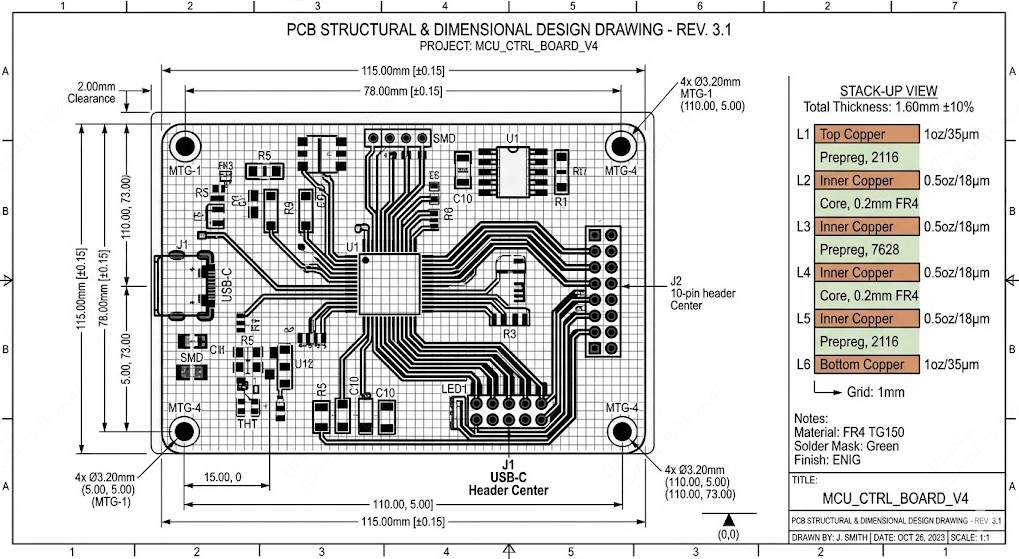
What is Dimensional Stability and Why Does It Matter?
Dimensional stability quantifies a material’s resistance to change in length, width, or thickness due to environmental or processing stresses. In PCB terms, it is measured by changes in feature positions (e.g., hole-to-hole or pad-to-pad registration) and overall board flatness. Key metrics include coefficient of thermal expansion (CTE) in X/Y and Z axes, glass transition temperature (Tg), and moisture absorption.
The impact is immediate and measurable. During lamination, resin shrinkage and copper expansion can shift inner layers by tens of microns if not compensated. In reflow soldering, CTE mismatch between FR-4 (typically 13–18 ppm/°C in X/Y) and copper (17 ppm/°C) or components creates stress that warps boards or fractures vias. Real-world consequences include misaligned BGA balls, open circuits, or intermittent failures in automotive, medical, and telecom applications where boards endure thermal cycling from -40°C to +125°C.
Engineers prioritize dimensional stability because it directly correlates with yield and reliability. Boards with stable dimensions simplify automated optical inspection (AOI) and pick-and-place processes, reducing scrap and field returns.
Key Factors That Affect Dimensional Stability
Material Selection and Its Critical Role
Material choice forms the foundation of dimensional stability. Standard FR-4 laminates, reinforced with woven E-glass and epoxy resin, offer a balanced CTE and good mechanical strength. Higher-Tg variants (150–160°C or 170°C+) reduce Z-axis expansion above the glass transition point, minimizing via stress during lead-free soldering.
The table below summarizes typical CTE values for common PCB materials (X/Y plane):
| Material | CTE (ppm/°C, X/Y) | Tg (°C) | Typical Use Case |
|---|---|---|---|
| Standard FR-4 | 13–18 | 130–140 | General-purpose, cost-sensitive |
| High-Tg FR-4 | 12–15 | 150–170+ | Multilayer, high-reliability |
| Rogers/PTFE | 10–16 | >280 | RF/microwave |
| Polyimide | 12–15 | 250–260 | Flexible, extreme environments |
Professional manufacturers source Grade A FR-4 from reputable suppliers to ensure consistent resin content and low moisture absorption, further enhancing stability.
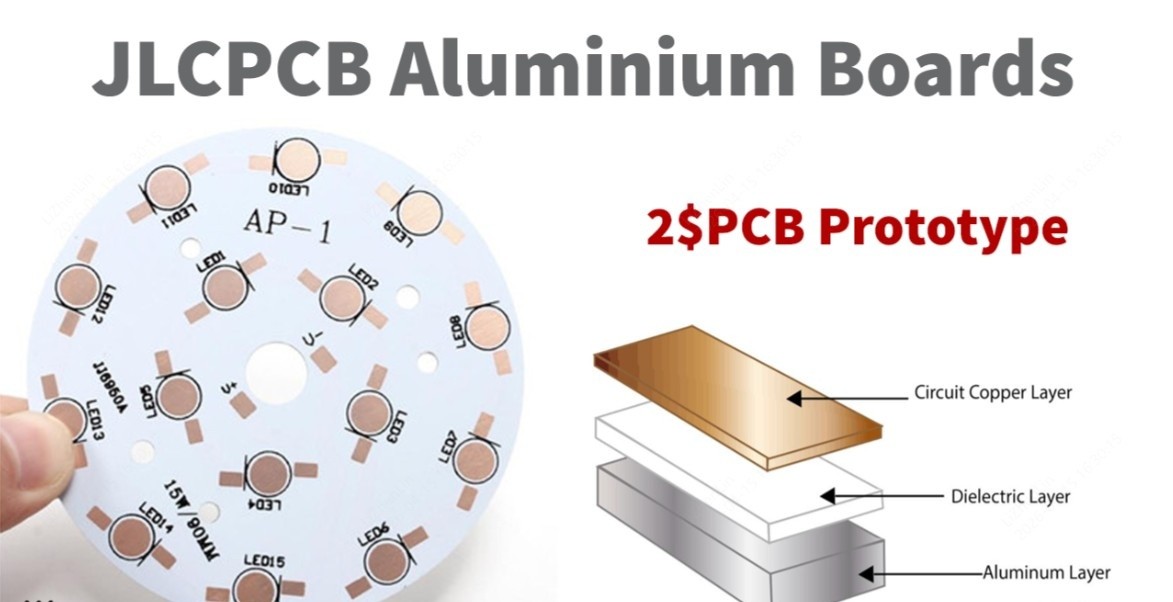
Manufacturing Processes That Control Stability
Lamination is the most influential step. Multiple cores and prepregs are stacked under heat and pressure; any imbalance in resin flow or copper distribution causes differential shrinkage. Precise scaling factors (compensation for material movement) and controlled press cycles maintain layer-to-layer registration within tight limits.
Subsequent processes—drilling, imaging, etching, and plating—must preserve these dimensions. Over-etching or uneven plating can introduce internal stresses. Leading facilities use automated controls and vacuum-assisted presses to minimize variability.
Design and Environmental Challenges
Balanced copper distribution across layers, symmetric stack-ups , and adequate clearances reduce bow and twist. Environmental factors such as humidity during storage or rapid temperature ramps in assembly further test stability. Designers mitigate these by following IPC-2221 guidelines and specifying panelization for small boards to improve handling rigidity.
Common Problems Caused by Poor Dimensional Stability
Assembly Failures and Reliability Risks
- Warpage exceeding 0.75% can prevent proper solder paste contact or cause component tombstoning.
- In fine-pitch BGAs, even 50 μm of shift leads to opens or shorts.
- Thermal cycling exacerbates micro-cracks in vias or solder joints due to CTE mismatch, shortening mean time between failures (MTBF).
Industry-Specific Requirements and Consequences
Aerospace and automotive standards demand <0.5% bow/twist and tighter hole-position tolerances. Medical devices require traceability and zero-defect levels. Failure to meet these results in costly redesigns, delayed certifications, or field failures that damage brand reputation.
How Professional Manufacturers Deliver Superior Dimensional Stability
Advanced Materials and Innovative Techniques
Expert manufacturers select high-Tg FR-4 laminates and apply scaling algorithms based on empirical shrinkage data for each material batch. Controlled resin content and low-moisture prepregs further limit movement. These steps ensure registration accuracy even in 8–12 layer boards.
State-of-the-Art Facilities and Process Controls
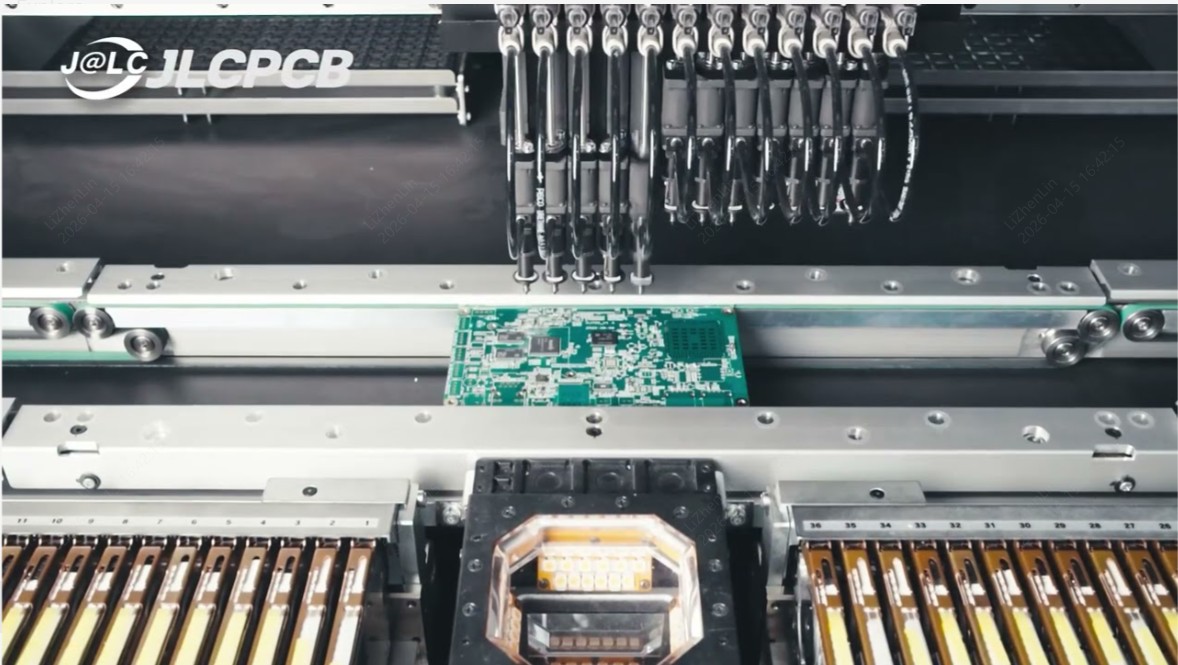
Modern facilities employ computer-controlled hydraulic or vacuum presses with precise temperature ramping and cooling profiles. Automated material handling prevents contamination or uneven pressure. Dimension tolerances are held to ±0.1 mm for outlines, while thickness stays within ±10% (for boards ≥1.0 mm) or ±0.1 mm (thinner boards). Such controls directly translate to predictable dimensional behavior.
Rigorous Quality Assurance and Proven Results
AOI, X-ray, and electrical testing verify every board against design data. Statistical process control tracks key parameters like hole position and flatness. Manufacturers achieving these standards consistently deliver boards with <0.5% warpage and reliable performance across thermal cycles.
Practical Tips to Achieve Better Dimensional Stability
- Use symmetric stack-ups and balanced copper pours.
- Specify high-Tg material for boards >4 layers or high-temperature assembly.
- Add fiducials and panel rails for better registration.
- Follow manufacturer design rules for minimum clearances and aspect ratios.
- Request impedance control where signal integrity matters.
Frequently Asked Questions about Dimensional Stability
Q: What is dimensional stability in PCB manufacturing?
Dimensional stability is a PCB’s ability to maintain its exact designed dimensions under heat, humidity, and mechanical stress. It ensures accurate layer registration, flatness, and reliable assembly.
Q: How does material choice affect dimensional stability?
Higher-Tg FR-4 materials (150–170°C+) and lower CTE values reduce expansion and shrinkage. This minimizes warpage and via stress during soldering and thermal cycling.
Q: What problems result from poor dimensional stability?
Common issues include board warpage >0.75%, misaligned pads, tombstoning, via cracks, and higher field failure rates in automotive, medical, and telecom applications.
Q: How can engineers ensure better dimensional stability?
Use symmetric stack-ups, specify high-Tg materials when needed, follow DFM guidelines, and partner with manufacturers offering tight tolerances (±0.1 mm) and full quality reports.
Conclusion: Choose Precision Manufacturing for Reliable PCBs
Dimensional stability is not an afterthought; it is a foundational requirement for modern electronics. By understanding its drivers, avoiding common pitfalls, and working with manufacturers that combine advanced materials, controlled processes, and rigorous quality systems, engineers achieve the precision needed for today’s demanding applications. The result is higher yields, lower costs over the product lifecycle, and electronics that perform reliably under real-world conditions.
Selecting precision manufacturing partners who consistently meet or exceed industry tolerances delivers the confidence that your boards will fit, function, and endure. For designs where dimensional stability matters—and in most cases it does—the right manufacturing expertise turns a potential risk into a competitive advantage.
Popular Articles
• Understanding the Basics of Electronic Devices and Circuits
• Understanding Digital Circuit Timing: Setup Time, Hold Time, Contamination Delay & Clock Skew
• PCBs Explained: A Simple Guide to Printed Circuit Boards
• Guide to the Top 10 Commonly Used Electronic Components
• Digital 101: Fundamental Building Blocks of Digital Logic Design
Keep Learning
Polyimide Flex PCB: A Complete Guide for Engineers
A polyimide flex PCB can be folded about 285,000 times when the base film is 25 µm (1 mil) thick. Make that film 75 µm (3 mil), and the same MIT fold test gives up near 6,000 cycles. Bending is a strain problem, not a material problem. Copper sits above the center of the stack, so a bend forces it to stretch around the longer outer path. Figure 1: A polyimide flex circuit folded tight, with a stiffener holding the connector A thicker stack places the copper farther out, resulting in more stretch at th......
Flex PCB Bend Radius: Calculation, Minimum Radius & Design Guidelines
Flex PCB bend radius is the one dimension on an FPC that no design rule check will catch. Bend the circuit tighter than its material allows; the outer copper stretches from its elongation limit, and then it cracks. Figure 1: A flex circuit formed around a mandrel, with bend radius and stack thickness A flex circuit bends around a neutral axis near the middle of its stack. Copper below that line is squeezed, and copper above it is pulled. So the further a layer sits from the line, the harder it is to w......
Flexible Circuit Connector: Types, Features & Selection Guide
A flexible circuit connector clamps onto the bare copper at the end of a flex circuit, so nothing is soldered at that joint. The tail slides into the housing, and an actuator presses a row of spring contacts onto the pads. Every connector is built around one tail thickness. TE's 0.5 mm pitch 2328702 family expects 0.30 mm (12 mil) of flex, because the contact beams are deflected by exactly that dimension. Figure 1: Cross-section of a 0.5 mm pitch FPC connector with the tail inserted Feed it a bare sin......
FPC vs FFC: Understanding the Key Differences Between Flexible Circuit Technologies
The FPC vs FFC decision is really a question about how the copper was made. An FFC consists of flat copper strips laminated between two PET films. Every conductor runs straight from end to end at one fixed pitch, because nothing in that process can make a trace turn or branch. An FPC starts as copper-clad polyimide and is etched exactly like a rigid board. Traces can turn, taper, split onto a second layer, and land under a soldered component. The finished circuit can be as thin as 0.1 mm (4 mil). Figu......
A Comprehensive Guide to Capacitor ESR: What It Is, Good Values, and How to Measure It
Key Takeaways Definition: Capacitor ESR (equivalent series resistance) is the single resistance that represents the losses inside a real capacitor, from its electrodes, terminations, electrolyte, and dielectric. Why It Matters: Ripple current flowing through the ESR produces a ripple-voltage step on the supply rail and I²R heating in the capacitor, which limits the capacitor's ripple-current rating and service life. Conditions Matter: ESR varies with frequency, temperature, capacitance, case size, and......
Understanding IPC-6012 Standards for High-Reliability Rigid PCB Fabrication
Key Takeaways IPC-6012 vs. IPC-A-600: IPC-6012 is the binding specification, while IPC-A-600 is only for visual reference. Class 2 vs. Class 3: Class 3 requires thicker copper (25μm vs. 20μm) and zero plating voids. Coupon Verification: Quality is tested by microsectioning panel coupons after thermal stress. Upfront Callout: Specify the class on drawings upfront; boards cannot be upgraded later. IPC-6012 is the line on your fabrication drawing that decides what your supplier is allowed to ship. Most d......