Selecting a PCB Assembly Manufacturer: Expert Engineer Tips
11 min
- Core Technical Capabilities: Matching a PCB Assembly Manufacturer to Your Design's Complexity
- Quality Assurance and Testing: The Foundation of PCB Assembly Reliability
- Certifications and Standards: Ensuring Quality and Building Trust
- Cost, Lead Time, and Customer Support
- Conclusion
- FAQs
In the field of electronics, the final product's dependability rests on its Printed Circuit Board Assembly (PCBA). PCB assembly is the process of soldering electronic components onto the bare PCB itself. This complicated act of assembly is very important to the function of the product.
Choosing a PCB assembly manufacturer should be viewed as a partnership decision. A competent manufacturer will serve as an extension of your engineering staff, providing important feedback on Design for Manufacturability (DFM) and helping you meet quality standards.
The following guide will help provide a technical framework for professional engineers and designers to consider when selecting a PCB assembly manufacturer that best meets their project requirements.
PCB assembly process from bare board to component mounting, soldering, and final testing.
Core Technical Capabilities: Matching a PCB Assembly Manufacturer to Your Design's Complexity
Today's electronics have components with very high density, are small, and contain complex thermal requirements. The first task is to analyze a potential partner's core PCB assembly capabilities.
#1 Evaluating a PCB Assembly Manufacturer's Assembly Technologies
Surface Mount Technology (SMT): the accepted standard in the world of electronics today. Verify a PCB assembly manufacturer's capabilities in:
● Pick-and-Place Machinery: Verify that they operate high-speed machines that are capable of placing a variety of package sizes (including 0201/01005). You will want to analyze their placement accuracy (measured in µm).
● Fine-Pitch & BGA: If your design contains fine-pitch (≤0.4mm) or BGA components, verify that the manufacturer’s assembly process contains 3D solder paste inspection (SPI) and X-Ray inspection.
● Solder Paste Application: Stencil printing is the standard; however, for prototypes and soldering dense designs, jet printing can offer additional accuracy without having to produce a custom stencil.
Through-Hole Technology (THT): For components that require high mechanical strength (features, connectors, or large capacitors), THT is essential. There are some key processes to understand in THT. Wave Soldering, for example, is used for bulk soldering, while Selective Soldering is used when soldering needs to be done more precisely on mixed-technology boards.
Mixed Technology: Most modern printed circuit boards are a combination of SMT and THT components. It is important to urge that any capable PCB assembly manufacturer has a clear process flow to manage such complexity. Typically, the SMT process is completed before THT.
| PCB Assembly Technology | Ideal Applications | Advantages | Key Manufacturing Considerations |
|---|---|---|---|
| SMT | High-density designs, small form factors | Miniaturization, high-speed automated assembly | Pick-and-place accuracy, reflow thermal profiling, 3D SPI |
| THT | Connectors, power components, and large capacitors | High mechanical strength, easy manual rework | Wave/selective soldering capability, lead trimming |
| Mixed | Most modern electronics | Combines the density of SMT with the strength of THT | Process order, thermal management, masking |
JLCPCB offers advanced SMT and THT assembly services, handling a wide range of component complexities and ensuring your design is manufactured to the highest standards. Learn more about JLCPCB PCB Manufacturing & Assembly Capabilities
#2 Component Sourcing and Supply Chain Management
A PCB assembly manufacturer’s supply chain is just as important as its assembly processes.
● Component Sourcing Strategy: Secure PCB assembly manufacturers deploy components from authorized distributors to ensure authenticity and avoid damage from improper handling. Sourcing from the "grey market" takes significant risk and the potential for counterfeit parts.
● BOM Verification: As a sustainable manufacturer, they perform a "BOM scrub" - validating every part number within their bill of materials for availability, life cycle status, and legal compliance.
● Inventory Management: Sustainable manufacturers with a large in-stock library of common components are able to cut lead times. The real-time visibility of component stock is a huge benefit.
● Handling Consigned Components: When you supply your own components (consignment), a professional PCB assembly manufacturer should have a documented process for receiving, inspecting, and managing those parts to ensure they arrive undamaged and are properly kitted before production. Additionally, it’s important to confirm that any Moisture Sensitive Devices (MSDs) are handled according to proper storage and reflow guidelines.
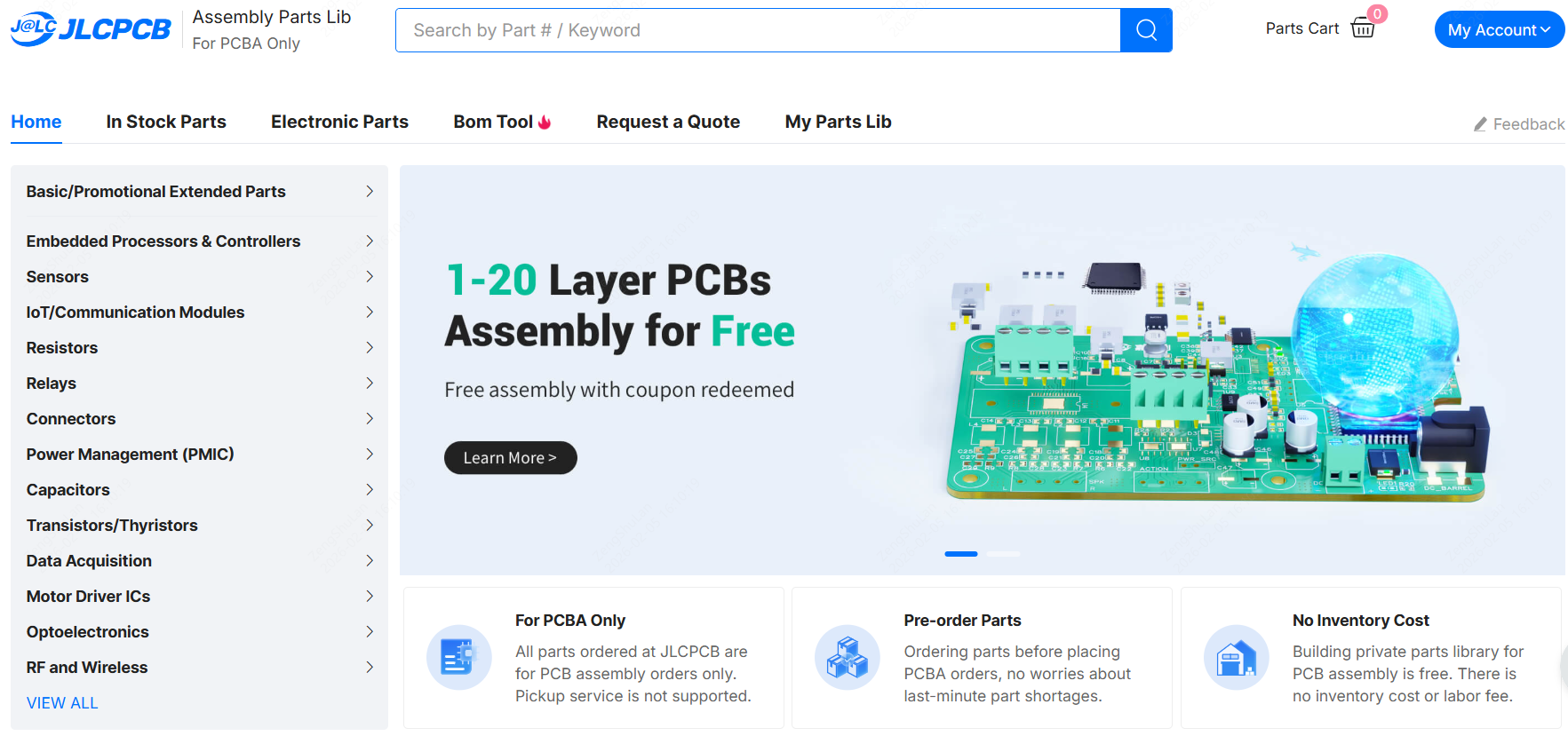
A well-optimized supply chain is what is essential for fast and reliable PCB assembly. JLCPCB excels in this area, maintaining a large in-stock parts library of 630,000+ components that are ordered exclusively through authorized distributors. This, in conjunction with its BOM analysis tool, makes for less time spent sourcing parts, allows for component authenticity tracking, and easy transition from price quote to production.
Quality Assurance and Testing: The Foundation of PCB Assembly Reliability
Top-tier PCB assembly manufacturers use a multi-layered inspection and testing strategy to catch defects early.
#1 In-Process Quality Control and Inspection
Automated Optical Inspection (AOI): A required step after reflow as a verification step. AOI systems scan the PCBA and compare that to a known correct reference.
● 2D AOI: Verifies basic defects such as presence, polarity, and shorts (if the components are on the top of the board).
● 3D AOI: Superior in that 3D AOI measures solder joint height and volume, and will detect minor defects that 2D may miss, such as insufficient solder, lifted leads, or tombstoning.
X-ray Inspection (AXI): Required for components with solder joints that are concealed, such as BGAs and QFNs. AXI can detect voids, shorts, and head-in-pillow defects that traditional optical systems may not be able to see.
First Article Inspection (FAI): A detailed manual inspection of the first board off the line to confirm that the machine has been set up perfectly before a full production run.
PCB assembly quality control flowchart
#2 PCB Functional Testing and Validation
● In-Circuit Testing (ICT): Uses a "bed-of-nails" fixture to check for shorts, opens, and correct component values.
● Functional Circuit Testing (FCT): The ultimate test of board operation. FCT powers up the board and runs it through its functions, often using a custom test jig.
● Flying Probe Testing: Ideal for prototypes, this method uses robotic probes to perform ICT-like measurements without a costly custom fixture.
JLCPCB follows a comprehensive quality control process throughout PCB assembly. The system employs advanced inspection technologies, including AOI and Flying Probe Testing, to ensure that every board—whether prototype or production—meets the highest quality standards. This rigorous process helps identify potential defects early, ensuring the functional reliability of the final product.
Certifications and Standards: Ensuring Quality and Building Trust
Certifications demonstrate a PCB assembly manufacturer’s commitment to consistent, high-quality assembly processes.
Essential Industry Certifications for PCB Assembly Manufacturers
● ISO 9001: This guideline for Quality Management Systems (QMS) demonstrates clearly defined, controlled, and continuously improved manufacturing processes.
● IPC Standards (IPC-A-610): The most utilized standard for assembly acceptability defines workmanship across different classes:
Class 1: General Electronics (i.e, toys).
Class 2: Dedicated Service Electronics (i.e., laptops, industrial controls).
Class 3: High-Performance/Harsh Environment (i.e., aerospace, medical).
| Certification | What It Guarantees | Why It Matters to You |
|---|---|---|
| ISO 9001 | A documented, controlled, and audited Quality Management System. | Ensures process consistency and a commitment to quality. |
| IPC-A-610 | Adherence to globally recognized workmanship standards. | Defines the quality level of your final product (Class 2/3). |
Commitment to international standards is a key indicator of a manufacturer's quality. JLCPCB demonstrates this commitment by adhering to major certifications, including ISO 9001 for quality management, UL Certification for safety. JLCPCB ensures a reliable and high-quality final product for all standard applications.
Cost, Lead Time, and Customer Support
#1 Understanding the True Cost of PCB Assembly
The per-unit price tells only part of the story. The real cost of PCB assembly includes hidden fees, costly board re-spins caused by poor DFM, and even long-term expenses from product failures in the field.
To avoid these issues, choose a PCB assembly manufacturer that provides full cost transparency—covering NRE (Non-Recurring Engineering), PCB fabrication, components, assembly labor, and testing. A reliable manufacturer will also provide DFM feedback to help you optimize layouts, reduce design complexity, and prevent unnecessary rework. They may also leverage their extensive in-stock component library to further reduce material costs and lead times.
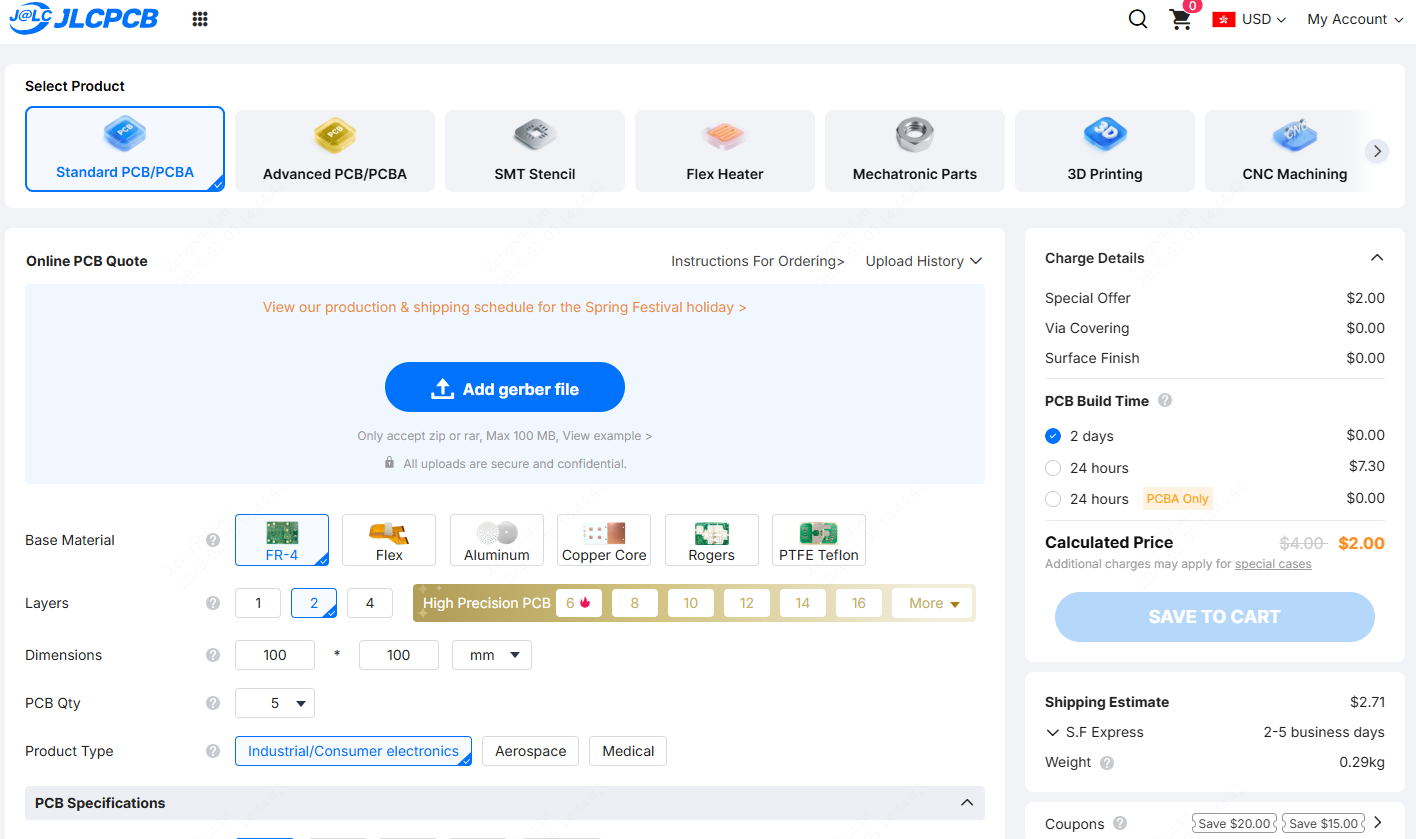
JLCPCB’s online PCB/PCBA quoting calculator offers instant visibility into component and assembly costs, allowing you to plan and control your budget with confidence from the very start.
#2 Evaluating the PCB Assembly Lead Time and Flexibility
In today's product development landscape, speed and flexibility are critical. A PCB assembly manufacturer’s ability to fulfill quick-turn orders with high reliability can significantly shorten your time-to-market. However, it’s important to understand what turnaround time truly means. A legitimate quick-turn service begins when the order is placed—and this is only possible if the manufacturer maintains an in-house component library to avoid sourcing delays.
Beyond speed, a reliable manufacturing partner must also offer flexibility in production volume. JLCPCB can easily adapt to your project’s requirements, from development prototypes to full-scale production. JLCPCB also supports low-volume PCB assembly, which is essential for agile development, iterative testing, and small-batch production—without the burden of a large upfront purchase order.
#3 Don't Forget About Timely Communication and Engineering Support for PCB Assembly
A top-tier PCB assembly manufacturer acts as a collaborative partner, not just an assembler. This partnership is evident in two key areas: proactive engineering support and responsive communication.
Proactive Design for Manufacturability (DFM) analysis is the cornerstone of engineering support. A thorough DFM check goes beyond simple rule validation; it bridges the gap between a theoretical design and the realities of high-volume production. This cycle of critical observation and feedback is provided before manufacturing, identifying problems that could result in assembly failure, low yield performance, or long-term reliability issues.
JLCPCB’s expert DFM support will identify concerns, like insufficient component clearances that may result in shorts, poor pad designs that may affect solder quality, or layout concerns that may increase board cost. By addressing these early, engineers can avoid costly, time-consuming re-spins, reducing cycle time to market and improving the final product's quality.
Equally important is the PCB assembly manufacturer's communication and after-sales support. A reliable partner provides transparency, offering real-time progress updates and accessible technical support channels. When issues or questions arise, a quick and knowledgeable response is critical. JLCPCB prioritizes this through a dedicated global support team and a comprehensive online help center, ensuring engineers get timely answers to keep their projects on track.
Conclusion
Selecting the right PCB assembly manufacturer is a decision more strategic than just cost. It is a significant investment in your product's quality, reliability, and success. The full cost of the PCBA manufacturing is tied to the level of field failure rates, product recalls, and engineering hours spent troubleshooting preventable assembly defects. A good PCB assembly manufacturer helps to minimize these risks.
Evaluating a potential partner by assessing their core technical capabilities, including their SMT and THT capabilities, as well as their AOI and AXI inspection capabilities, will help ensure they can assemble your complex design reliably.
The best PCB assembly manufacturer engages as a partner and delivers value with transparency in pricing, strong engineering support, and an efficient supply chain. These qualities provide a comprehensive approach to a successful, high-quality electronic product and a faster route from an idea to the market.
FAQs
1. How can I prepare my BOM to ensure a smooth PCB assembly process?
A clean BOM is critical. It should include complete manufacturer part numbers (MPNs), reference designators matching your PCB layout, quantities, and clear notations for any "Do Not Install" (DNI) components. Providing substitute part options can also help prevent delays.
For detailed BOM guidelines and examples, visit JLCPCB's BOM Preparation Guide.
2. What are the most common causes of delays in PCBA manufacturing?
The most frequent causes are component sourcing issues (shortages, long lead times), errors or ambiguities in the BOM, and DFM problems in the PCB design that require clarification from the customer.
3. Is it better to source my own components or let the PCB assembly manufacturer handle it?
Letting the PCB assembly manufacturers handle sourcing (a "turnkey" service) is better. They have established supply chains, buying power, and the expertise to manage component logistics, including MSL handling. Sourcing your own components (a "kitted" or "consigned" service) puts the responsibility and risk of counterfeit or damaged parts on you.
4. What is a turnkey PCB assembly service?
A turnkey PCB assembly service is an all-in-one solution where the manufacturer manages the entire process: PCB fabrication, component sourcing, and PCB assembly. This single-point-of-contact approach is the most efficient and reliable method for most projects, simplifying logistics and accountability.
Popular Articles
Keep Learning
PCB Assembly Manufacturing Process - JLCPCB Factory Tour
Printed circuit board assembly (PCB assembly manufacturing) is where a circuit design becomes a functional electronic product. Even with a perfectly fabricated PCB, poor assembly processes can lead to defects, reliability issues, and costly rework. In this factory tour, we walk through the complete PCB assembly manufacturing process at JLCPCB—from solder paste printing and automated component placement to reflow soldering, inspection, and final quality control. You'll see how a modern PCB assembly lin......
Turnkey PCB Assembly Explained: Full vs Partial Process And Benefits
Turnkey PCB Assembly offers a streamlined way to bring electronic products from design to production by handling component sourcing, PCB fabrication, assembly, and quality control under one service provider. For teams facing long lead times, complex BOM management, or repeated communication across multiple vendors, a turnkey solution eliminates these bottlenecks and significantly reduces the risk of production delays. By consolidating procurement and assembly into a single workflow, turnkey PCB assemb......
Low-Volume PCB Assembly for Startups and Prototyping
Introduction: Beyond the First Prototype The rapid advancement of the electronics industry has enabled the journey from a digital design to a physical product to be sped up. For startups, R&D labs, and individual makers, the ability to physically prototype and iterate time-sensitive solutions is not just a nice option; it is a necessity. Low-volume PCB assembly is a specialty manufacturing service catering to the manufacturing of low quantities of populated circuit boards, in most cases ranging from a......
Printed Circuit Board Assembly (PCBA): A Step-by-Step Guide
Printed Circuit Board Assembly (PCBA) is the process of mounting electronic components onto a fabricated PCB through solder paste deposition, SMT placement, reflow soldering, inspection, and final testing. A well-controlled PCB assembly workflow is essential for electrical performance, reliability, and overall manufacturing yield. This guide provides a clear, step-by-step overview of the full Printed Circuit Board Assembly process. At JLCPCB, PCB manufacturing and assembly are integrated in one ecosys......
Low-Cost and Rapid PCB Prototype Assembly Service
For hardware developers, electrical engineers, and entrepreneurs, the most critical stage of product development is the transition from digital design to a physical prototype. Bringing a great schematic to life as a fully functional board is the ultimate goal—though historically, this has been the most costly and time-consuming phase of the process. This is where PCB prototype assembly becomes the key manufacturing stage, where electronic designs are physically realized for the first time. This articl......
Selecting a PCB Assembly Manufacturer: Expert Engineer Tips
In the field of electronics, the final product's dependability rests on its Printed Circuit Board Assembly (PCBA). PCB assembly is the process of soldering electronic components onto the bare PCB itself. This complicated act of assembly is very important to the function of the product. Choosing a PCB assembly manufacturer should be viewed as a partnership decision. A competent manufacturer will serve as an extension of your engineering staff, providing important feedback on Design for Manufacturabilit......