Stencil Cutting Machine Guide: Choosing the Best Solution for PCB Stencil Manufacturing
7 min
- Core Features for Engineers
In the PCB assembly process using Surface-Mount Technology (SMT), precision plays a critical role in determining the final quality of a market-ready product. One of the most crucial stages in SMT is the solder paste printing process, which is the first step in the SMT production line. In this process, the stencil functions as the medium that distributes solder paste onto each component pad. At this stage, the stencil cutting machine plays a vital role in determining the overall success of the assembly process.
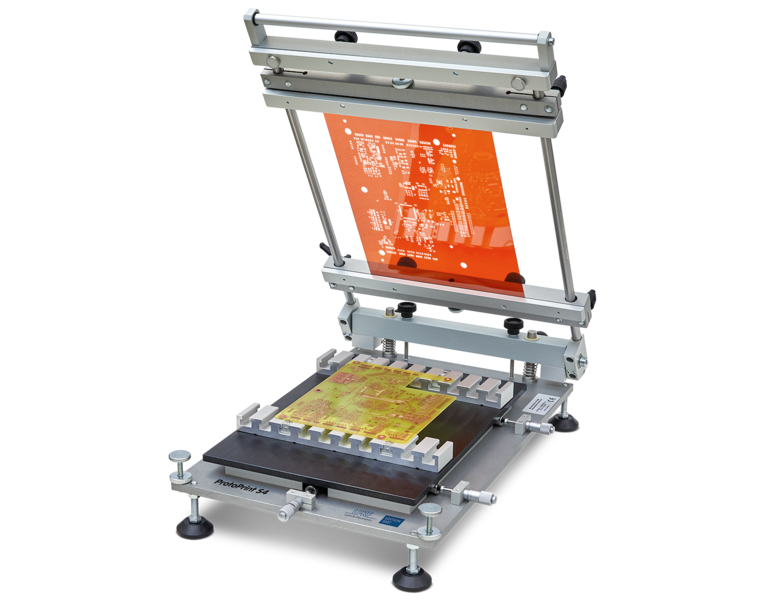
(Solder paste application using a PCB stencil in Surface-Mount Technology (SMT) assembly)
An SMT stencil cutting machine enables the creation of apertures with precise size, shape, and position according to the PCB design. Accurate stencil cutting helps reduce defects such as solder bridging, insufficient solder, or component misalignment during the reflow process. Professional engineers, industry practitioners, and hobbyists can all benefit from choosing the right stencil cutting solution, whether by using a stencil cutting machine for home use or by relying on a professional stencil cutting service.
For PCB stencil requirements that demand high precision and production readiness, JLCPCB’s SMT stencil service offers high-quality stencil cutting, multiple stencil thickness options, and full compatibility with high-density PCB designs. This solution helps ensure stable soldering results from the prototyping stage through to production. In addition, JLCPCB provides comprehensive PCB assembly services, covering the entire process from design to PCB assembly manufacturing.
This article discusses stencil cutting machines in depth, their different types, and practical guidance on choosing the best solution between in-house machines and professional stencil cutting services.
Understanding Stencil Cutting Machines
What Is a Stencil Cutting Machine?
A stencil cutting machine is specialized equipment designed to cut apertures in PCB stencils, which are typically made of stainless steel. These apertures must precisely match the PCB pad layout so that solder paste can be evenly applied to every component joint.
In modern SMT applications, aperture size is not always identical to PCB pad size. Many designs require aperture reduction or modified aperture shapes to control solder volume. Therefore, a stencil cutting machine must be capable of producing cuts with micron-level tolerances and clean edges to ensure consistent solder transfer characteristics.
Unlike conventional cutting tools, stencil cutting machines are developed specifically for SMT requirements, including stencil-to-stencil consistency, positional accuracy, and compatibility with increasingly complex PCB designs.
Types of Stencil Cutting Machines
Various types of stencil cutting machines are available to support different production needs and scales:
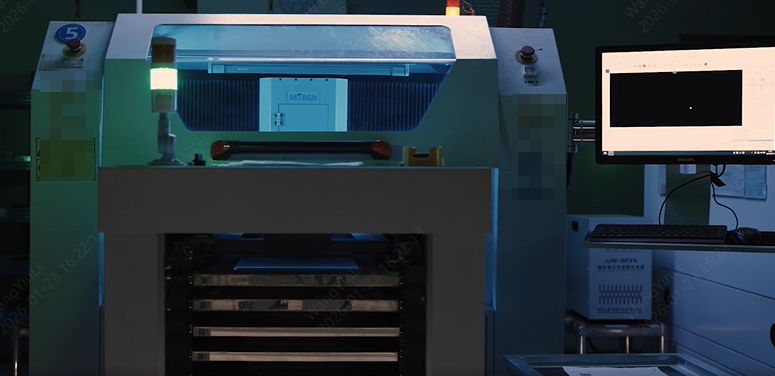
Laser Stencil Cutting Machine
Laser stencil cutting machines are widely used in the electronics industry because they can produce high-precision apertures with smooth edges. Laser technology is ideal for fine-pitch PCBs, QFN packages, and BGA components that require tight solder volume control.
Desktop or Compact Stencil Cutting Machine
These machines are generally used for light prototyping and are often categorized as stencil cutting machines for home use. They are suitable for simple designs with a limited number of components, but they have inherent precision limitations.
Manual or Semi-Mechanical Methods
Manual or semi-mechanical cutting methods have relatively low tolerances and are not recommended for professional SMT applications due to the high risk of producing consistent solder defects.
Core Features for Engineers
For engineers, selecting a stencil cutting machine is not only about cost, but also about technical capability. Key features to consider include:
· Micron-level aperture cutting accuracy
· Consistent results across stencil batches
· Support for various stencil thickness options
· High-quality aperture edges for optimal solder transfer
In many cases, engineers choose to combine their in-house design work with JLCPCB’s SMT stencil services to achieve precise stencil results without having to manage machines, calibration, or quality control processes internally.
Stencil Thickness and Aperture Design Considerations
In addition to the cutting machine itself, stencil design factors have a significant impact on soldering quality. One of the most important parameters is stencil thickness. A stencil that is too thick can cause excessive solder deposition, while a stencil that is too thin may result in weak solder joints.
For PCBs with fine-pitch components or BGAs, aperture reduction techniques are commonly used to control the amount of solder transferred to each pad. As a result, the stencil cutting machine must be capable of producing apertures with precise shapes and dimensions based on SMT design calculations.
In industrial practice, professional services such as JLCPCB’s SMT stencil service typically offer multiple stencil thickness options and can manufacture apertures tailored to specific design requirements, allowing engineers to avoid repeated trial-and-error during assembly.
Common SMT Defects Caused by Poor Stencil Quality
Poor stencil quality is often the root cause of many SMT defects. Common issues resulting from inaccurate stencils include solder bridging, insufficient solder, and solder balling.
Inconsistent aperture sizes or rough aperture edges can prevent solder paste from releasing evenly during the printing process. This directly affects reflow stability and increases the need for rework.
By using a professional stencil cutting service, these risks can be significantly reduced, as each stencil is produced using precision laser equipment and undergoes strict quality control processes.
When to Choose Machines Over Services
The decision between using an in-house machine or a professional service depends on project requirements. For early-stage experiments and simple prototyping, a stencil cutting machine for home use can provide flexibility and fast iteration.
However, as designs become more complex or approach the production stage, many engineers switch to stencil cutting services near me or global providers such as JLCPCB to ensure consistent quality and time efficiency. This hybrid approach is commonly used in R&D environments and hardware startups.
Choosing the Right Solution for Your Needs
Stencil Cutting Machine for Home Use
For hobbyists, makers, and small laboratories, a stencil cutting machine for home use can be a practical solution for rapid prototyping and early design iterations. These machines allow design experimentation without relying on third-party services.
However, when designs begin to involve fine-pitch components or high-density layouts, limitations in precision and consistency can directly impact soldering quality.
Professional Stencil Cutting Services
In many professional applications, a stencil cutting service provides more stable and predictable results. Services such as JLCPCB’s SMT stencil offering use industrial-grade machines and standardized quality control processes to ensure that every aperture meets modern SMT design requirements.
Key advantages of professional services include:
· High precision for complex designs
· Consistent quality across production batches
· Technical support for stencil design optimization
· Finding Local Services
Engineers often search for stencil cutting services near me to reduce turnaround time and simplify technical communication. In addition to local providers, global services like JLCPCB offer stencil ordering that is fully integrated with PCB manufacturing, making the workflow more efficient and reducing the risk of errors.
Applications and Benefits in PCB Assembly
High-Density and Fine-Pitch PCBs
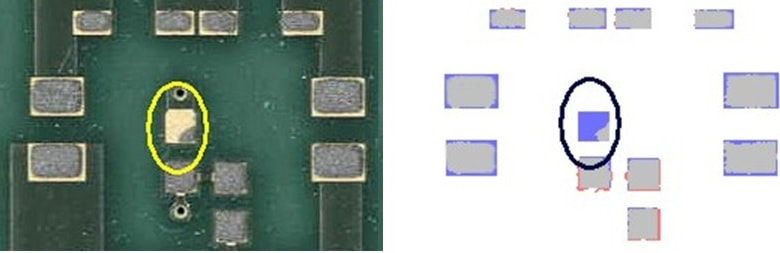
High-density PCBs with fine-pitch components and BGAs require stencils with very tight tolerances. Even small aperture errors can lead to solder bridging or open joints, making high-quality stencils essential.
Prototyping and Small-Batch Production
Both in-house machines and professional services can support prototyping and small-batch production. However, professional services are often preferred due to consistent quality and reduced rework risk, especially when designs are still evolving.
Improving Assembly Efficiency and Quality
Precisely cut stencils help improve assembly efficiency, reduce solder defects, and increase production yield. Therefore, choosing the best machine for cutting stencils or the right professional service is an important part of building a reliable SMT strategy.
Selecting the right stencil cutting solution—whether using an in-house stencil cutting machine or relying on stencil cutting services near me—is a critical step in ensuring high-quality PCB assembly. Precision in solder paste application directly affects the reliability, performance, and lifespan of electronic products.

Keep Learning
Nano-Coating vs Electropolishing for SMT Stencils
Key Takeaways Electropolishing improves the underlying metal surface by smoothing aperture walls. Nano-coating adds a low-friction, hydrophobic surface that helps paste release and reduces residue. Both treatments can improve fine-pitch paste release and support more consistent deposits and higher first-pass yield. Nano-coating is especially useful for BGA/QFN assemblies and high-volume runs, where cleaning frequency and paste-release consistency matter more. Electropolishing and nano-coating are comp......
Stencil in PCB: A Comprehensive Guide to PCB Stencil Design, Fabrication, and JLCPCB Solutions
Figures 1 Solder paste application using a stainless steel stencil to achieve high-precision results. In PCB assembly based on Surface-Mount Technology (SMT), precision is a key factor that determines the final quality of electronic products. One critical element that strongly influences soldering accuracy is the stencil. The stencil functions as a physical template that controls the distribution of solder paste onto PCB pads before components are placed. Accurate solder paste application produces rel......
Unlocking the Secrets of Nano-Coated Stencil Manufacturing
Nano-Coated Stencil Manufacturing Process The manufacturing of nano-coated stencils involves a series of precision engineering steps including design and drafting, laser cutting, polishing, nano-coating deposition, and quality inspection. Below is a detailed description of each process stage: 1. Design and Drafting (1) Data Acquisition: Accurate data is obtained from customer-supplied design files (e.g., Gerber files, PCB layouts) or physical product samples. This includes stencil dimensions, pad layo......
The ROI of Nano-Coated Stencils in PCB Assembly Lines
Nano coatings offer several benefits. They are hydrophobic and repel water-based chemistry or flux, and some are also oleophobic and repel oil-based chemistry or flux. When applied to the bottom or board side of the stencil, these coatings will prevent solder paste squeeze-out during the print process between the stencil and PCB from sticking to the bottom of the stencil when the stencil separates from the board. As a result, the next print will be as good as the initial print, and bridging is reduced......
What Are Laser Cut Stencils? A Guide for PCB Assembly
Traditional PCB assembly processes require the manual placement of electronic components before soldering. However, the increasing complexity of electronic printed circuit boards, combined with the need for miniaturisation, necessitates mechanical assembly and solder paste application using SMT stencils. Placing and soldering many small components on a small circuit board is no longer practical.Stencils replace the hand soldering of surface mount components and the inconsistencies caused by hand solde......
Stencil Cutting Machine Guide: Choosing the Best Solution for PCB Stencil Manufacturing
In the PCB assembly process using Surface-Mount Technology (SMT), precision plays a critical role in determining the final quality of a market-ready product. One of the most crucial stages in SMT is the solder paste printing process, which is the first step in the SMT production line. In this process, the stencil functions as the medium that distributes solder paste onto each component pad. At this stage, the stencil cutting machine plays a vital role in determining the overall success of the assembly......