Choosing the Right Stencil Maker for PCB Assembly
11 min
- Understanding SMT Stencil Makers
- Selecting the Right SMT Stencil Maker
- Applications and Benefits of SMT Stencil Makers
- Best Practices for Using Stencil Makers
Surface mount technology assembly relies on controlled solder paste deposition across dense PCB pad layouts. SMT stencil makers regulate paste volume through apertures that match copper land patterns. A stencil maker machine influences solder joint geometry, electrical continuity, and reflow consistency.
Laser cut stencil maker systems achieve aperture accuracy and stencil flatness for automated printing. Stencil makers exist as local stencil maker near me services and scalable online stencil maker platforms. This article examines SMT stencil maker types, selection criteria, applications, and operational practices.
Understanding SMT Stencil Makers
What is an SMT Stencil Maker?
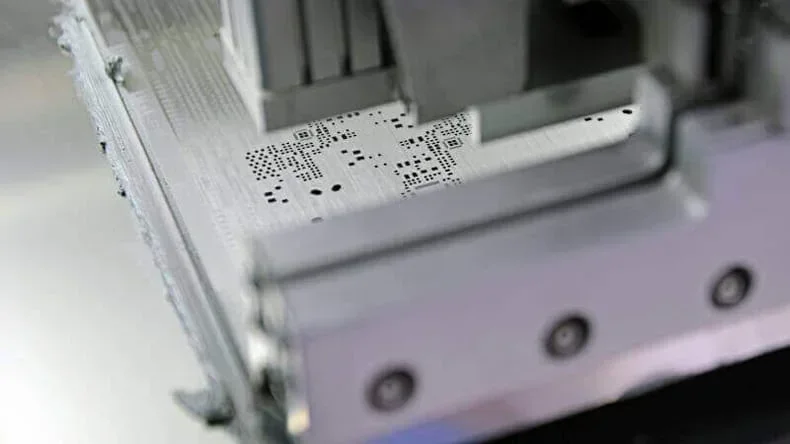
An SMT stencil maker is a system that produces metal stencils for solder paste deposition in surface mount assembly. The stencil maker machine creates apertures aligned with PCB land patterns, controlling paste volume, alignment, and joint consistency.
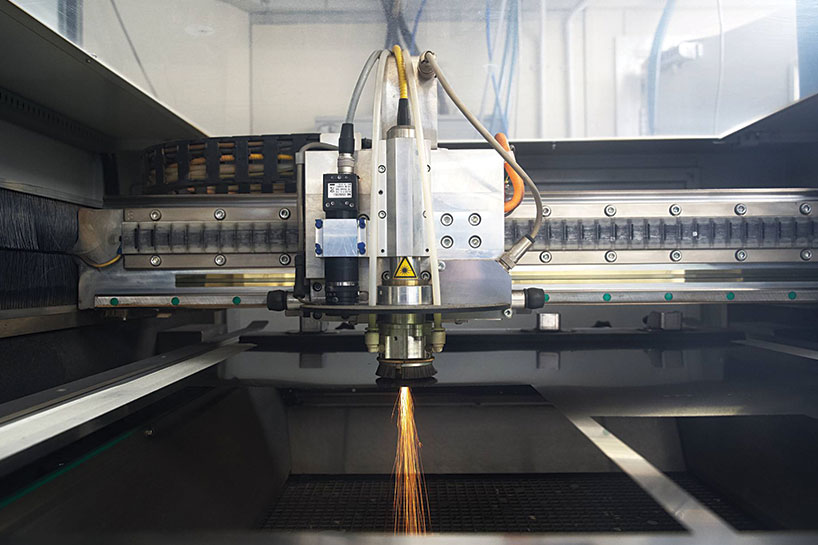
Laser cut stencil makers are the most common type, using focused lasers to cut apertures in stainless steel or nickel alloy sheets. These systems work with manual and automated printers, maintaining aperture geometry, smooth walls, and flatness across repeated prints for prototypes and production boards.
Types of SMT Stencil Makers
SMT stencil makers fall into defined technical categories based on cutting method and production scale. Each stencil fabrication system serves specific PCB density, tolerance, and volume requirements. Selecting the correct stencil maker machine depends on aperture accuracy, material control, and operational throughput.
1. Laser Cut Stencil Maker: A laser cut stencil maker uses fiber or CO₂ laser sources for aperture formation. This stencil maker machine achieves straight walls, sharp corners, and controlled aperture dimensions. Laser systems suit fine pitch components, dense pad arrays, and repeatable SMT production cycles.
2. Chemical Etching Stencil Maker: Chemical etching stencil makers remove material through photoresist masking and chemical exposure. This stencil fabrication system suits low to medium-density layouts. Tapered aperture walls limit paste release consistency for fine pitch assemblies.
3. Mechanical Punch Stencil Maker: Mechanical stencil maker machines use hardened tools to punch apertures into metal sheets. This stencil maker type supports simple pad geometries and low component density. Tool wear affects dimensional accuracy over repeated production cycles.
4. Online and Local Stencil Makers: An online stencil maker operates centralized stencil maker machines through uploaded CAD data. A stencil maker near me operates similar systems with reduced lead time for urgent builds. These stencil makers address prototype and short-run production needs.
Each SMT stencil maker type addresses defined assembly conditions and tolerance limits. Matching stencil fabrication systems to PCB density and volume improves print consistency and joint reliability.
Selecting the Right SMT Stencil Maker
Factors to Consider
Selecting the right SMT stencil maker impacts solder paste accuracy, joint reliability, and overall PCB assembly yield. Engineers evaluate multiple technical factors to match stencil maker machines with production requirements. The list below highlights the key considerations for precise and repeatable SMT printing.
1. Aperture Tolerance: Laser cut stencil maker systems provide micron-level aperture control. Accurate apertures ensure consistent paste volume and prevent bridging or insufficient solder deposition.
2. Material Compatibility: Stencil makers must handle stainless steel or nickel alloy sheets without warping. Material rigidity affects aperture shape retention and printing reliability over repeated runs.
3. Repeatability: Stencil maker machines with precise positioning maintain alignment across multiple prints. Consistent aperture placement supports fine pitch components and dense PCB layouts.
4. Stencil Thickness: Thickness determines paste transfer for various pad geometries. Thin stencils suit prototypes, while thicker stencils support medium-volume production with controlled paste deposition.
5. Frame Stability: A stable stencil frame ensures uniform contact with the PCB. Proper alignment reduces void formation and prevents uneven solder paste application.
6. Production Volume and Printer Type: Selection depends on batch size and printer compatibility. High-volume boards require durable stencils and fast cycle stencil maker machines.
7. PCB Density: High-density layouts require laser cut stencil maker systems that maintain aperture integrity under tight pad spacing and fine pitch components.
Careful evaluation of these factors ensures that the selected SMT stencil maker produces consistent solder paste deposition, reduces defects, and improves assembly yield across both prototype and production boards.
Personalized Online or Local Stencil Makers
A personalized stencil maker allows engineers to specify material type, stencil thickness, and aperture geometry based on PCB design. Online stencil maker platforms, including JLCPCB, accept Gerber file uploads and use laser-cut stencil maker machines to produce precise apertures with smooth walls and flat surfaces. This process suits prototypes, short-run production, and fine-pitch IC assemblies requiring repeatable printing.
Local stencil makers operate similar laser-cut systems on-site, reducing turnaround time for urgent prototypes or validation runs. Both online and local stencil makers maintain aperture accuracy and flatness, supporting reliable solder paste deposition for high-density and fine-pitch PCBs.
Applications and Benefits of SMT Stencil Makers
Applications of SMT Stencil Makers
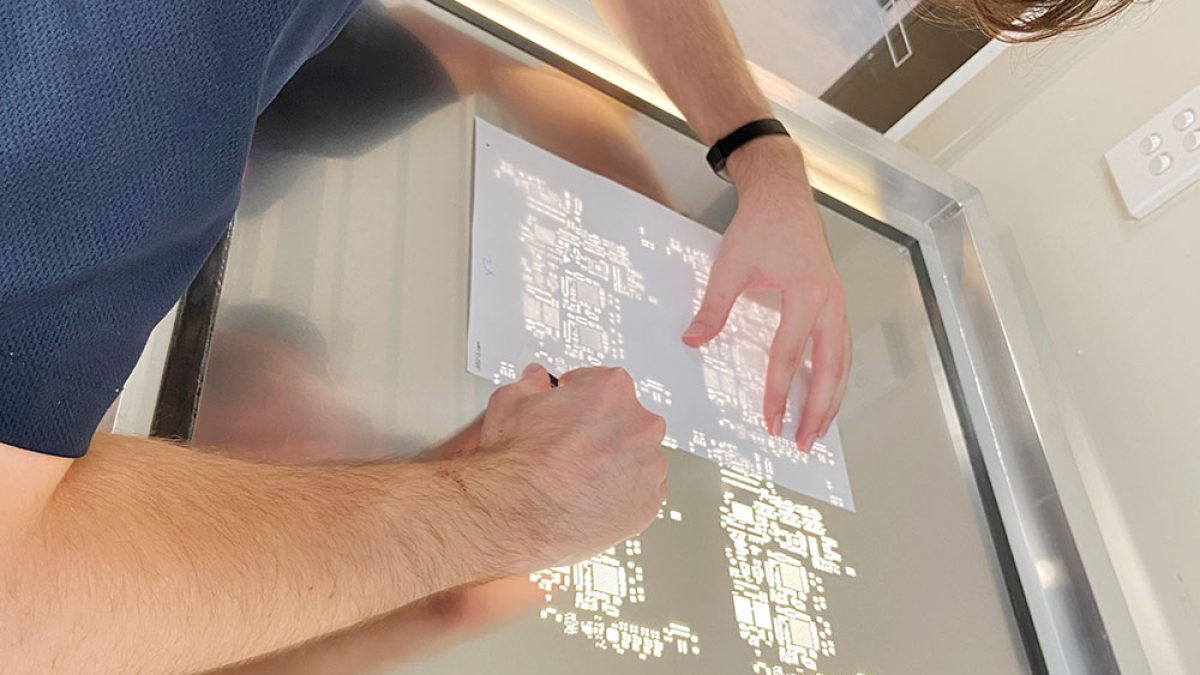
SMT stencil makers serve multiple applications in PCB assembly, enabling precise solder paste deposition and consistent joint formation. Different stencil maker machines accommodate prototypes, small batches, and medium-volume production. The following list outlines the primary technical applications of SMT stencil makers:
1. BGA Placement: Laser cut stencil maker systems produce apertures for ball grid arrays with micron-level accuracy. Consistent paste deposition prevents bridging and void formation, ensuring reliable electrical connections.
2. QFN Components: Stencil makers fabricate apertures for quad flat no-lead ICs. Accurate paste application forms uniform solder joints beneath the package body, improving assembly reliability.
3. Microcontrollers: Fine-pitch pins on microcontrollers require precise solder paste volume. SMT stencil makers maintain alignment and volume control across all pads.
4. Prototype Boards: Personalized stencil makers allow specification of aperture size, stencil thickness, and material type for experimental PCB layouts. This ensures accurate printing during initial design validation.
5. Small-Batch Production: Online stencil maker platforms and stencil maker near me services produce stencils for low- to medium-volume runs. These systems maintain repeatable aperture geometry for consistent joint formation.
6. Dense Pad Arrays: Stencil makers handle high-density layouts with minimal spacing between pads. Accurate apertures reduce solder bridging, tombstoning, and other defects.
SMT stencil makers provide reliable paste deposition across diverse PCB applications. Matching the stencil maker type to the component density and production volume improves assembly repeatability, reduces defects, and enhances overall PCB performance.
Benefits of SMT Stencil Makers
SMT stencil makers deliver measurable improvements in PCB assembly quality, precision, and reliability. Engineers rely on stencil maker machines to maintain consistent solder paste deposition across prototype and production boards. The following list highlights the key technical benefits of using SMT stencil makers:
1. High Paste Transfer Accuracy: Laser cut stencil maker systems produce precise apertures that control solder paste volume. Accurate paste deposition prevents bridging, insufficient solder, and misalignment.
2. Reduced Soldering Defects: Stencil makers minimize common defects such as tombstoning, void formation, and paste smearing. Smooth aperture walls and flat stencils ensure consistent joint formation.
3. Repeatable Printing: Proper stencil maker alignment maintains uniform contact with the PCB surface. Engineers achieve consistent results across multiple prints, supporting prototype and medium-volume production runs.
4. Increased Assembly Efficiency: SMT stencil makers reduce the need for post-reflow rework. Consistent paste deposition improves throughput while maintaining electrical and mechanical reliability.
5. Compatibility with Fine-Pitch and High-Density Layouts: Laser cut stencil maker systems maintain micron-level aperture tolerance. They accommodate BGAs, QFNs, microcontrollers, and other high-density components.
6. Enhanced Yield and Reliability: Combining material quality, precise laser cutting, and accurate stencil alignment improves overall assembly yield. Stencil makers ensure long-term reproducibility for both prototypes and production boards.
SMT stencil makers provide consistent solder paste deposition, reduce defects, and improve assembly efficiency. Proper selection and use of stencil maker machines enhance PCB performance across high-density and fine-pitch applications.
PCB Prototyping and Small-Batch Production
SMT stencil makers play a vital role in PCB prototyping and small-batch production, where pad layouts often vary between designs. Personalized stencil makers allow engineers to define aperture size, stencil thickness, and material type based on experimental PCB requirements. Laser cut stencil maker systems produce precise apertures with consistent wall smoothness, enabling repeatable solder paste deposition even in low-volume runs.
Local stencil makers reduce lead times for urgent prototypes, allowing rapid iteration and early validation. Online stencil maker platforms provide remote ordering with fast turnaround, delivering high-accuracy stencils for prototype builds without compromising solder paste reliability or joint quality.
High-Density and Fine-Pitch PCB Assembly
High-density PCBs with fine-pitch ICs, BGAs, and complex connectors demand accurate solder paste deposition. SMT stencil makers deliver micron-level aperture precision, controlling paste volume for tightly spaced pads. JLCPCB laser cut stencil maker systems produce smooth aperture walls and maintain stencil flatness, preventing bridging, voids, and tombstoning during reflow.
Engineers use stencil makers to ensure uniform contact between the stencil and PCB surface, supporting automated SMT printers and high-speed assembly operations. Consistent solder paste application improves joint reliability, electrical continuity, and signal integrity, enhancing overall PCB performance for advanced electronics, high-density modules, and fine-pitch SMT assemblies.
Best Practices for Using Stencil Makers
Maintenance and Cleaning Tips
Proper maintenance and cleaning of SMT stencil makers preserve aperture accuracy, extend stencil lifespan, and ensure consistent solder paste deposition. Engineers follow defined procedures to maintain stencil integrity and optimize printing performance. The following list highlights essential maintenance and cleaning practices for stencil makers:
1. Visual Inspection: Check stencils for bent edges, scratches, or debris before each print cycle. Detecting damage early prevents paste misalignment and joint defects.
2. Residual Paste Removal: Clean stencils after every print to eliminate solder paste buildup. Removing residue prevents clogging of fine apertures, especially in laser-cut stencil maker systems.
3. Chemical Cleaning Agents: Use cleaning solutions compatible with stainless steel or nickel alloy. Proper chemicals maintain stencil material properties while effectively removing paste.
4. Controlled Drying: Dry stencils under controlled conditions to avoid corrosion or warping. Even drying preserves aperture shape and flatness.
5. Frame and Fastener Checks: Inspect stencil frames, tighten fasteners, and verify flatness periodically. Stable frames maintain uniform contact with the PCB during printing.
6. Proper Storage: Store stencils in protective holders to prevent bending or deformation. Proper storage maintains aperture geometry during non-use periods.
Following these maintenance and cleaning steps ensures SMT stencil makers deliver consistent printing results across both prototype and production boards. Engineers achieve reliable solder paste deposition, reduce defects, and extend stencil operational life.
Optimizing Print Accuracy
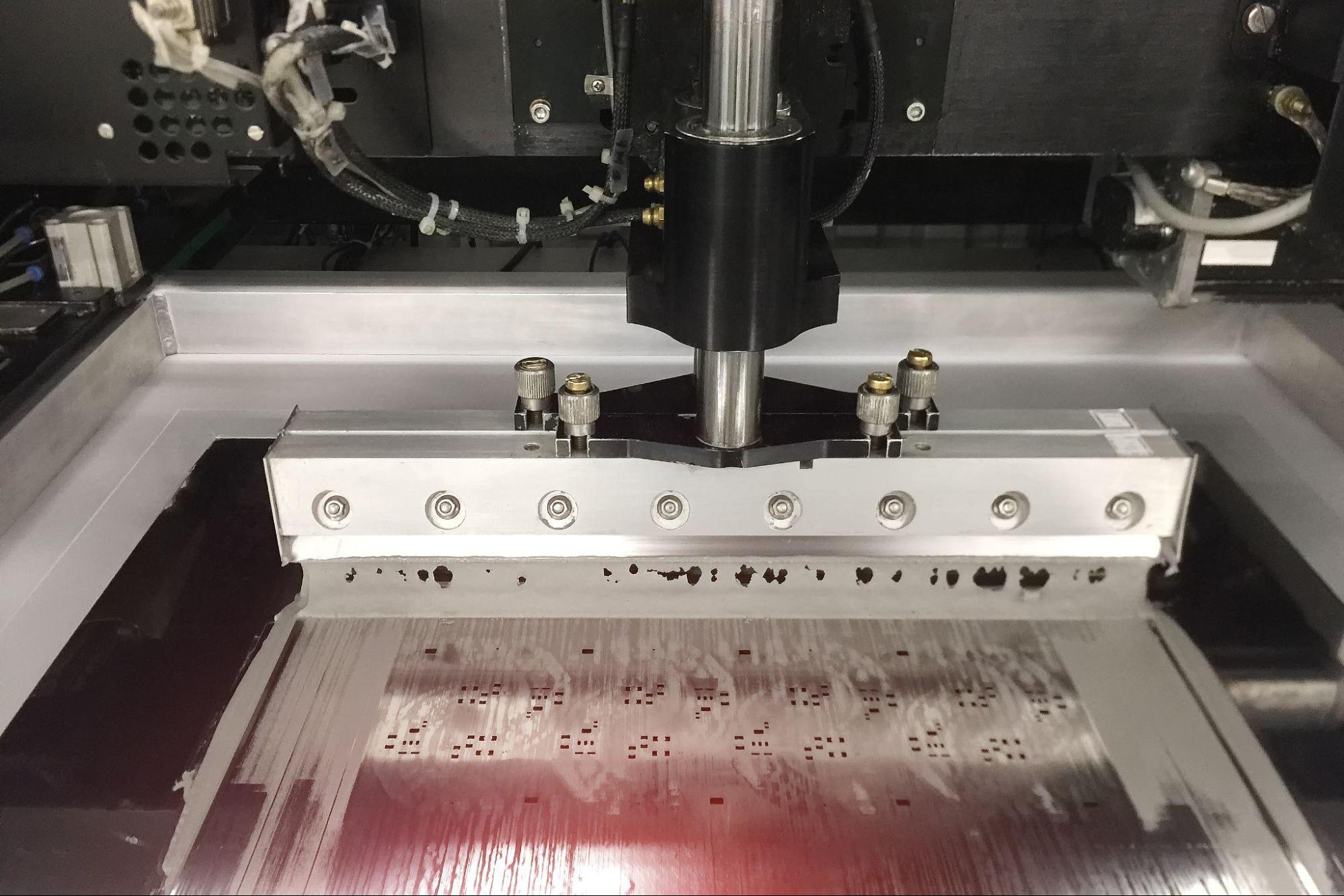
Print accuracy depends on stencil flatness, printer calibration, and solder paste rheology. SMT stencil makers with stable frames maintain uniform contact across PCB surfaces. Laser cut stencil maker systems ensure micron-level aperture tolerance for fine-pitch components. Engineers adjust squeegee pressure, printing speed, and paste volume according to pad size and component density.
Verification of paste deposition through test prints allows early detection of misalignment or bridging. Consistent print conditions reduce defects and improve joint formation. Proper integration of stencil maker machines with automated SMT printers enhances repeatability for medium-volume production and prototype validation.
Common Mistakes to Avoid
Avoiding common mistakes in SMT stencil use is essential for reliable solder paste deposition and PCB assembly yield. Engineers identify risks associated with stencil alignment, material selection, and maintenance practices. The following list highlights frequent errors and their technical impact on printing performance:
1. Stencil Misalignment: Placing the stencil incorrectly on the PCB surface produces uneven paste transfer. Misalignment causes incomplete joints, bridging, and solder defects.
2. Using Worn or Damaged Stencils: Scratched, bent, or deformed stencils reduce aperture precision. Damaged stencils increase the risk of tombstoning, voids, and inconsistent paste deposition.
3. Incorrect Stencil Thickness or Material: Choosing an inappropriate stencil thickness or incompatible material diminishes paste control for fine-pitch pads. Aperture walls may deform, affecting joint volume and reliability.
4. Neglecting Cleaning and Maintenance: Skipping regular cleaning leads to clogged apertures and uneven paste transfer. Overlooking maintenance reduces stencil lifespan and print repeatability.
5. Ignoring Print Parameters: Failing to monitor squeegee pressure, printing speed, and paste rheology causes inconsistent deposition. Fine-pitch and high-density layouts require controlled printing conditions.
Adhering to these guidelines prevents defects, maintains stencil performance, and ensures consistent solder paste application. Proper management of SMT stencil makers improves assembly quality across prototype, small-batch, and high-density PCB production.
Choosing the right SMT stencil maker ensures precise solder paste deposition, accurate joint formation, and reliable PCB assembly. JLCPCB laser cut stencil maker systems maintain micron-level aperture accuracy, flatness, and repeatable printing for prototypes and production boards. Proper use includes selecting the correct material, stencil thickness, and alignment during printing.
Regular maintenance, cleaning, and monitoring of print parameters preserve stencil performance. Engineers using JLCPCB stencil services achieve consistent solder paste transfer, reduce defects, and maximize assembly yield, improving results for fine-pitch, high-density, and small-batch PCB assemblies.

Keep Learning
DIY PCB Stencil: How to Make a Solder Paste Stencil
Key Takeaways DIY is possible: You can make a working solder paste stencil from Kapton, Mylar, or vinyl using a craft knife, vinyl cutter, or laser for larger SMD components and low-volume prototyping. 0.5 mm pitch is the practical boundary: DIY stencils work well above 0.5 mm pitch but struggle with finer QFNs, QFPs, and BGAs due to poor aperture quality and paste release. Match thickness to your smallest pad: Use 0.10–0.15 mm (4–6 mil) sheet stock, choosing thinner material for smaller pads and thic......
How to Choose an SMT Stencil
What is an SMT stencil? SMT Stencil is a thin metal sheet used in the soldering process for SMT (Surface Mount Technology) and it plays an essential role in the SMT soldering process. Smt Stencil allows the direct placement of solder paste onto the SMD pads of PCB, which can help prevent errors and defects during the reflow soldering process. This results in a precise amount of tin coverage once the work is completed. Types of SMT Stencils Depending on the application of solder paste, there are three ......
Order Custom Stencils for PCB Assembly: How to Make, Buy, and Choose the Right Supplier
Surface Mount Technology (SMT) stencils are essential tools in modern PCB assembly. They are thin sheets of metal, usually stainless steel, with precise cut-outs that allow solder paste to be applied accurately to PCB pads. The quality of the stencil directly affects solder paste deposition, which in turn impacts the reliability of the final assembled PCB. Engineers often need to order custom stencils instead of relying on generic options. Every PCB design has unique pad layouts, component densities, ......
Custom Stencils for PCB Assembly: Design, Ordering, and Usage Guide
Have you ever faced solder bridging or insufficient solder issues that ruined an entire production batch? In many cases, the problem is not the pick-and-place machine, but the very first step of the process: solder paste printing. This is where custom stencils make the difference between a reliable product and one that requires extensive rework. Unlike rigid standard stencils, a custom SMT stencil gives engineers full control over solder paste volume, allowing precise adjustment to match increasingly ......
SMT Stencil Thickness Guide 2026: How to Choose the Right Solder Paste Stencil
In SMT assembly, the stencil quietly decides whether a production run succeeds or fails. Problems like bridging, tombstoning, and insufficient wetting are frequently traced back not to PCB design errors, but to incorrect stencil selection or poorly controlled paste volume. Quick Answer: How to Choose a Solder Paste Stencil If you need to define your stencil parameters immediately, follow this quick decision guide: Select thickness based on component pitch: Use component density as your primary baselin......
Custom Cut Stencils for PCB Assembly: How to Cut, Use and Choose the Right PCB Stencil
Custom-cut stencil and Solder paste printing are two of the most vital processes in Surface Mount Technology (SMT) PCB assembly, concerning solder joint quality, electrical performance, and product reliability over time. SMT stencils are used to deposit solder paste in accurate amounts onto PCB pads, or for depositing and compressing adhesive pastes which are arranged in the form of a column on components such as connectors and sockets. While PCB designs have seen a trend toward increased density, fin......