What Constitutes the Cost of PCBA? How to Calculate and Reduce PCBA Cost
9 min
- PCB Manufacturing: Foundation of the PCBA Cost
- PCB Component Sourcing: The Biggest Cost Variable in PCB Assembly Cost
- Labor and PCB Assembly Technology Affect the Cost of PCBA
- The Impact of Order Volume and Turnaround Time on PCBA Cost
- Conclusion: PCBA Cost Breakdown
- FAQ about PCBA Cost
The final PCBA cost is not just a dollar amount, but rather a collection of interconnected inputs and variables. Engineers, hardware developers, and makers must have a thorough understanding of these variables to design a product that is both functional and economical. A smart decision in board material or even a minor change in your BOM can have a significant potential impact on PCBA costs.
By the end of this article, you will be confident to intelligently assess the key drivers of your custom PCBA costs and have the tools to refine your PCB design for cost-effective impact without sacrificing quality.
With a PCB assembly cost calculator—such as the online Instant Quote and PCBA cost calculator offered by JLCPCB—all trade-offs and options, including PCB manufacturing, components, and assembly, are visible in real time, allowing you to accurately estimate PCBA manufacturing costs.
PCB Manufacturing: Foundation of the PCBA Cost
The bare printed circuit board serves as the foundational substrate for your design and constitutes the first significant portion of the total cost of PCBA.
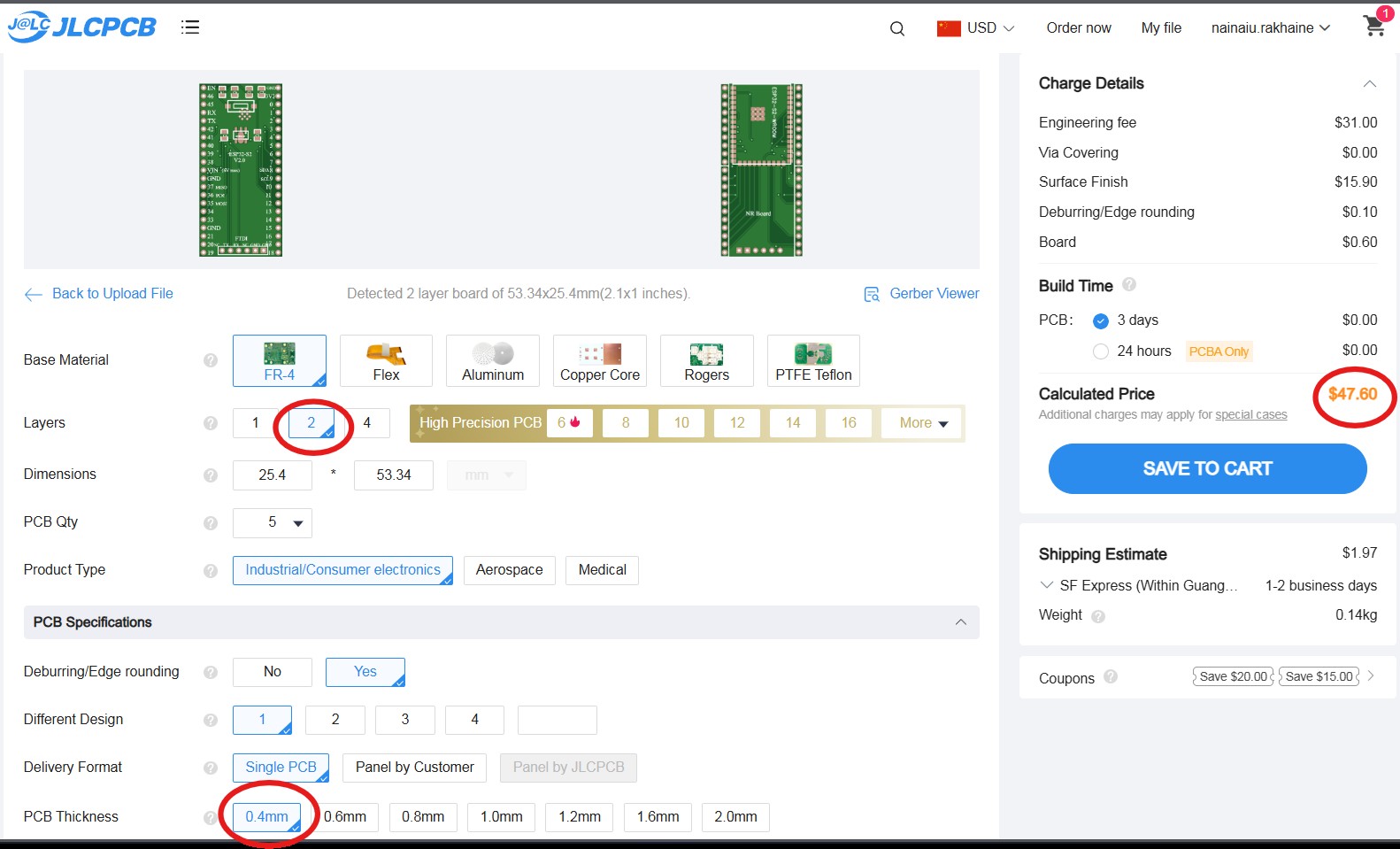
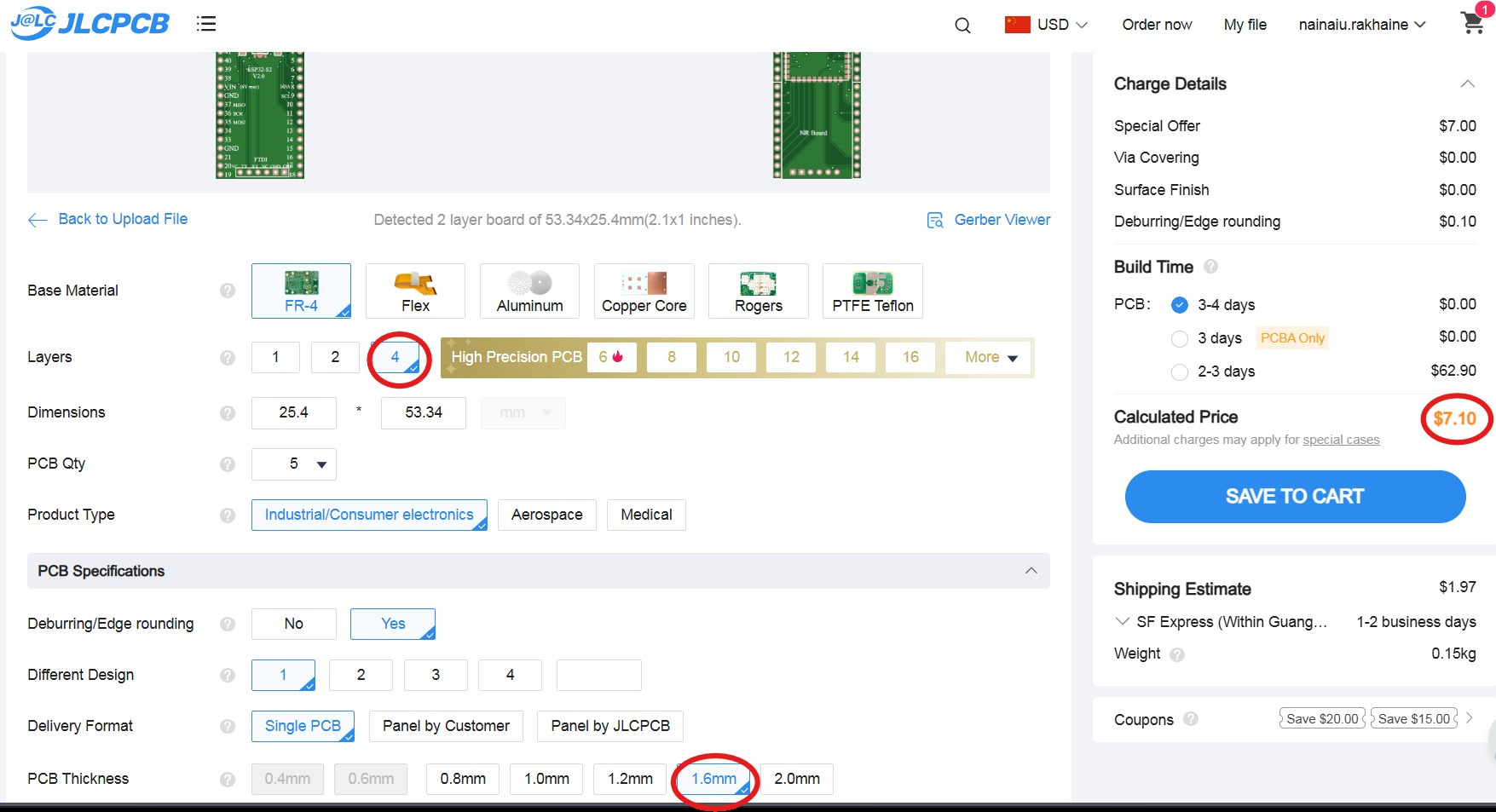
PCB Size and Number of Layers
This is obvious: larger boards have an increased amount of raw material used (laminate, copper), and more layers use different and more complicated processes (lamination, drilling, plating) to create the more complicated PCBs.
For example, on the JLCPCB platform, you will see an increase in price for a non-standard 2-layer board compared to 4 or 6-layer boards, which are frequently required for dense circuits or high-speed circuits.
PCB Material Selection
The common standard currently is "FR-4"; this is the least expensive substrate and is the default for the vast majority of applications.
Of course, JLCPCB sells specialized materials, like Rogers or Teflon material, that would be used for high-frequency RF designs; however, due to the increased dielectric properties and more complex manufacturing processes, these types of advanced materials will cost more on the relative price scale.
PCB Surface Finish
The finish that is placed on top of the copper pads can affect solderability and long-term durability.
- HASL (Hot Air Solder Leveling): Most cost-effective and most common finish, this is JLCPCB's standard option for most general-purpose circuit boards.
- ENIG (Electroless Nickel Immersion Gold): Higher cost, but provides a perfectly flat surface for oxidation protection and has a high corrosion resistance, making it great for fine-pitch components like BGAs and any applications that require wire bond plating.
PCB Manufacturing Complexity
Stretching manufacturable standards adds cost. Requirements with tighter trace/space (for example, 3.5 mil vs. 5 mil is standard), controlled impedance for high-speed signals, blind or buried vias-- all these features increase accuracy in the PCB manufacturing phase and involve more stringent controls, which drives the PCB price up.
PCB Component Sourcing: The Biggest Cost Variable in PCB Assembly Cost
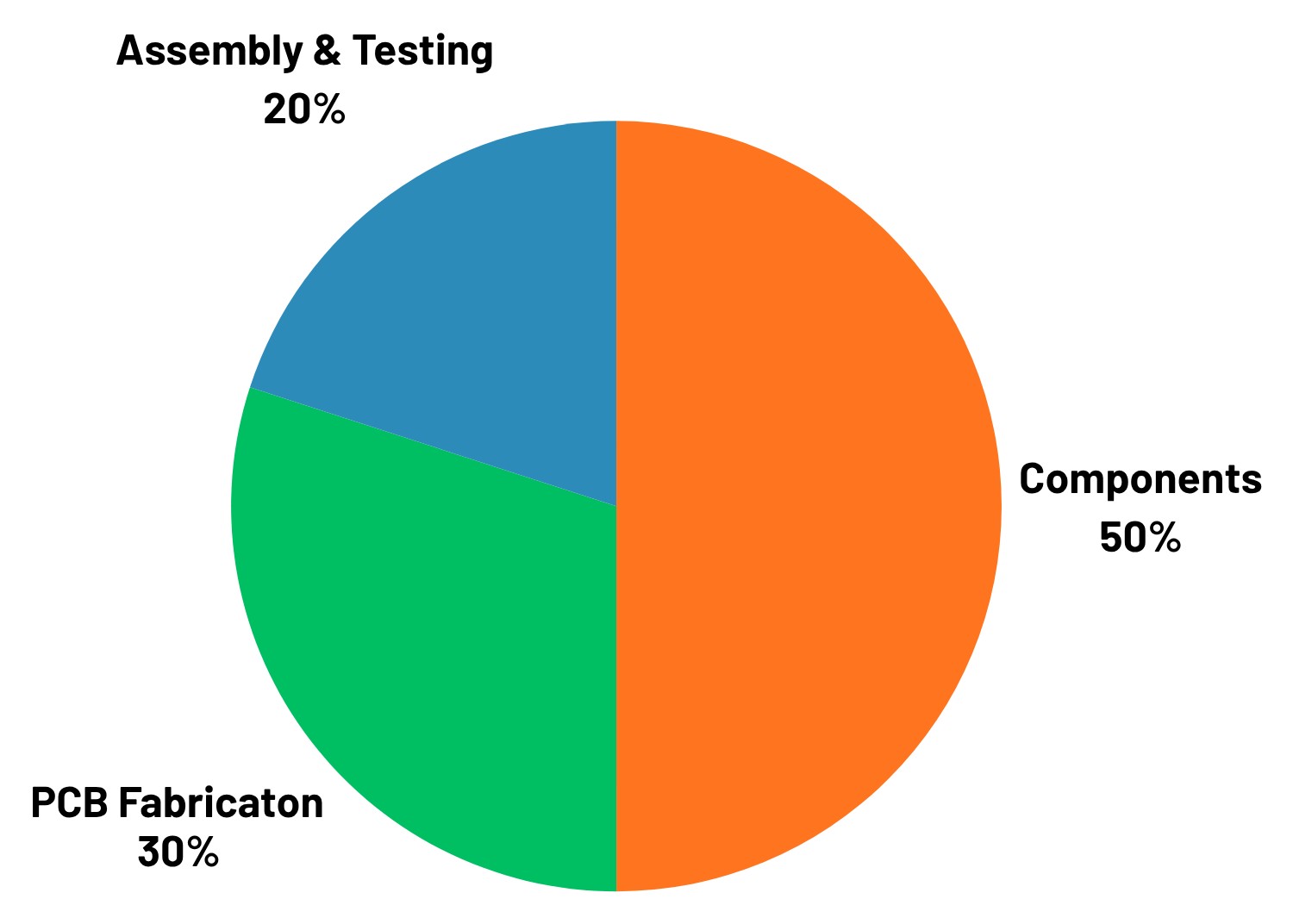
Typically, the largest and most volatile portion of the overall PCBA costs is the Bill of Materials (BOM).
BOM Line Items
It's not just the total number of components that impacts the assembly cost, but the number of unique parts listed in the BOM. Every BOM line-item (or "part number") incurs fees and subsequent overhead (sourcing/handling) that is attached to the handling and shipping of each unique part number.
Therefore, a design with 100 components and only 10 unique parts may cost significantly less to assemble than another with the same 100 components but 50 unique part numbers.
PCB Component Cost and Availability
A handful of unique, expensive components (e.g., high-end FPGAs, specialized sensors, powerful microprocessors) can easily dominate the total PCB assembly cost.
PCB component availability also matters: Can't get that particular part, or it is "hard to find" - then it could increase procurement costs and introduce significant lead time delays.
The Advantage of Turnkey Component Sourcing
This is where working with a turnkey provider like JLCPCB offers a substantial economic advantage. Leveraging JLCPCB's purchasing power and its large inventory of in-stock components, customers benefit from reliable sourcing, lower part costs, and minimized project delays.
When designing your board, selecting components from JLCPCB's verified in-stock parts library ensures smoother procurement, faster PCB assembly, and more predictable overall PCBA costs.
Labor and PCB Assembly Technology Affect the Cost of PCBA
The overall cost of a printed circuit board assembly (PCBA), including component placement and soldering, is primarily driven by labor requirements and the sophistication of assembly technology.
PCB Assembly Technology (SMT vs. THT)
- Surface Mount Technology (SMT): A very automated assembly process using high-speed pick and place machinery. SMT is the primary method of JLCPCB PCB assembly service and is very economical, particularly at volume.
- Through-Hole Technology (THT): These components typically require manual insertion or a separate wave soldering process, which adds to labor time and cost.
- Mixed Technology: Any board requiring both SMT and THT components will be the most expensive to manufacture since it requires the SMT to be processed through the automated line, then a subsequent manual or wave soldering process.
Component Density and Fine Pitch
Boards with dense component placements and/or lower pitch components (i.e., 0.4mm BGAs) require more accuracy with machine setup, and in some cases will be required to run slower to maintain accuracy. Slower speed means more machine time, which results in increased cost.
Single-Sided vs. Double-Sided PCB Assembly
This is one of the largest multipliers in PCB assembly cost. When components are on both sides of the printed circuit board, the process requires two passes through the SMT line - one for side A (stencil, paste, place, and reflow process) and once it is complete, a flip and pass through the SMT line for side B. The result is nearly double the machine setup and time through the SMT process, which is reflected in the assembly cost portion of your customized PCBA.
| Factor | Low-Cost Option | High-Cost Option | Relative Cost Impact |
|---|---|---|---|
| PCB Layers | 2 Layers | 6+ Layers | High |
| Surface Finish | HASL | Hard Gold / ENIG | Medium |
| Assembly Sides | Single-Sided | Double-Sided | High |
| Component Pitch | > 0.5mm | < 0.4mm (BGA) | Medium |
| Turnaround Time | Standard (5-7 days) | Expedited (24h) | High |
A summary of how different PCB design and PCB manufacturing choices available at JLCPCB can influence the final PCBA cost.
The Impact of Order Volume and Turnaround Time on PCBA Cost
Pricing for each board is not linear and greatly depends on the order quantity and required lead time.
Quantity and NRE Costs
Each PCB assembly, whether a prototype run of 5 boards or a production run of 1,000 boards, will always include Non-Recurring Engineering (NRE) costs, which are one-time setup charges for a new design.
At JLCPCB, this consists of programming the SMT machines for your board and for the custom laser-cut solder paste stencil. JLCPCB has a high level of automation and the ability to build thousands of unique small orders at the same time, which keeps these initial setup costs very low, and therefore keeps your prototype runs very affordable.
These are fixed costs that are independent of your order quantity. As you move from a small prototype run (e.g., 5 boards) to a small batch (e.g., 50 boards), you'll see the per-unit price drop significantly because that initial setup cost is spread across more units. This is a very practical approach for small runs and small to medium volume PCBA, allowing you to expand your project in one ecosystem gradually.
Turnaround Time
The standard lead time is usually the most affordable option. If you need your boards expedited, that comes with the expense of your order being prioritized, which requires interruption to the standard schedule for each assembly type. The cost of your expedited lead time is just an addition to your total PCBA cost.
Conclusion: PCBA Cost Breakdown
The most efficient way to optimize your cost of PCBA is to make thoughtful, informed decisions in the PCB design phase. By understanding the interplay between the main PCB specs, the components you choose, how complex the PCB assembly is, and how many circuit boards you want to order, you can guide your project to the cost you have budgeted. The best practice is to consider cost as a design parameter from the outset.
There is no better way to see these principles in action than to use an interactive tool, such as uploading your design files to the JLCPCB Instant Quote page, where you can play with your options, such as changing between 2 layers and 4 layers, switching from ENIG to HASL, or see the dramatic change when going from 10 units to 100 units. It will also provide itemized pricing that is correct, before you decide to order PCB/PCBA!
FAQ about PCBA Cost
Q: Is it cheaper if I source my own components and consign them to JLCPCB?
For small prototypes, sourcing your own components might seem cheaper at first. However, JLCPCB's turnkey service usually offers better value. Leveraging bulk purchasing, JLCPCB can acquire PCB components at lower costs than individual buyers. Additionally, consigning your own parts introduces logistical risks—incorrect, damaged, or missing components—that can cause costly production delays. Overall, turnkey PCB assembly is generally more efficient and cost-effective.
Q: Does the solder mask color affect my PCBA cost?
At JLCPCB, the standard green solder mask is the default and has no extra charge. Selecting other colors like black, blue, red, white, or yellow typically incurs a small surcharge because these colors are run in batches less frequently than the industry-standard green.
Q: How can I reduce my BOM cost without changing the circuit's function?
The best way is to design with parts from the JLCPCB parts library from the start. You can also consolidate passive components; for example, if your design uses 9.1k, 10k, and 11k resistors, check if a standard 10k resistor would work in all three locations. This reduces three BOM line items to just one, lowering handling costs.
Keep Learning
What Constitutes the Cost of PCBA? How to Calculate and Reduce PCBA Cost
The final PCBA cost is not just a dollar amount, but rather a collection of interconnected inputs and variables. Engineers, hardware developers, and makers must have a thorough understanding of these variables to design a product that is both functional and economical. A smart decision in board material or even a minor change in your BOM can have a significant potential impact on PCBA costs. By the end of this article, you will be confident to intelligently assess the key drivers of your custom PCBA c......
The Definitive Guide to Reducing PCB Assembly Costs and Enhancing Efficiency
In today's fiercely competitive market for electrical devices, lowering PCB assembly costs is crucial to maintaining competitiveness and staying ahead of the competition. This comprehensive article provides valuable suggestions to help you effectively reduce PCB assembly expenses while improving your bottom line. By implementing these tactics, you can streamline your assembly procedures, minimize costs, enhance overall productivity, and achieve cost-effectiveness without compromising quality. Factors ......