JLCPCB Enhances Lead-Free OSP PCB Surface Finish with New Chemistry
Product Update
Oct 26, 2026- Key Benefits of the OSP Chemistry Upgrade
- Precautions for the Upgraded OSP Finish
- Application Example After the Upgrade
Since introducing the free lead-free OSP (Organic Solderability Preservative) surface finish, JLCPCB has continuously optimized the process based on production experience and customer application needs.
Previously, JLCPCB used OSP chemistry from different brands. To broaden the process window and improve reliability through multiple reflow cycles and subsequent soldering operations, all JLCPCB production facilities switched to Shikoku Chemicals' Glicoat-SMD F2 OSP chemistry since October 8, 2026.

Key Benefits of the OSP Chemistry Upgrade
Improved Heat Resistance and Performance Through Multiple Reflow Cycles
The upgraded chemistry offers improved heat resistance and can withstand multiple reflow cycles. In JLCPCB internal tests at a peak reflow temperature of 260°C, the finish showed no discoloration after three cycles, compared with a maximum of two cycles for conventional OSP chemistry.
Improved Oxidation Resistance
Improved oxidation resistance provides greater tolerance when boards are left exposed to indoor air or when there is a delay between soldering Side A and Side B. Many orders placed through JLCPCB's Economic SMT assembly service involve reflow assembly of Side A at JLCPCB, followed by soldering of Side B by the customer, or partial component assembly at JLCPCB followed by soldering of the remaining components after delivery. These applications have demonstrated stable performance in production.
Better Suited to Soldering Connectors at a Later Stage
Connectors are usually soldered last. Thanks to its improved heat and oxidation resistance, the upgraded OSP chemistry performs better during these later soldering operations.
Note
Glicoat-SMD F2 OSP chemistry is a well-established fifth-generation, imidazole-based OSP developed specifically for lead-free processes. Its thin, heat-resistant coating supports multiple reflow cycles and is well suited to boards with BGA and fine-pitch components.
Precautions for the Upgraded OSP Finish
- The recommended peak reflow temperature is ≤260°C. Do not use hot plates at 300–400°C or high-temperature hot-air guns to heat the boards, as excessive heat will directly damage the OSP protective coating.
- The new Glicoat-SMD F2 OSP chemistry provides stronger oxidation resistance, greatly improving tolerance to air exposure and delays between soldering the two sides of a board. However, prolonged exposure to air is not recommended. Do not leave these boards exposed to air for extended periods. Under normal indoor conditions, exposure should be limited to approximately one week at most; the actual limit depends on the indoor environment. If some components have already been soldered, solder the remaining components as soon as possible.
- Inspect the OSP finish before soldering. If it has darkened due to oxidation, return the boards to JLCPCB for free OSP reprocessing.
Application Example After the Upgrade
The drone main control board shown below has extremely complex circuitry and also uses an OSP finish:
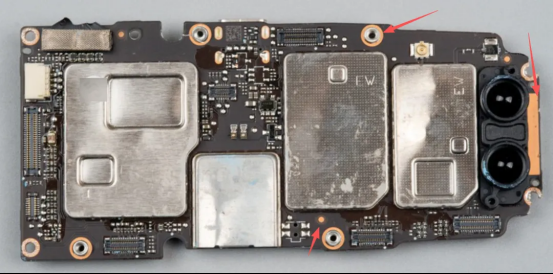
JLCPCB's lead-free OSP process uses proven, stable chemistry. With the upgrade to Glicoat-SMD F2 OSP chemistry from Shikoku Chemicals, its performance has been further enhanced. When proper soldering procedures and temperatures are followed, lead-free OSP is a suitable finish for most applications, except those with special requirements such as gold fingers and button contacts. It is expected to become a more widely selected surface finish option for PCB applications.
Recent News
• JLCPCB Enhances Lead-Free OSP PCB Surface Finish with New Chemistry
Oct 26, 2026
• JLCPCB Officially Launches HDI PCB Manufacturing Services
Sep 14, 2026
• JLCPCB Launches OSP Starting from 2-Layer PCBs: High Quality at No Extra Charge
Jul 31, 2026
• JLCPCB Completes Website Upgrade for Enhanced Clarity and Mobile Experience
Jan 04, 2026