What Is a Nano-Coated SMT Stencil? Benefits and Applications
Last updated on Aug 14, 2026
What is a Nano-Coated Stencil?
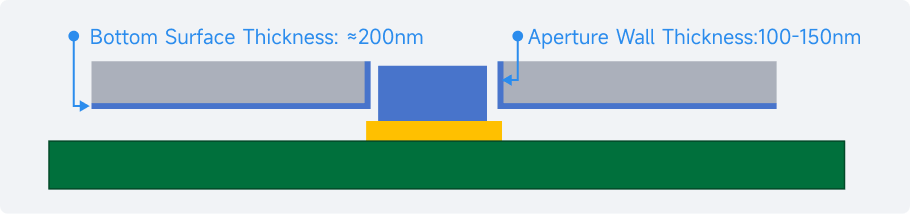
A nano-coated stencil is a laser-cut stainless steel SMT stencil with a nanometer-scale fluoropolymer coating applied to the board side and the inner walls of the apertures using a high-vacuum coating process. The coating provides excellent hydrophobic and oleophobic properties, reducing solder paste adhesion and enabling more consistent solder paste transfer during printing.
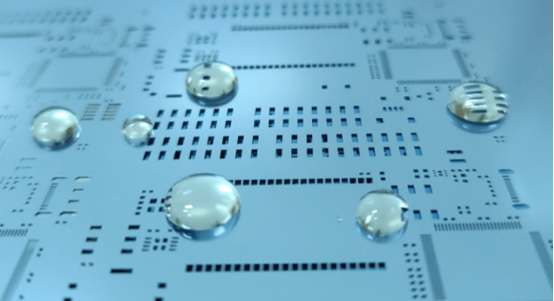
Compared with a standard stencil, a nano-coated stencil provides improved solder paste release and increases surface hardness by approximately 10–30% (up to 400–450 HV). As a result, it offers better wear resistance and more consistent printing performance throughout its service life.
Please note: The nano coating is applied only to the board side of the stencil and the inner walls of the apertures. The squeegee side remains uncoated to maintain proper friction, allowing solder paste to roll smoothly during printing.
Benefits of a Nano-Coated Stencil
1Better Solder Paste Release
The ultra-low-friction coating allows solder paste to release more completely from the stencil apertures, resulting in more complete and uniform solder paste deposits. This improves print quality and consistency, especially for fine-pitch components and high-density PCB assemblies.
2Reduced Solder Paste Residue
The hydrophobic coating minimizes solder paste adhesion to the aperture walls and the board side of the stencil, reducing solder paste residue buildup. This helps minimize printing defects, such as solder bridging, while improving overall printing consistency.
3Lower Cleaning Frequency
The nano coating reduces solder paste buildup on the board side of the stencil, helping keep the stencil cleaner during printing. As a result, the stencil requires less frequent cleaning, reducing machine downtime and improving production efficiency.
4Improved Printing Stability
By maintaining consistent solder paste transfer throughout long production runs, nano-coated stencils help deliver stable print quality, reduce print variation, and improve first-pass yield.
5Longer Stencil Service Life
The nano coating enhances the stencil's surface hardness and wear resistance, making it more resistant to abrasion during repeated printing and cleaning cycles. As a result, the stencil maintains stable printing performance for a longer period and requires less frequent replacement.
Conclusion
Compared with a standard stencil, a nano-coated stencil offers improved solder paste release, reduced solder paste residue, lower cleaning frequency, enhanced printing stability, and a longer service life. These advantages help improve printing consistency, reduce maintenance requirements, and support reliable SMT production, making nano-coated stencils well suited for high-precision SMT applications and high-volume production.