FPC Substrate Types: Adhesive vs Adhesiveless FCCL Guide
Last updated on Oct 19, 2026
The FPC substrate is critical to the performance of flexible circuit boards. It directly affects your product's reliability and service life.
The most commonly used FPC substrate on the market, also called FCCL, is polyimide (PI). It has excellent heat resistance, chemical stability, and mechanical performance, and can maintain stable insulation performance in high-temperature environments.
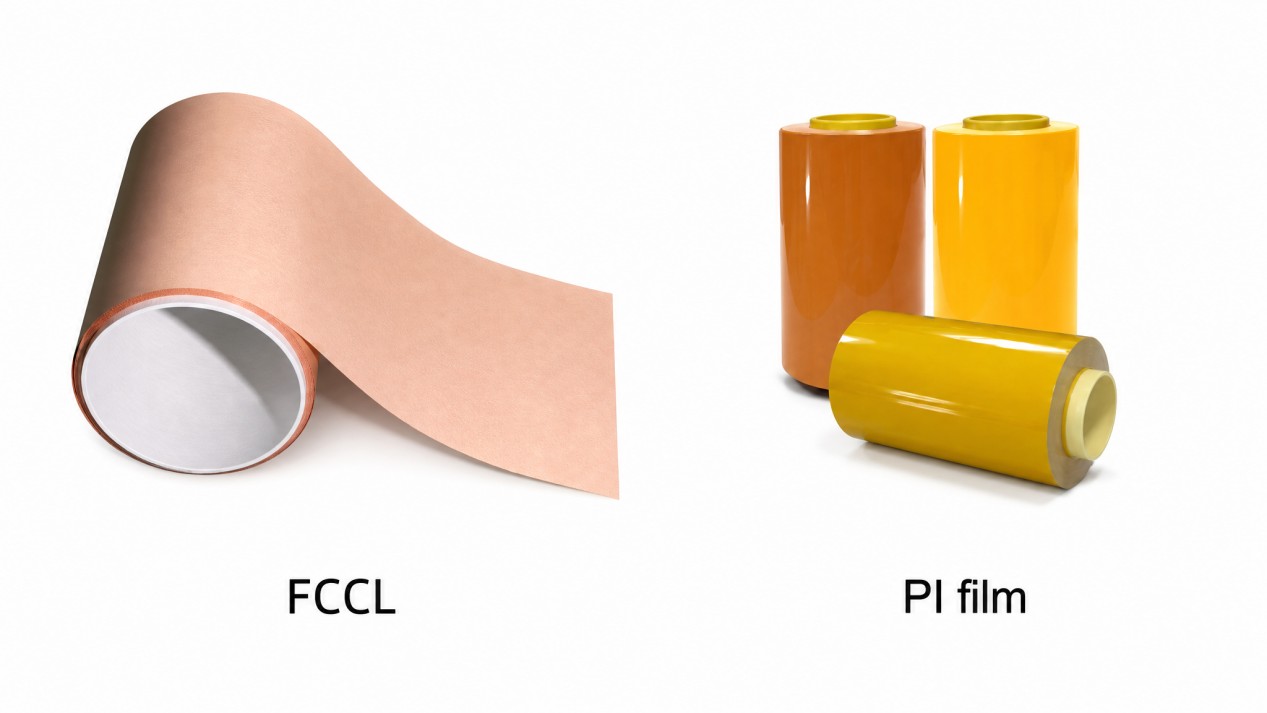
But please note: by processing method, PI is divided into adhesive and adhesiveless substrates. They differ significantly in material composition, performance characteristics, and application scenarios.
Currently, all JLCPCB FPCs use adhesiveless substrates, except transparent PET material. Below, we explain the differences and how to identify FPC substrates.
I. Structures of Adhesive and Adhesiveless Substrates
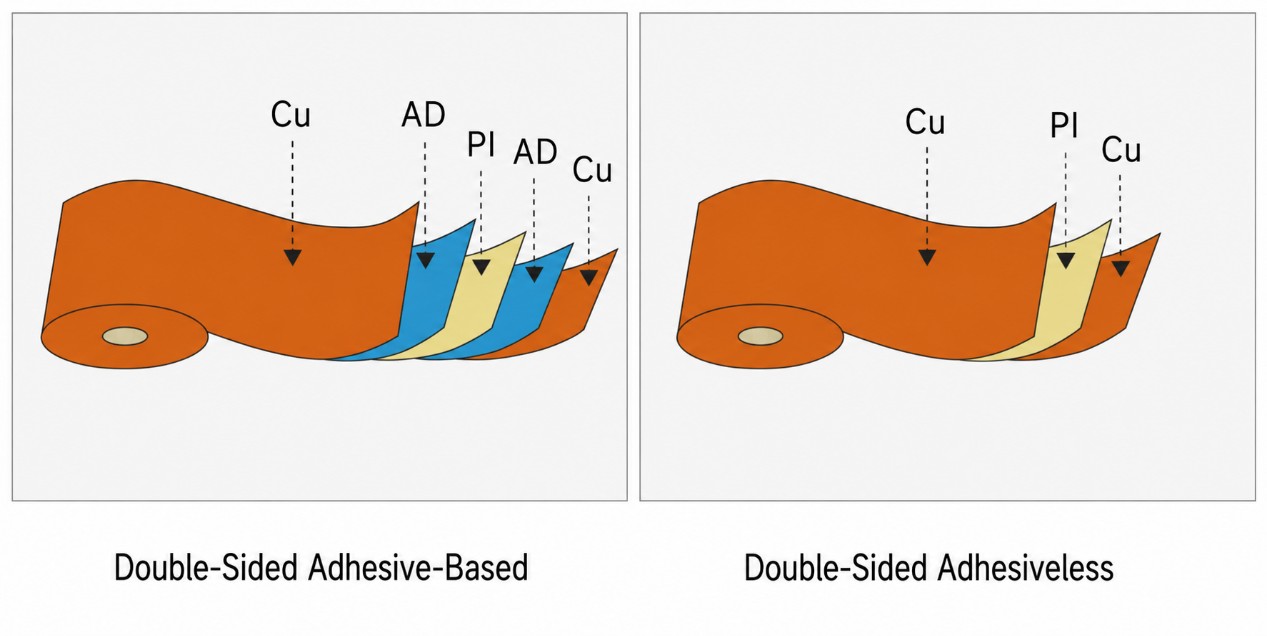
Adhesive substrate: mainly a three-layer structure of PI film/adhesive (AD)/copper foil, produced by coating, pressing, and baking. The adhesive is usually epoxy resin or acrylic adhesive.
Adhesiveless substrate: composed of PI film and copper foil. There are two manufacturing methods. One hot-presses PI film and copper foil together; this PI requires special treatment, is also called TPI, and is a trade secret. JLCPCB FPC substrates use this technology. The other method coats liquid PI onto copper foil.
II. Differences Between Adhesive and Adhesiveless Substrates
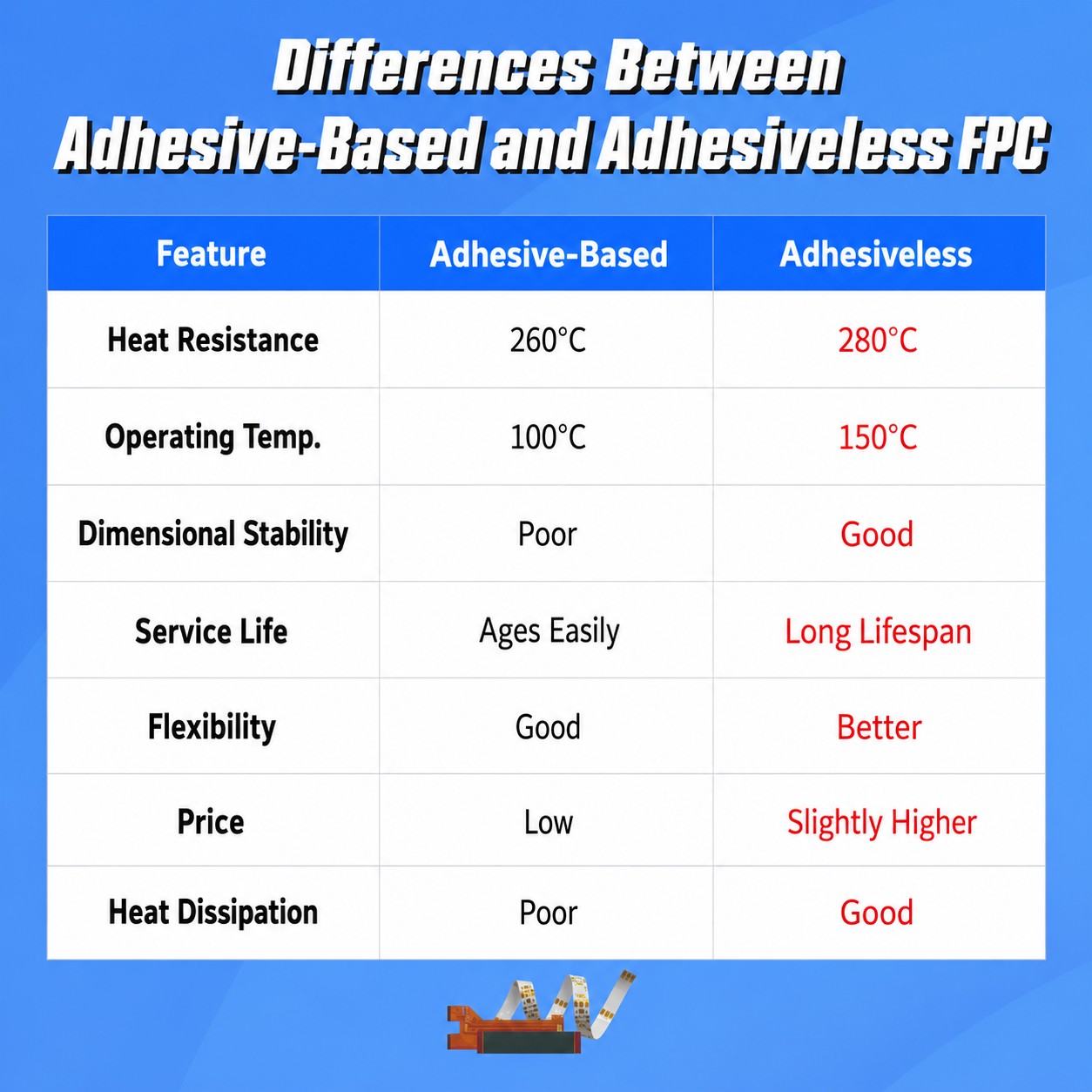
Because adhesiveless substrates do not require glue as an adhesive, their performance is better than adhesive substrates. Currently,90% of products on the market require adhesiveless substrates. Details are as follows:
III. How to Identify Adhesive and Adhesiveless Substrates
Although most products on the market require adhesiveless substrates, many suppliers use adhesive substrates to pass as adhesiveless substrates in order to reduce cost. Here are two quick identification tips:
1. Check the thickness
The PI thickness of a standard FPC substrate is 25 um, and the PI thickness of an extra-thick FPC is 50 um. Copper thicknesses are 12 um, 18 um, and 35 um. Coverlay thicknesses are 27.5 um and 50 um, with white coverlay requiring an additional 10 um.
Copper thickness + substrate + coverlay = finished board thickness. If the actual measured FPC thickness differs greatly from the calculated thickness, it indicates that an adhesive substrate is being used. For example, a standard double-sided FPC with 12 um copper has the following structure:
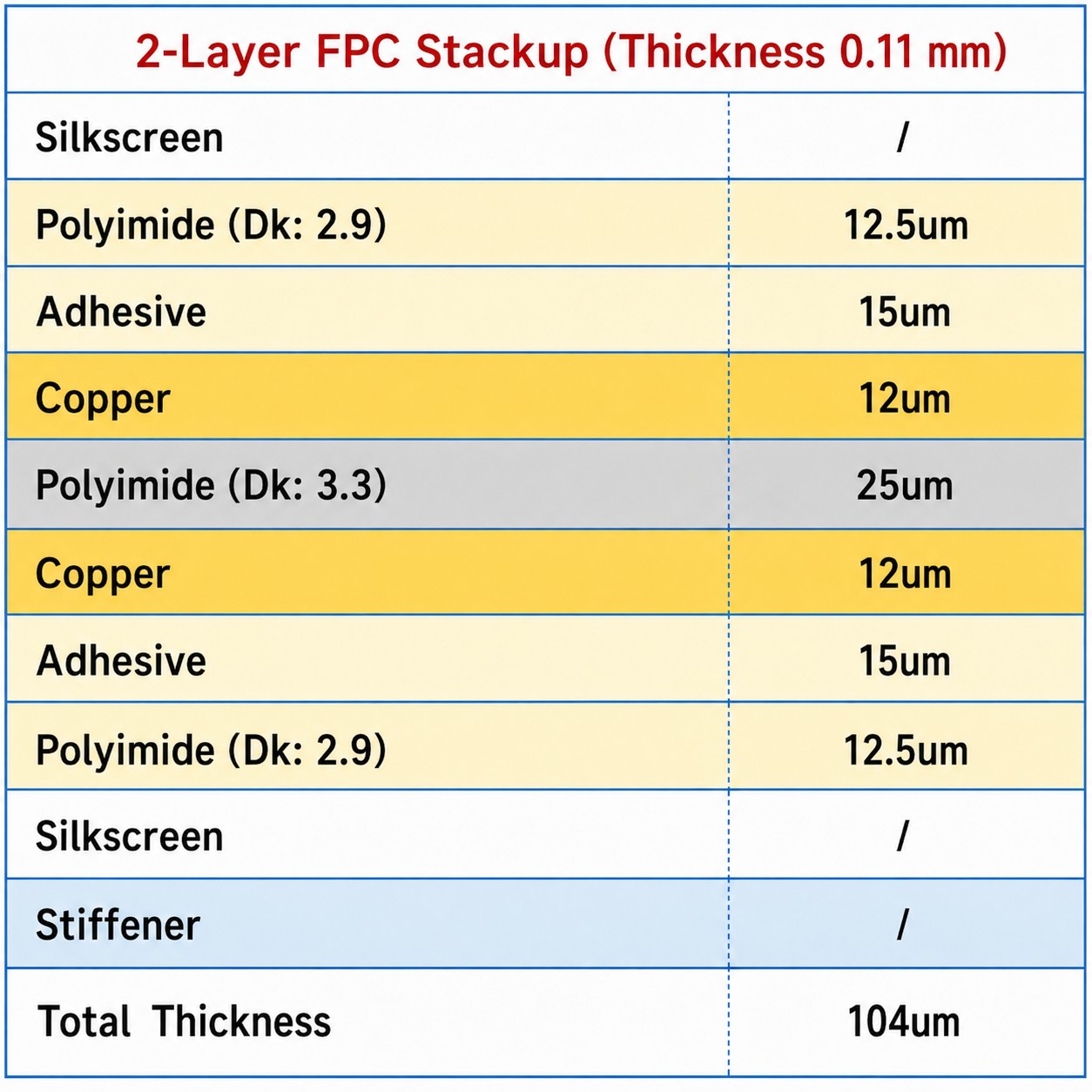
The total thickness calculated from the figure above is 0.104 mm. If the measured board thickness is 0.13 mm, it may be an adhesive substrate.
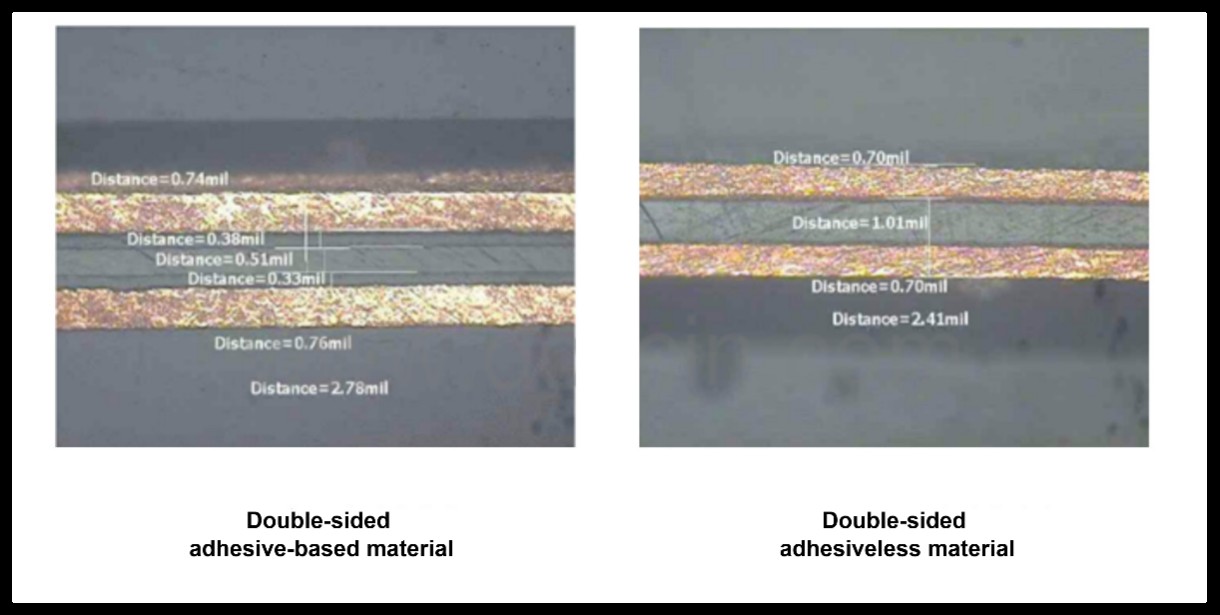
2. Make a cross-section
Cross-section the FPC and observe it under a microscope to check whether there is AD adhesive between the PI and copper. This method can more accurately determine whether the board uses an adhesive substrate.
How JLCPCB Verifies Substrate Quality
To ensure your FPC truly utilizes premium adhesiveless substrates, the JLCPCB Material Quality Analysis Lab conducts strict internal cross-section inspections. This rigorous material verification process prevents low-grade materials from compromising your design, guaranteeing exceptional thermal stability and flexibility for every batch.